How Are Achilles Tendonitis and Running Connected?
The Achilles tendon connects the calf muscles to the heel bone and is the strongest and largest tendon in the body. It connects your lower leg to your foot and helps you push off, absorb force, and store energy with every stride. It works hard during easy runs, harder during speed sessions, and even harder when you sprint, run hill sessions, or train with tired legs.
When the Achilles tendon is asked to do more than it can tolerate, the result is a familiar pattern for runners: soreness at the back of the heel or lower leg, especially after a run, first thing in the morning, or when pushing pace. This is why Achilles tendonitis and running are closely linked, as repeated running loads can irritate the Achilles tendon.
A sore Achilles tendon running problem can affect beginners and experienced runners alike. It is a common overuse injury after a sudden jump in training load, a return to running after time off, or a new block of hills, intervals or track work. It can also happen when training continues without adequate rest, when worn-out shoes are used, or when tight calf muscles and poor loading mechanics repeatedly strain the Achilles tendon.
In Singapore, many runners notice Achilles tendinitis symptoms during the build-up period for the Standard Chartered Singapore Marathon, when weekly mileage rises faster than the Achilles tendon can adapt. Thankfully, this is a manageable condition with the right medical team, including an experienced podiatrist.

Symptoms
Symptoms of Achilles tendinitis often include pain, stiffness and tenderness at the back of the heel, or along the Achilles tendon itself. Achilles tendon pain may begin as a mild ache after a run or another demanding session, such as stair climbing, sprinting, or hill sessions. Over time, Achilles tendinitis may cause discomfort that starts earlier during runs and lasts longer afterwards.
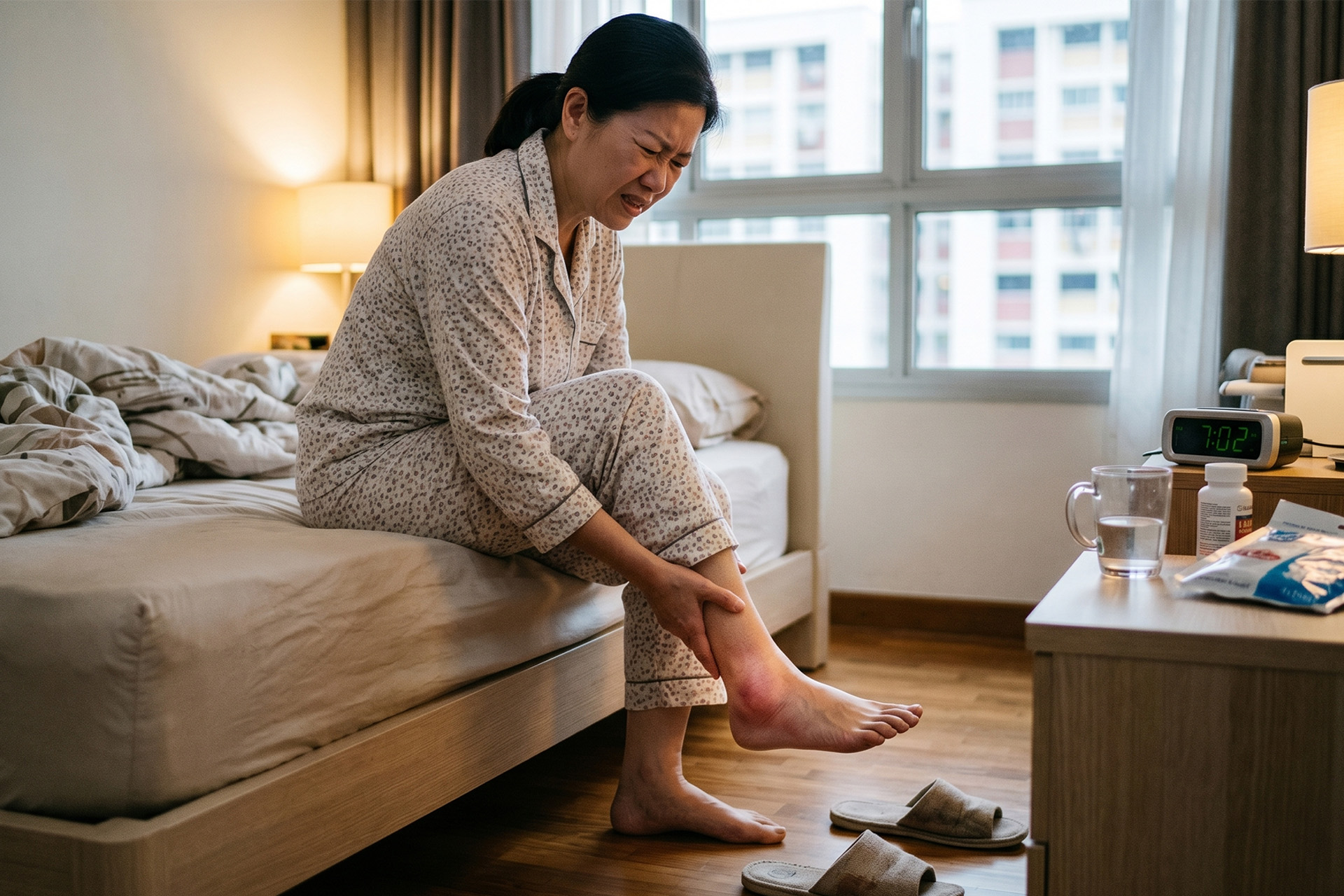
Morning stiffness is especially common with Achilles tendinitis. The first few steps out of bed may feel tight and sore, but they gradually ease as the Achilles tendon warms up. Some runners also notice ankle pain when rising onto their toes, walking uphill, or moving after sitting for a while. The Achilles tendon may feel thickened or tender when pressed, and in some cases, there is a mild swelling.
An Achilles tendon running injury does not always behave like an acute muscle strain. Tendons can be deceptive. Achilles tendinitis symptoms may settle during a run, giving the impression that everything is fine, only to flare up in the following 24 hours. That is why the after-effect matters as much as the run itself.
When to See a Podiatrist
You should see a podiatrist if Achilles tendon pain keeps coming back, is worsening, or is starting to affect both walking and running. A mild flare-up after an unusually hard session may settle with a few days of load reduction. Achilles tendinitis that lingers, returns every time you run, or forces you to alter your stride deserves a proper assessment by a podiatrist.
You should also seek professional medical advice if the Achilles tendon pain is suddenly severe, if you feel a ‘pop’, or if you struggle to push off the foot. These features raise concern for a more serious injury, such as an Achilles tendon rupture or partial tendon rupture.
Many runners ask, “Can I run with Achilles tendonitis?” Sometimes the answer is yes, but only within sensible limits. As a general rule, if Achilles tendinitis symptoms are mild, increase only slightly during the run, settle within an hour or two, and are not worse over the next 24 hours, a modified running plan may still be possible. If Achilles tendinitis pain escalates, lingers, or leaves the tendon stiff the next day, your run was probably too much, and you should consider load reduction with either shorter mileage or a longer rest.
Diagnosis
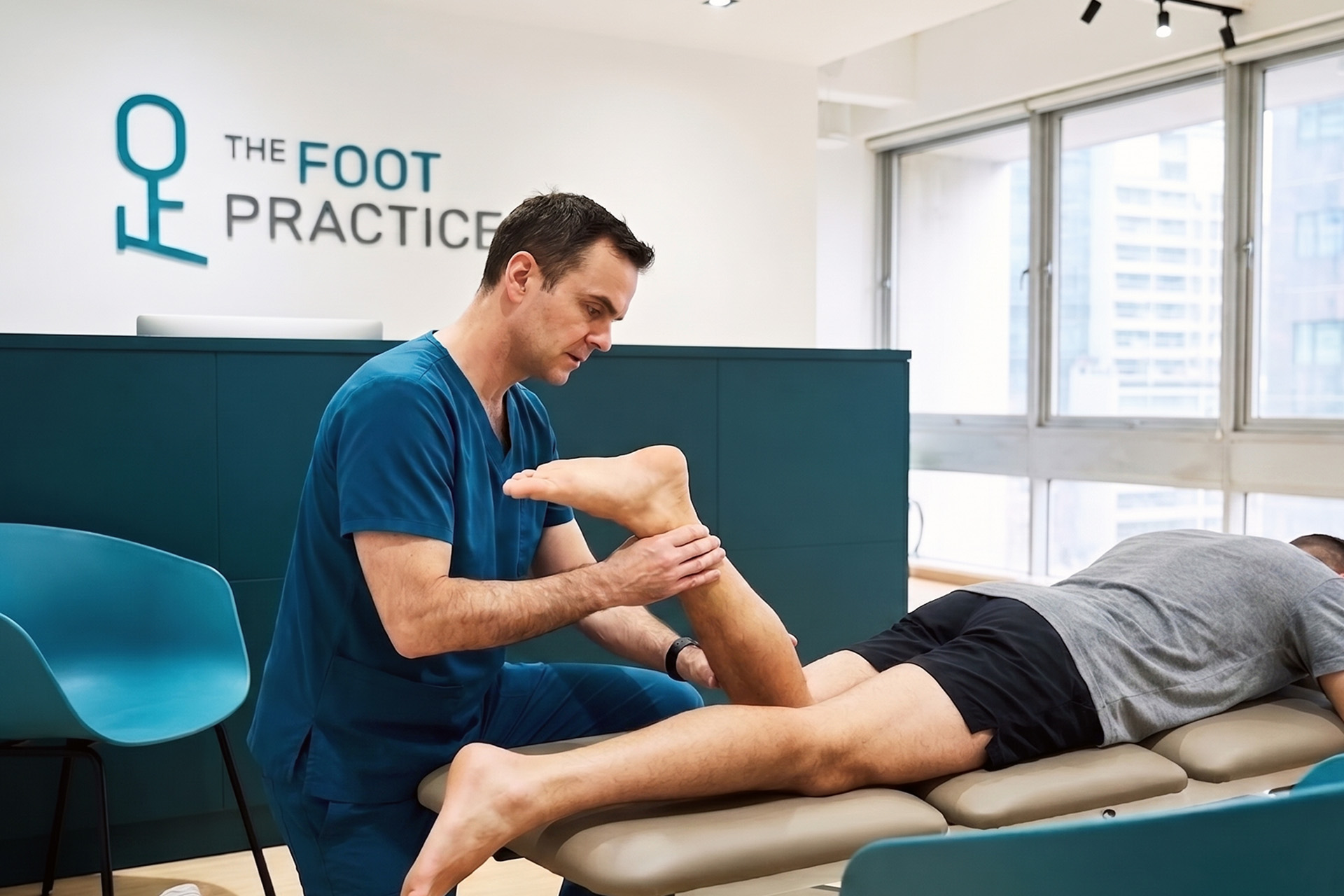
Diagnosing Achilles tendinopathies based on symptoms and training history is the first step. A podiatrist will ask when your Achilles tendon pain started, whether there has been a recent increase in distance, pace or training intensity, what surfaces you run on, and what shoes you use. This is because worn-out shoes, poor running form, flat or high arches, tight calf muscles, and age-related changes in the Achilles tendon are all risk factors for developing Achilles tendinitis.
The physical examination usually assesses tenderness, tendon thickening, ankle pain, ankle range of motion, calf muscle strength, and the Achilles tendon’s response to loading. Single-leg calf raises, hopping tolerance, and push-off function may also be included in the assessment. These clinical findings and symptom patterns help distinguish Achilles tendon injury from other causes of heel pain.
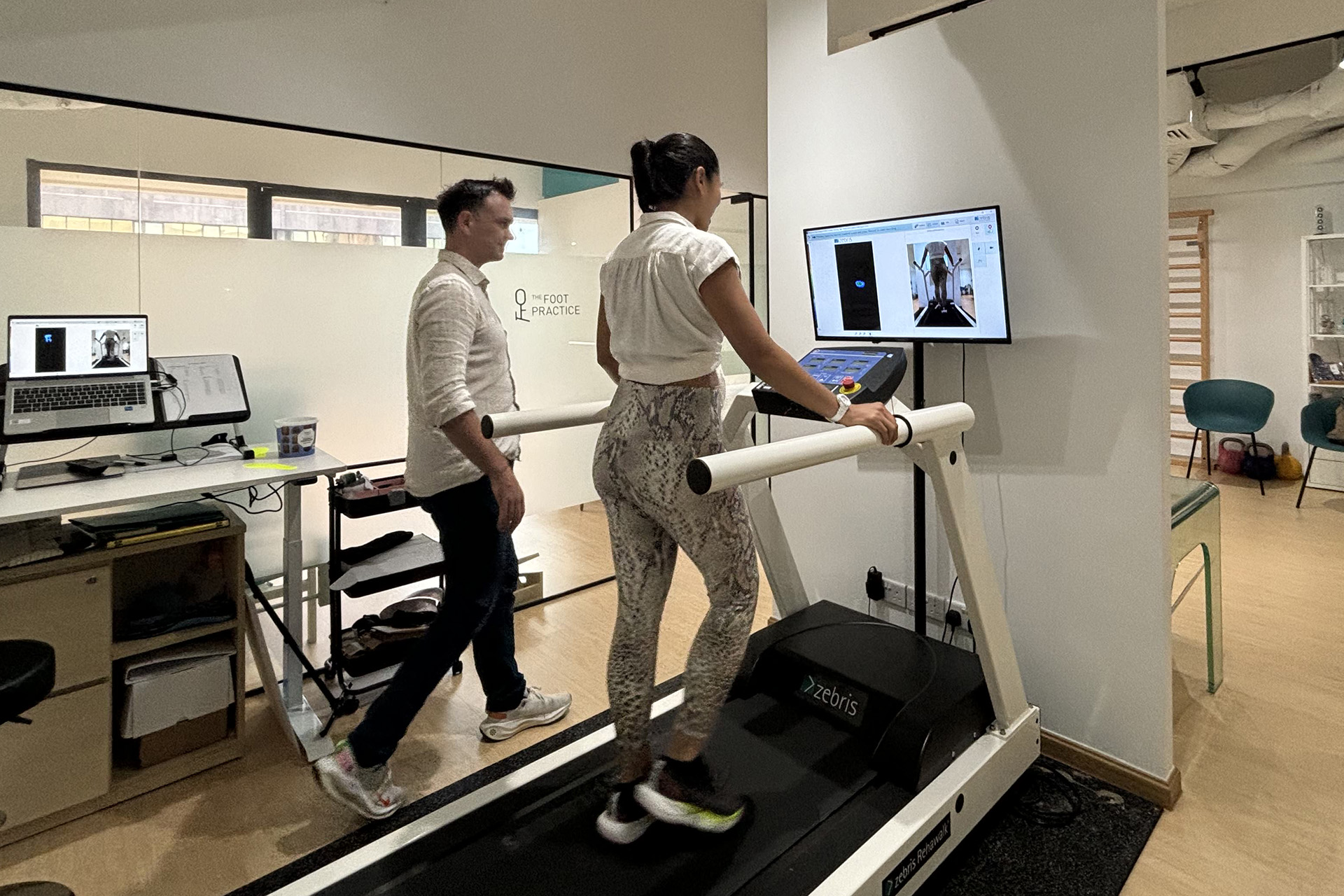
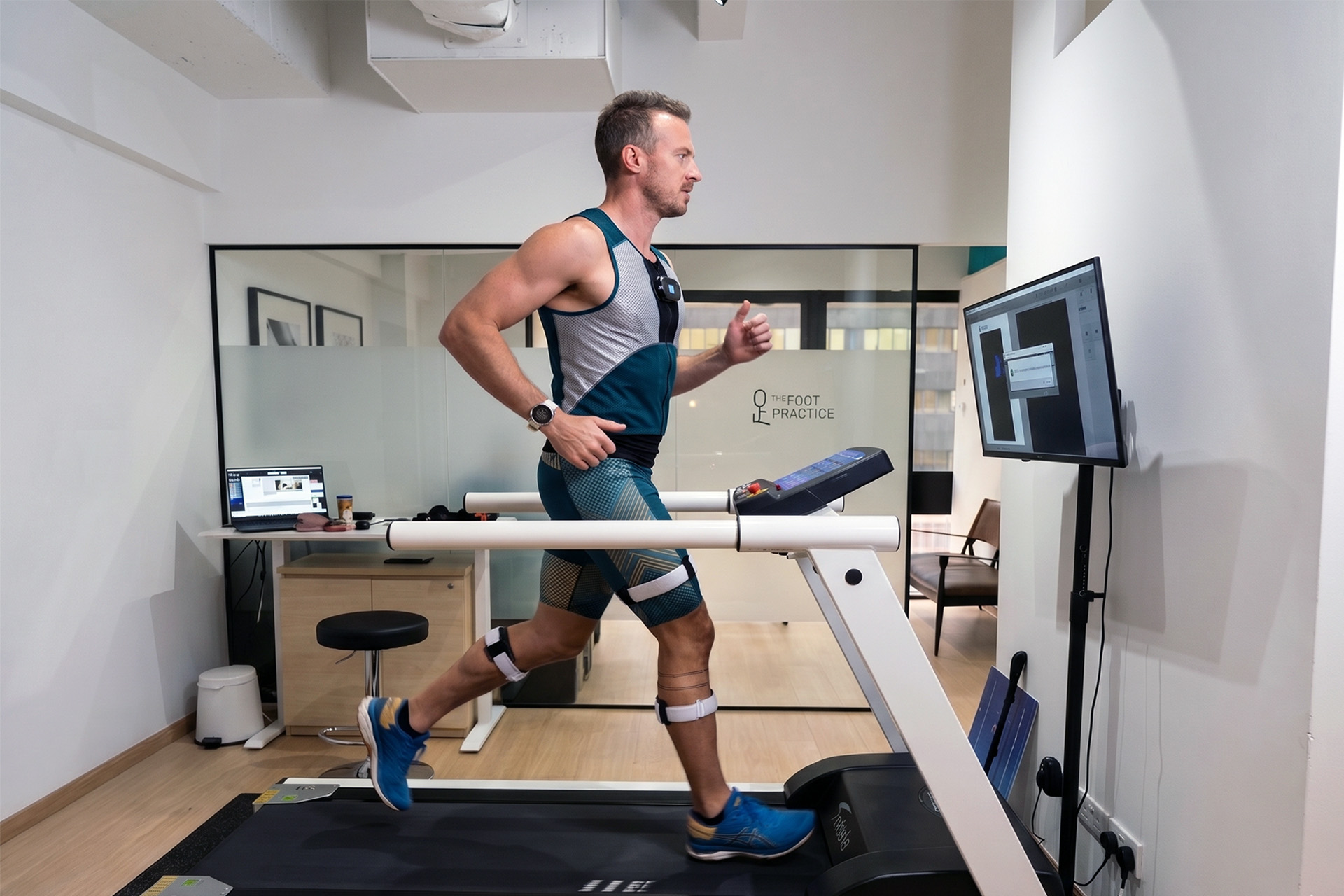
At The Foot Practice, diagnosis also focuses on how you move. RehaWalk® Gait Analysis can help identify asymmetrical loading, overpronation, reduced ankle motion, inefficient stride patterns, and other factors that may be keeping your Achilles tendon under stress. This matters because Achilles tendon pain relief from running is usually more durable when the driver of overload is identified, not just the painful area itself.
Imaging is not always necessary for Achilles tendinitis, but it may be considered if the diagnosis is unclear, symptoms are severe, or an Achilles tendon rupture is suspected.
Non-Surgical Management
Achilles tendonitis management for runners usually focuses on training load control, Achilles tendon strengthening, footwear review and biomechanical support. Many people search for fast Achilles tendonitis treatment and running advice, but the most useful approach is usually a staged plan rather than a quick fix.
The first step is often relative rest and adequate rest between sessions. That means reducing the specific training load that is provoking Achilles tendinitis, not necessarily stopping all exercise. Cross-training, such as swimming and cycling, may be useful because it helps maintain fitness while reducing repetitive stress on the Achilles tendon. For others, a temporary cutback in distance, pace, hill sessions or frequency is enough. The aim is to calm the Achilles tendon without complete deconditioning.
There are two main types of Achilles tendinitis: insertional Achilles tendinitis and noninsertional Achilles tendinitis. Insertional Achilles tendinitis affects the point where the Achilles tendon connects to the heel bone and may involve bone spurs or extra bone growth at that site. Noninsertional Achilles tendinitis affects the middle part of the Achilles tendon, often in active younger runners. Understanding the specific type helps guide Achilles tendinitis treatment and running programmes appropriately.
Physical therapy and progressive strengthening are central to recovery from Achilles tendinitis. Strengthening exercises address weak calf muscles and help the Achilles tendon rebuild capacity. The Achilles tendon needs gradual, structured loading to regain its strength. Calf raises, slow heavy strengthening drills, and a structured return-to-run plan are often more effective than repeated short rest spells alone. Blood flow to the Achilles tendon is enhanced through progressive loading, which supports healing of the remaining healthy tendon tissue.
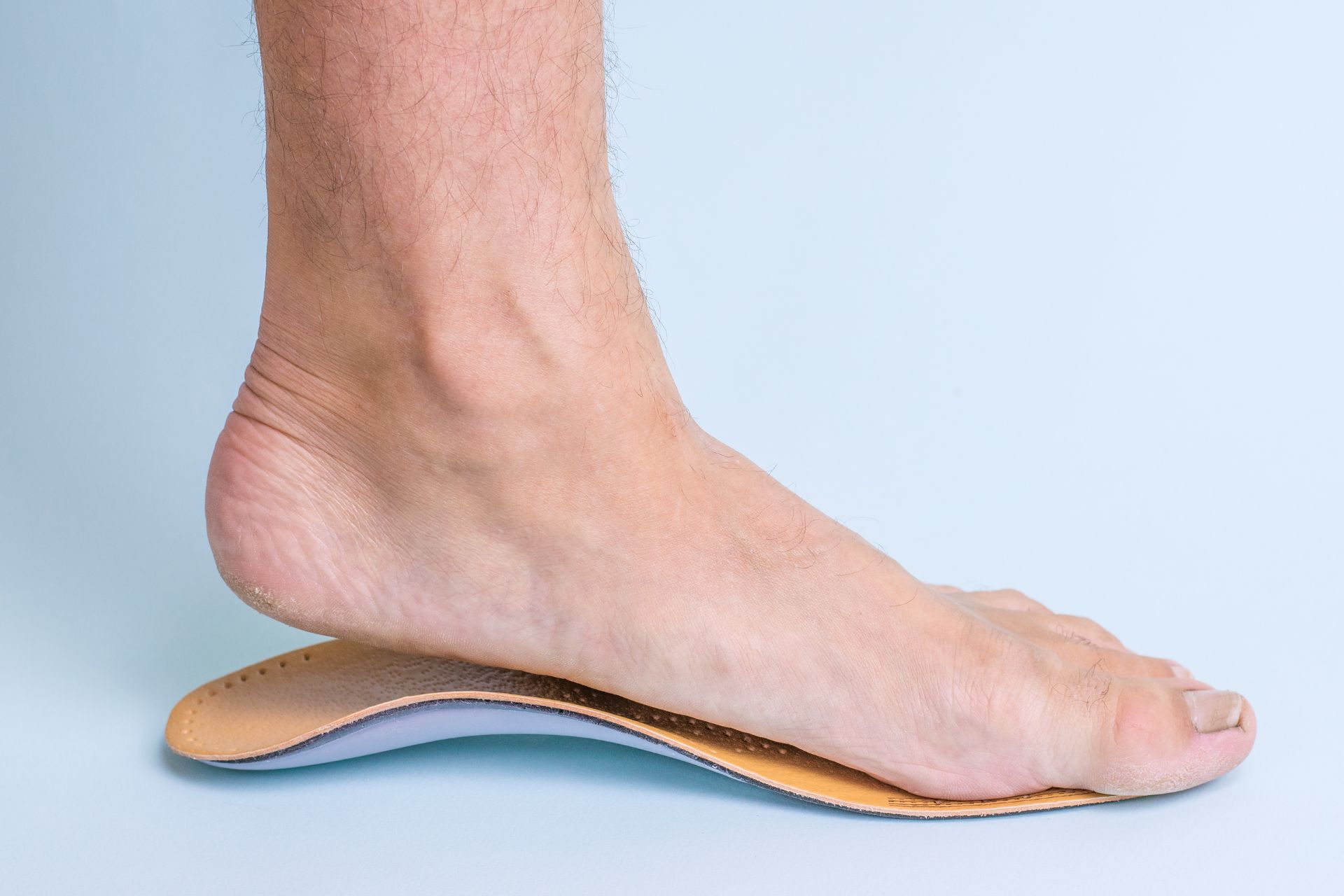
RehaWalk® Gait Analysis can guide decisions about stride, training load, and a return-to-run progression. If flat feet, high arches or excessive pronation are contributing to your Achilles tendinitis, custom arch supports and orthoses may help reduce strain on the Achilles tendon.
Footwear assessments are equally important. Running shoes for Achilles tendonitis should provide the appropriate heel cushioning, stable support and enough structure for the runner’s foot type and mileage. Worn-out shoes that are poorly matched to the runner can prolong Achilles tendinitis symptoms. Arch supports that control excessive foot motion further protect the Achilles tendon during repetitive movements.
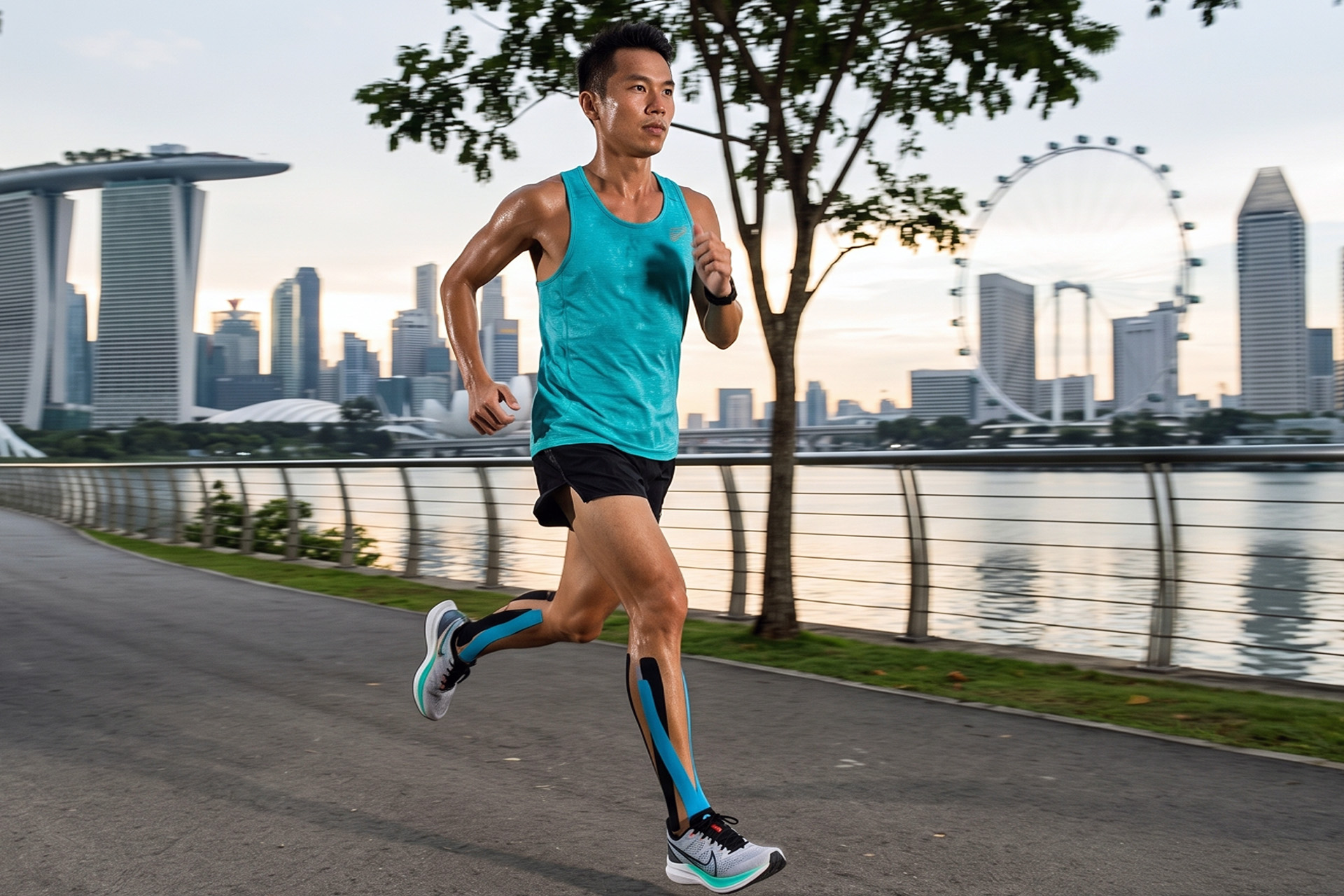
In selected cases, adjunctive Achilles tendinitis care may help. Shockwave Therapy may be considered for stubborn Achilles tendinitis that is not settling with loading work alone. Shockwave Therapy stimulates blood flow and may help reduce pain and swelling around the Achilles tendon. Dry Needling may be useful when tight calf muscles are a contributing factor. Taping the Achilles tendon for running with surgical tape or an athletic wrap may provide short-term support and help reduce Achilles tendon pain during running, but it is not a substitute for proper load management, strength training and footwear correction.
For runners who want to know how to prevent Achilles tendinitis from worsening while continuing to train, symptom monitoring matters. Running with Achilles tendonitis may be reasonable in some cases, but the Achilles tendon must tolerate it. A general rule is that slight discomfort during the run should remain mild, settle fairly quickly afterwards, and not worsen the next morning or over the next 24 hours. Otherwise, the Achilles tendinitis treatment running plan will need to be adjusted.
Risks and Recovery
Recovery time from Achilles tendonitis and running-related overload is usually good, but the Achilles tendon often improves gradually rather than quickly. Mild Achilles tendinitis may settle in a few weeks, while more persistent Achilles tendon injuries can take months, especially if they have been present for a long time before care begins.
The main risks of ignoring Achilles tendinitis are chronic Achilles tendon pain, reduced running tolerance, loss of calf muscle strength and, in more serious cases, Achilles tendon rupture. In severe Achilles tendinitis cases with tendon rupture, surgical options such as a tendon transfer or gastrocnemius recession may be considered by orthopaedic surgeons.
To prevent Achilles tendinitis and Achilles tendon injuries, runners should avoid repetitive stress by gradually increasing their training load, wearing supportive shoes, and maintaining calf muscle flexibility. Prevent Achilles tendonitis by keeping the training load increasing gradually and consistently. Running on soft surfaces or very soft surfaces, where possible, can also help reduce the load on the Achilles tendon during recovery.
Good Achilles tendon running pain relief depends not only on resolving tendinitis symptoms but also on rebuilding the Achilles tendon’s ability to withstand load again. A runner who keeps trying to run despite worsening Achilles tendon pain often ends up stuck in a stop-start cycle that significantly lengthens recovery time.
Get Help for Running and Achilles Tendon Pain
If you have ongoing Achilles tendon pain after running, or are unsure whether you should keep training, it may be time for a proper assessment.
At The Foot Practice in Singapore, our podiatrists assess your Achilles tendons, biomechanics, gait, footwear and training load to build a personalised Achilles tendinitis management plan. With the right combination of load modification, strength training, RehaWalk® analysis, footwear advice, orthotic support, and, where appropriate, Shockwave Therapy, many runners with Achilles tendonitis can return to running more comfortably and with a lower risk of recurrence.
Contact The Foot Practice today to arrange a consultation and receive professional advice about your Achilles tendon pain and running problem, along with a practical sports injury plan to help you move forward.