What Is an Ankle-Foot Orthosis (AFO)?
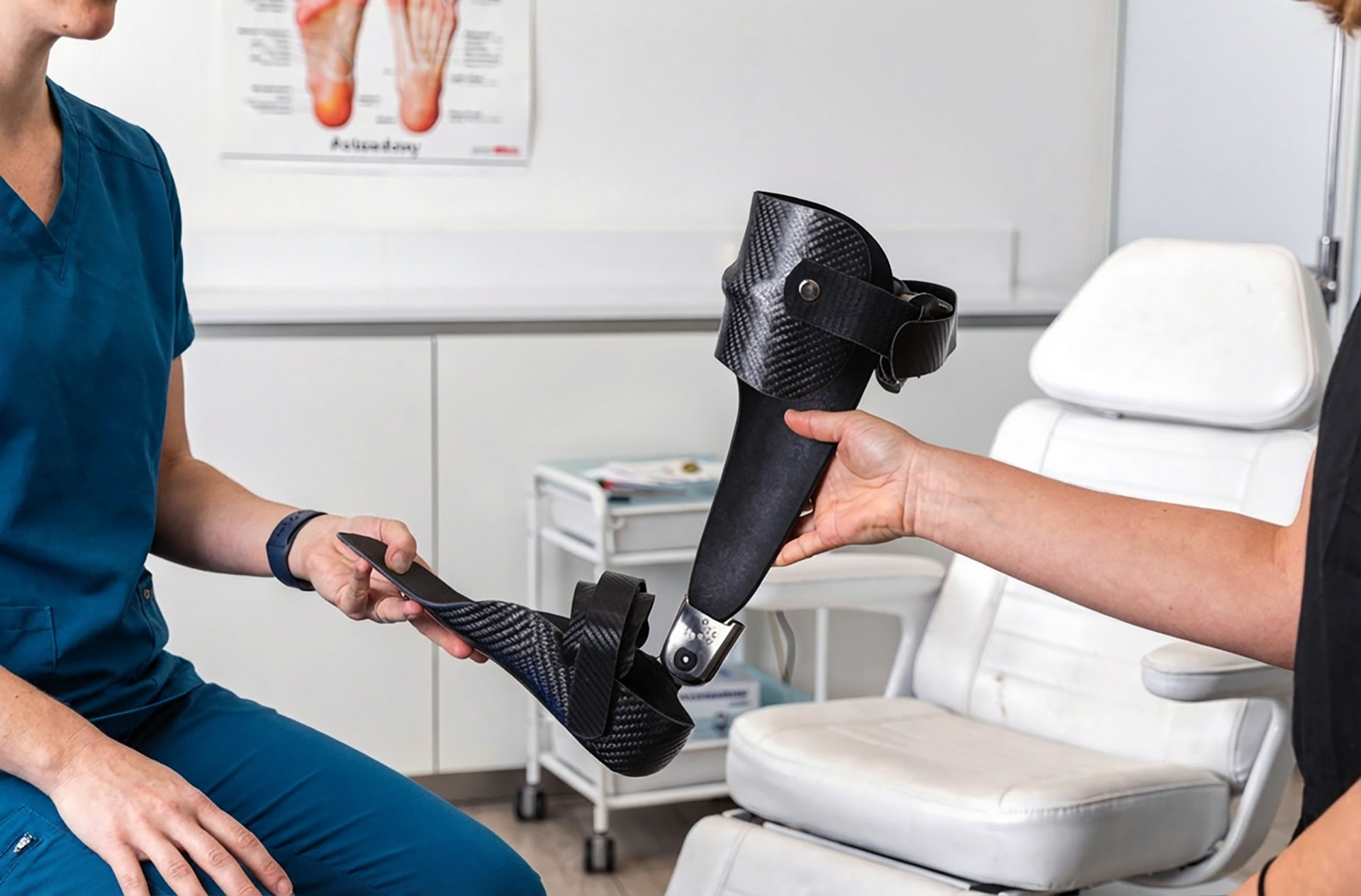
An ankle-foot orthosis (AFO) is a brace worn below the knee that goes down to the foot. It supports the ankle joint and foot to improve gait, alignment and overall posture, making walking safer and more comfortable. AFOs stabilise the leg, control ankle movement, reduce pain, support weak muscles, and improve balance, often providing immediate relief from stumbles and strain resulting from a variety of conditions.
At The Foot Practice in Singapore, we ensure you receive the correct, customised ankle-foot orthosis brace based on proper diagnosis, physical examination, careful fitting, and a plan that factors in your footwear and goals. Depending on what you need, the device can be made rigid, semi-rigid, hinged, dynamic, or even lightweight, using materials like carbon fibre. An ankle-foot orthosis price varies depending on its complexity, but we will first have a conversation with you so you are not taken by surprise.
Who Needs an Ankle-Foot Orthosis?
An AFO is beneficial when daily walking becomes unsafe, stressful, or painful, significantly impacting gait. Causes include injury, tendon issues, ankle arthritis/instability, or neurological conditions like cerebral palsy or multiple sclerosis that impair muscle control.
An ankle-foot orthosis may be needed if you experience:
- Foot drop (toe catches during swing phase of walk, requiring higher knee lift)
- Frequent ankle rolling leading to balance issues or falls
- Painful ankle or midfoot arthritis needing stability and support
- Adult-acquired flat foot or posterior tibial tendon dysfunction requiring support
- Gait and posture issues due to muscle weakness or poor coordination
- Ankle instability on uneven surfaces (for example, curbs or stairs)
- Inability to walk at a normal pace due to fall concerns
- Foot turning in or out when fatigued
- Avoidance of longer walks due to balance and stability concerns
If you’ve noticed new or worsening numbness, weakness, or changes in foot shape and position, get yourself checked out as soon as possible. These symptoms may indicate chronic conditions requiring an AFO prescription.
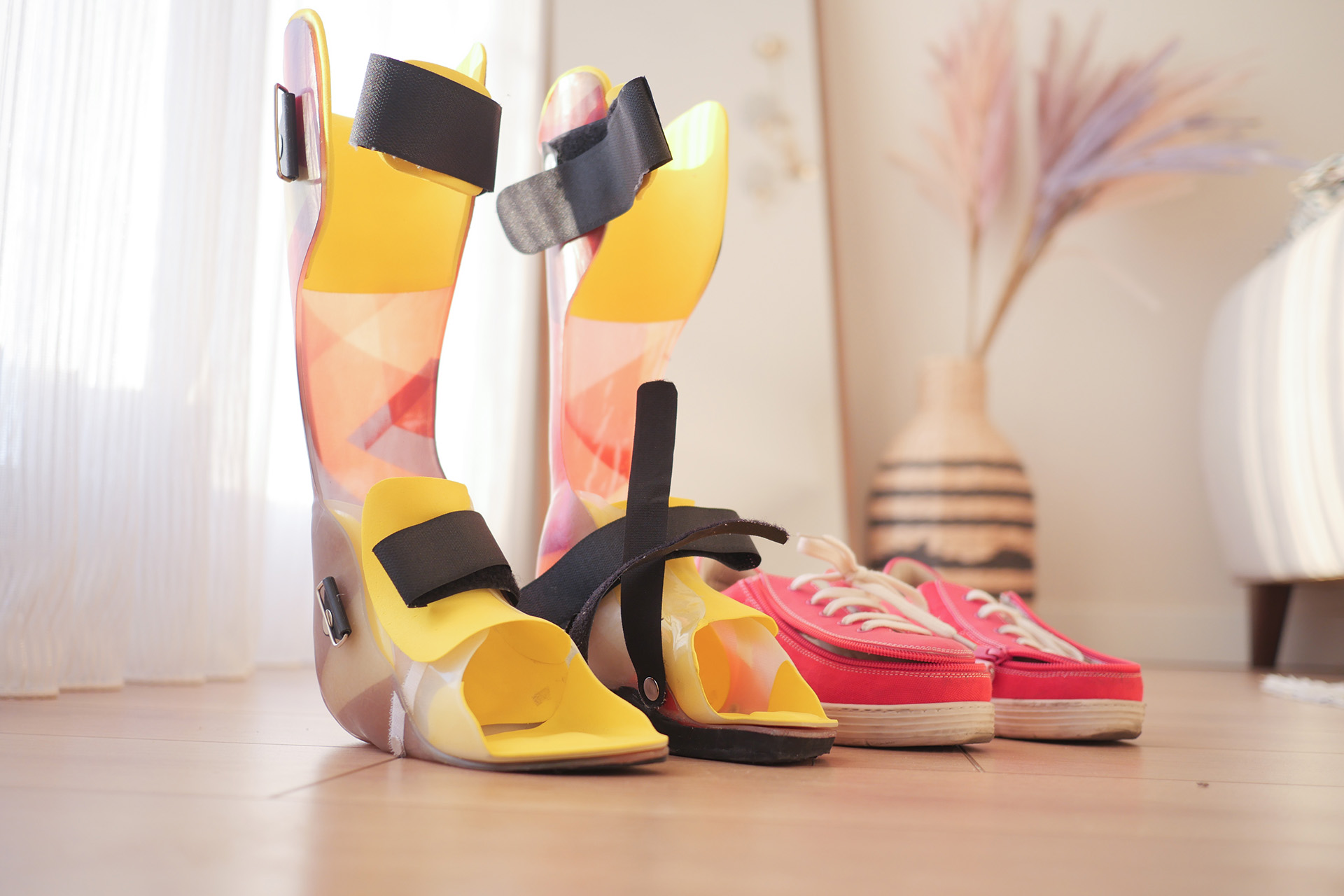
Ankle-Foot Orthosis Types
The right ankle-foot orthosis for you will depend on what you need to sort out, your strengths and weaknesses, and what you’re trying to achieve. The different types of ankle-foot orthoses vary in the amount of movement and plantar flexion they allow, as well as in how they support propulsion and control during the stance phase.
Here are the different types of AFOs that are available:
| Type of AFO | Description & Benefits |
| Solid AFO | Best for significant ankle weakness, instability or pain. A solid AFO provides maximum control, limiting your ankle movement and plantar flexion so you can stay stable and stabilise the joints. Solid AFO designs effectively correct deformities. |
| Hinged AFO | Ideal when controlled movement can improve walking comfort. A hinged AFO is a good option if you have weak ankle muscles and need assistance with dorsiflexion. Hinged AFO designs allow a more natural gait. |
| Posterior leaf spring style AFO | Good for mild foot drop and mild dorsiflexion weakness. It helps lift your foot a bit while remaining lightweight thanks to its low profile. |
| Carbon fibre AFO | Good for active patients who need a bit of energy return while walking. Carbon fibre options are lightweight and can support a more efficient gait during the stance phase. |
| Traditional AFO | A traditional AFO provides reliable support for patients who need to stabilise the ankle and correct deformities. |
Ankle-Foot Orthosis for Foot Drop
An ankle-foot orthosis for foot drop is prescribed when dorsiflexion weakness causes your toes to drag and you frequently risk tripping on them. Foot drop, ranging from mild to severe, involves muscle weakness in the leg and lower leg, affecting the ability to stabilise your gait and often worsens with fatigue. This condition can result from conditions such as stroke, cerebral palsy, peripheral nerve irritation, or lumbar spine issues.
A well-fitted custom ankle-foot orthosis for foot drop aims to improve your toe clearance, reduce pain and compensatory movements, and generally make walking smoother and more efficient. That makes ankle-foot orthoses in Singapore especially helpful, whether you’re commuting between MRT stations or walking through the Bukit Timah Nature Reserve.
Custom Ankle Foot Orthosis
A custom ankle-foot orthosis begins with a thorough assessment and physical examination of your structure, muscle strength, and gait. We need to understand what support you need and ensure the brace is tailored to your needs.
To do so, we’ll look at your ankle joint range of motion (dorsiflexion and plantarflexion), muscle control, any tenderness or swelling, the type of footwear you wear, and how you move under load during the stance phase. This assessment helps determine the appropriate AFO prescription.
Where necessary, we’ll use the following methods to guide the development of your custom ankle-foot orthosis:
- RehaWalk® pressure sensor treadmill gait analysis to map out how you distribute your weight and pressure, and the timing of your movements
- 3D infrared gait analysis to assess how well your joints are working, whether you’re using good walking technique and posture, and if there are any compensations you’re making in the lower limb
- Footwear and shoe assessment to make sure the brace will work with the shoes you wear
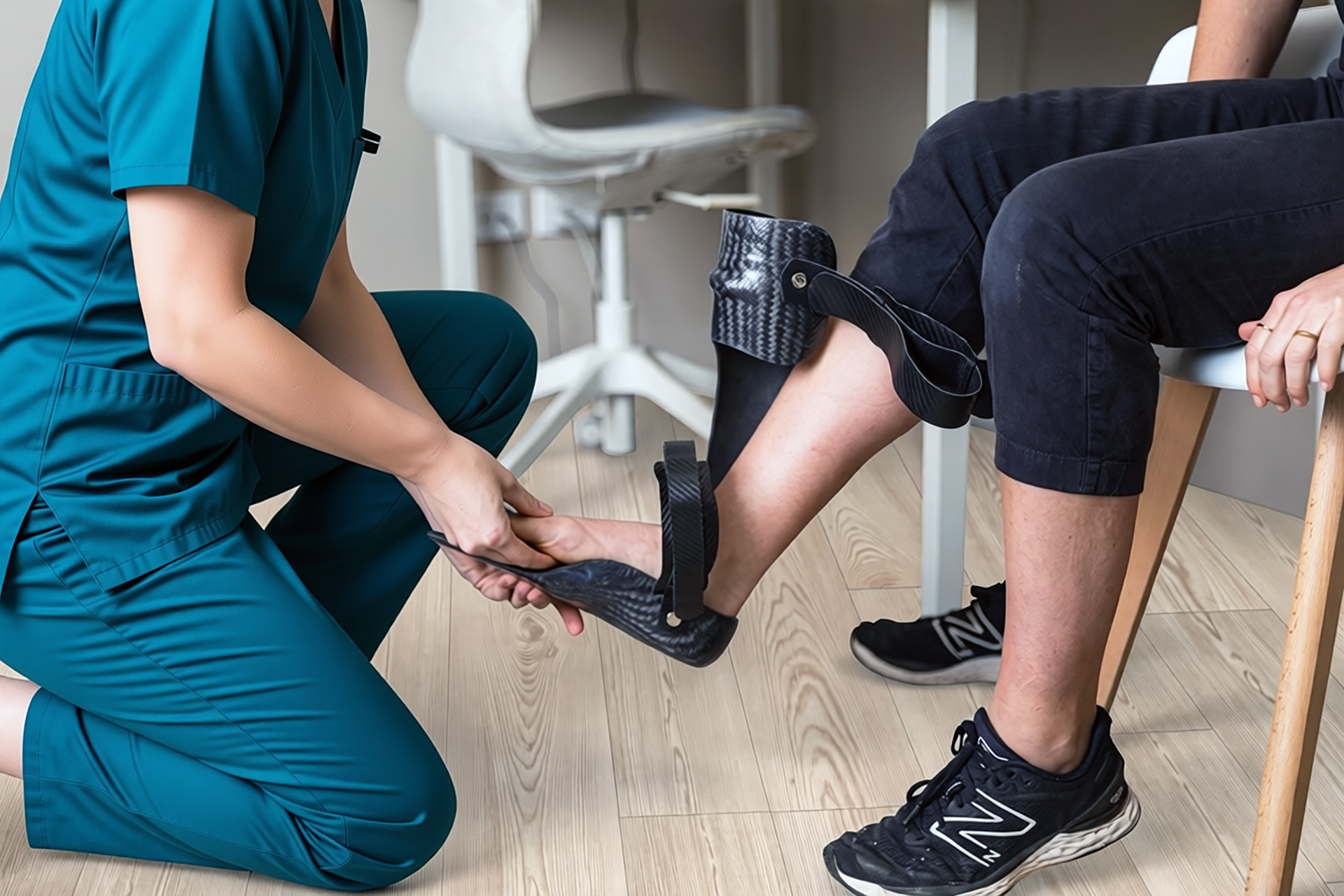
Ankle-Foot Orthosis Fitting and Adjustments
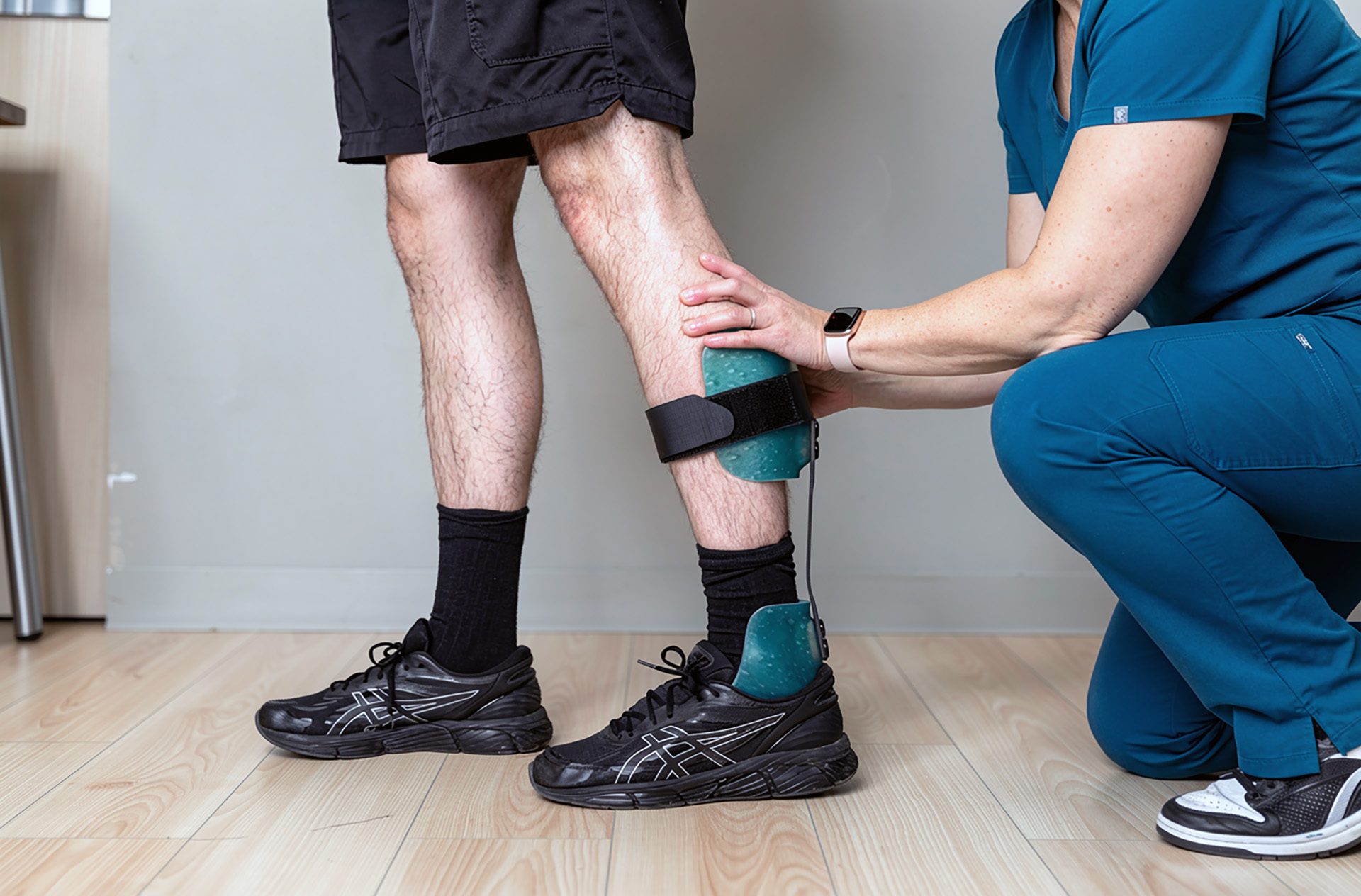
An ankle-foot orthosis must be solid, supportive, and secure, yet comfortable. Proper fitting involves precise strap adjustment, heel comfort, and correct alignment of the arch and lower leg, ensuring compatibility between the brace and the shoe. A few things to keep an eye on:
- Wear long socks to prevent skin irritation and chafing.
- Gradually increase the time you wear the orthosis, especially during the first week.
- Check your skin each time you remove the AFO.
While mild, temporary redness is normal, persistent or painful redness, soreness, or numbness indicates a problem and requires medical attention. Custom AFOs may need fine-tuning, especially if ankle swelling persists or your gait changes as confidence and strength improve.
AFOs for Runners and Active Individuals
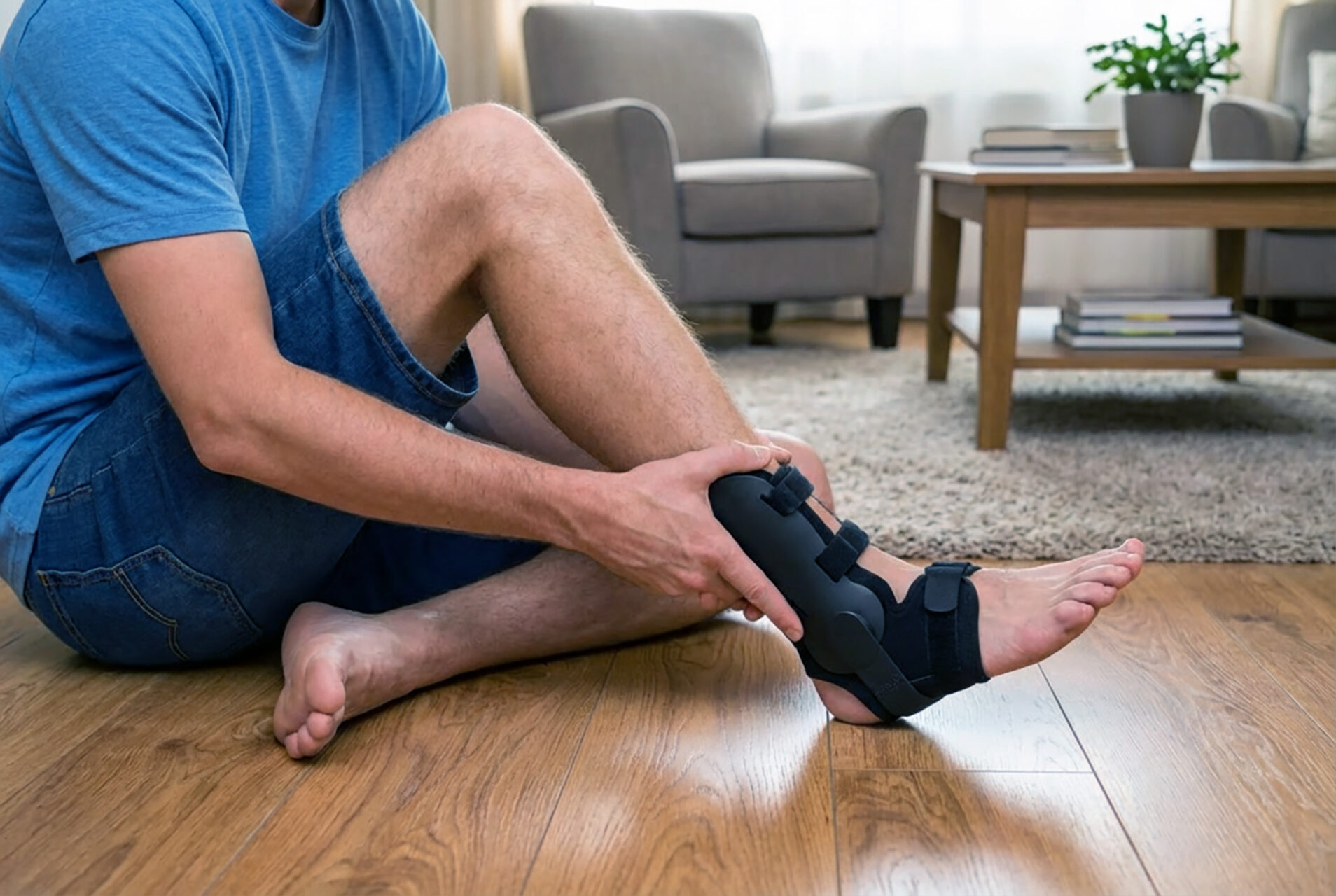
Not all AFO users have neurological conditions. Many rely on them for musculoskeletal issues and for ankle arthritis that needs extra support. AFOs for active patients must accommodate demanding footwear, such as trainers and running shoes.
The key focus for active users is:
- Getting the design to be as low profile design as possible with a lower profile
- Making sure it’s compatible with the shoes you wear for running or other sports
- Working out how to manage the load so you can get back to doing whatever it is you love doing without putting extra strain on yourself, or risking further injury
If you need something lighter, a lightweight AFO might be worth considering, but this depends on the individual case and whether you need to correct deformities or stabilise the ankle.
Why The Foot Practice for Your AFO
If you are getting an ankle-foot orthosis, you likely have a foot issue. That’s what makes The Foot Practice the perfect fit, as we address a broad range of podiatric conditions that can complement your custom ankle-foot orthoses. Importantly, we believe in tackling the root cause through range-of-motion and strengthening exercises rather than bandaging over the problem with temporary solutions.
If you’re experiencing gait issues or discomfort and pain when walking, reach out to our team at The Foot Practice orthotics centre for an initial consultation and assessment of your condition.