

A black toenail usually results from blood pooling beneath the toenail after trauma. Most black toenails follow injury or repeated impact inside shoes. This is a subungual haematoma. A toenail turning black may look red, purple, brown or black.
Other common causes of a black toenail include fungal infection, benign pigmentation and inflammatory skin conditions. In rare cases, a dark streak may be subungual melanoma, a type of skin cancer.
Toenail discolouration alone cannot identify the cause. The timing, discomfort, nail texture and movement of the mark with nail growth provide useful clues.
Symptoms
A black toenail may appear as:
- a dark red, purple, brown or black patch beneath the toenail
- a small black spot under the toenail
- a brown or black line running from the base towards the tip
- a dark toenail that is thick, brittle or crumbly
- a loose or lifting toenail
- tenderness, throbbing or pressure after trauma
A toenail turning black after trauma often changes soon after impact. Other symptoms may include tenderness or throbbing in the affected toe. A clear area should appear near the base, and the dark patch should move towards the tip as the toenail grows.
Bruise, fungus or pigmentation?
| Feature | Bruise beneath the nail | Fungal nail infection | Melanonychia or other pigment |
| Onset | Often sudden after an injury, or gradual with repeated pressure | Usually gradual | Usually gradual, sometimes noticed without an injury |
| Appearance | Red, purple, brown or black patch | Often white, yellow or brown, sometimes darker with debris | Brown or black band, line or diffuse colour |
| Pain | May throb or feel tender, especially at first | Often painless early | Often painless |
| Nail texture | May lift or loosen after injury | Often thick, brittle or crumbly | May remain smooth, but a suspicious lesion can split or distort the nail |
| Pattern over time | Usually moves towards the tip with nail growth | May spread through the nail or to other nails | May remain in place, widen or change |
These black toenail features are clues, not a diagnosis. Arrange an assessment if the cause is uncertain.
Most Common Causes of a Black Toenail
Injury and subungual haematoma
Stubbing your toe or dropping a heavy object on it can break small blood vessels in the nail bed, causing dark purple or black discolouration. Blood pooling beneath the toenail can create pressure and throbbing.
Repetitive trauma from tight shoes, long walks or running can cause the same damage. Wearing shoes that are too short increases the risk. The big toe, or longest toe, may repeatedly impact the shoe. This is often called runner’s toe.
Fungal nail infection
A fungal nail infection usually causes white, yellow or brown discolouration, with thickening, crumbling or lifting. Debris or pigment can sometimes make it look darker. A thick black toenail is not necessarily fungal.
Not every dark or thick toenail is fungal. Examination and, when needed, a nail sample can help confirm the cause. Read more about black nail fungus or the toenail fungus assessment and care pathway.
Melanonychia
Melanonychia is brown or black pigment within the nail plate. It may form a lengthwise band or affect more of the nail when pigment-producing cells deposit melanin into the growing nail.
Melanonychia can be benign. Natural pigmentation is more common in darker skin and may affect several nails. Trauma, medicines, inflammatory skin conditions and infection can also cause it.
A new or changing band in one toenail still needs assessment. In rare cases, subungual melanoma can cause a black toenail. Appearance alone cannot reliably distinguish a harmless cause from melanoma.
Splinter haemorrhages
Splinter haemorrhages are thin red, brown or black lines caused by damage to small vessels beneath the nail. They often follow minor trauma.
Contact a healthcare provider if splinter haemorrhages appear without recent trauma, affect several nails or occur with fever, shortness of breath or feeling unwell.
Melanoma of the nail unit
Subungual melanoma is a rare but serious form of skin cancer. It can affect the nail matrix, nail bed or surrounding skin.
Warning signs can include:
- a new brown or black band in one nail
- a band with multiple colours, or one that becomes wider, darker or more irregular
- blurred or uneven borders
- pigment spreading beyond the nail or onto the cuticle
- splitting, lifting or distortion of the nail
- a bump, ulcer, bleeding or persistent discomfort
- a dark area that does not move towards the tip as the nail grows
These changes do not always mean melanoma, but they require prompt medical assessment. A dermatologist or another appropriate specialist may use dermoscopy and may recommend a nail-unit biopsy.
Other causes
Psoriasis, eczema and lichen planus can change nail colour or structure. Some medicines can cause discoloured toenails, often in more than one nail. Nail polish, dye or other external substances can also stain the nail.
Underlying medical conditions can affect nail health, but don’t assume an underlying condition explains a black toenail. Diabetes, reduced sensation and poor circulation can make an unnoticed injury or infection more serious.
When to Seek Care for Black Toenails
Arrange a prompt assessment of a black toenail if:
- The black area appeared without known trauma
- The discolouration does not move towards the tip as the nail grows
- A dark band is widening, changing or spreading onto nearby skin
- The nail is splitting, lifting or becoming distorted
- There is a bump, ulcer or bleeding beneath or around the nail
- Discomfort is severe or throbbing
- The toe is deformed, or you cannot put weight on it after an injury
- Redness, warmth, swelling, pus or a foul odour develops
- You have diabetes, poor circulation, reduced sensation or a weakened immune system
Seek urgent medical care after severe crush trauma, for uncontrolled bleeding or when you suspect a fracture.
Diagnosis
A healthcare provider will ask when the discolouration appeared, about injuries and activities, and how your shoes fit. A foot and ankle assessment includes the affected toenail, surrounding skin, other nails and the affected toe.
Depending on the findings, further assessment may include:
- photographs to monitor whether the mark moves with nail growth
- dermoscopy to examine pigment or discolouration more closely
- toenail clippings or scrapings if fungal infection is suspected
- an X-ray when a fracture may be present
- referral for a nail-unit biopsy if melanoma cannot be excluded
If thickening is the main change, read about causes of thick toenails.
Treatment
The right treatment for a black toenail depends on the cause. Options include monitoring or medical treatment for trauma, infection or suspicious pigment.
Minor bruising
In mild cases, a subungual haematoma may need only protection from pressure. Rest the foot, use a cool compress and protect the toe in roomy shoes. Do not pull off a loose toenail.
Painful blood beneath the nail
A clinician may treat a recent subungual haematoma by making small holes in the toenail to drain blood and relieve pain and pressure. This treatment is most useful within 24 to 48 hours of trauma. Do not pierce or cut the nail at home because this can cause infection or further injury.
A severe injury, deep cut, fracture or damaged nail bed may need further treatment. For a partly detached nail, see nail avulsion and nail-bed injury.
Fungal changes
A healthcare provider may treat confirmed fungal infection with topical and oral antifungals. Treatment options depend on its extent and your health. Oral medication requires assessment and monitoring during treatment. If you use oral medication, follow the prescribed course. Do not treat an unexplained black toenail with an over-the-counter antifungal. If left untreated, toenail fungus may spread. See the dedicated toenail fungus care page.
Pigmentation or suspected melanoma
Do not treat, remove or lighten unexplained pigment. A suspicious lesion needs medical assessment. If melanoma is diagnosed, a specialist team plans treatment from the biopsy findings and extent of disease.

Recovery
In most cases, a toenail that turned black after trauma should gradually move towards the tip as the toenail grows. This can take many months. If a toenail falls off after an injury, full regrowth can take up to 18 months.
The new nail may grow with ridges or thickening if the nail matrix was damaged. Arrange a review if the black area stays near the base, widens, returns or does not move with nail growth.
Prevention
You cannot prevent every black toenail, but you can reduce repeated trauma:
- choose properly fitting shoes with enough length, width and depth for your toes
- avoid shoes that press the toenails or allow the foot to slide forwards
- secure sports shoes so the heel does not move excessively
- replace worn footwear that no longer holds the foot securely
- keep toenails short and cut them straight across
- increase running or hiking distance gradually
- wear activity-appropriate protective footwear
- wear clean, dry socks during exercise
- check your feet after exercise, especially if you have reduced sensation
Keeping feet clean and dry also helps lower the risk of fungal infection.
Podiatry Assessment in Singapore
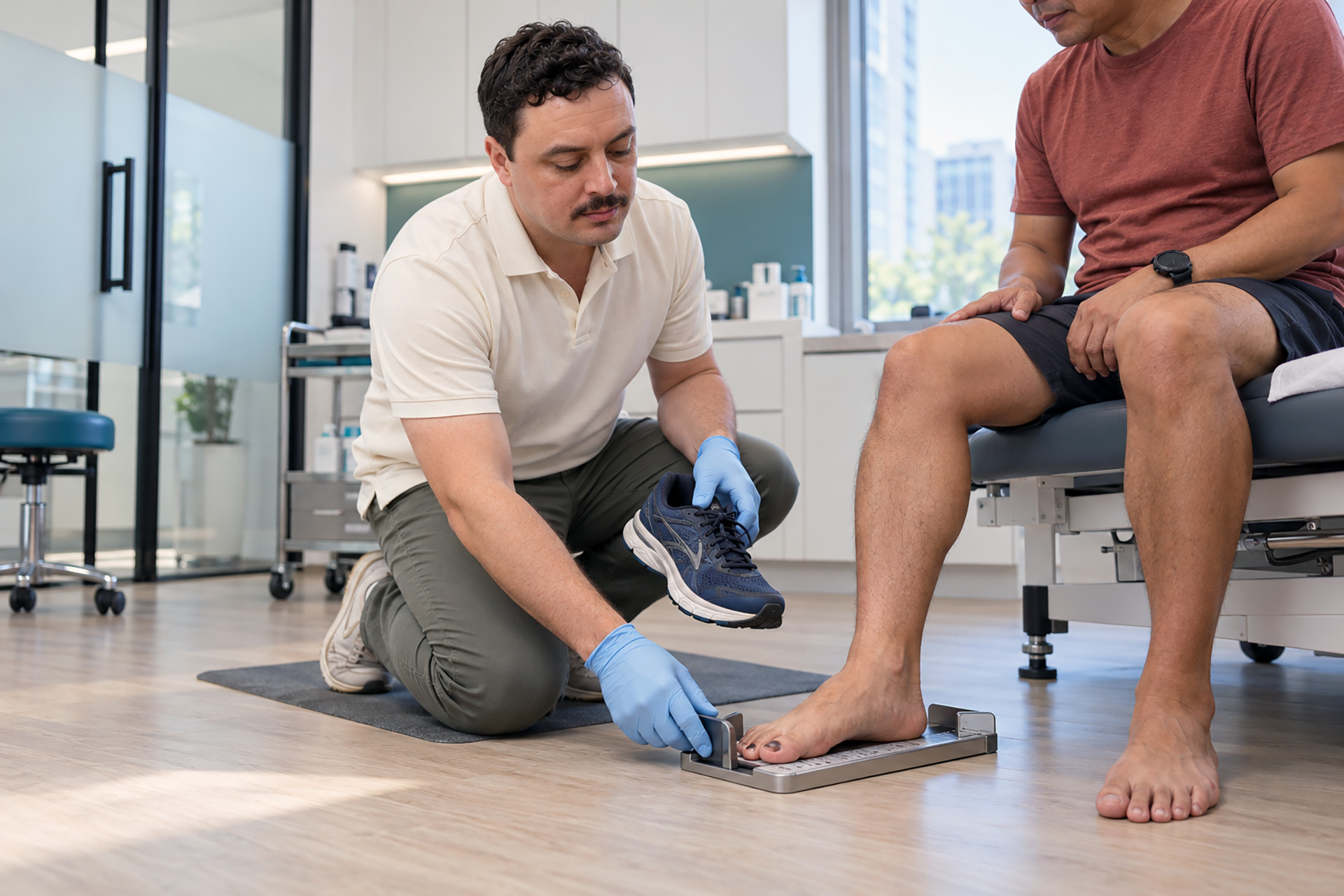
The Foot Practice’s podiatrists can perform a foot and ankle assessment, examine the black toenail, assess footwear, consider fungal testing and refer for medical or dermatology review when needed.
Book a podiatry appointment if the cause is uncertain, the nail is painful or lifting, or the change is not growing out.
Frequently Asked Questions
Why is my toenail black?
The most common causes of a black toenail are impact and shoe pressure. A black toenail is usually caused by trapped blood. If the toenail turned black without trauma, fungal infection or pigmentation is possible. Nail-unit melanoma is rare.
Can a black toenail occur without pain?
Yes. An older haematoma, repeated trauma, fungal infection or melanonychia may cause no pain. Seek assessment if the mark is unexplained, changing or not growing out.
How can I tell whether a black toenail is fungus or a bruise?
A bruise often follows pressure and moves towards the tip as the nail grows. Fungus develops slowly and may make the toenail thick, brittle or crumbly. Testing may be needed before treatment.
Will a black toenail fall off?
In most cases of minor trauma, the toenail stays attached. It may loosen after a substantial injury. Do not pull it away. Seek care for severe discomfort, partial detachment, a deep cut or signs of infection.
When should I worry about a black line on a toenail?
Arrange prompt medical assessment for a new or changing line, especially if it widens, has irregular colour or borders, spreads onto nearby skin, splits the nail or does not move as the nail grows.