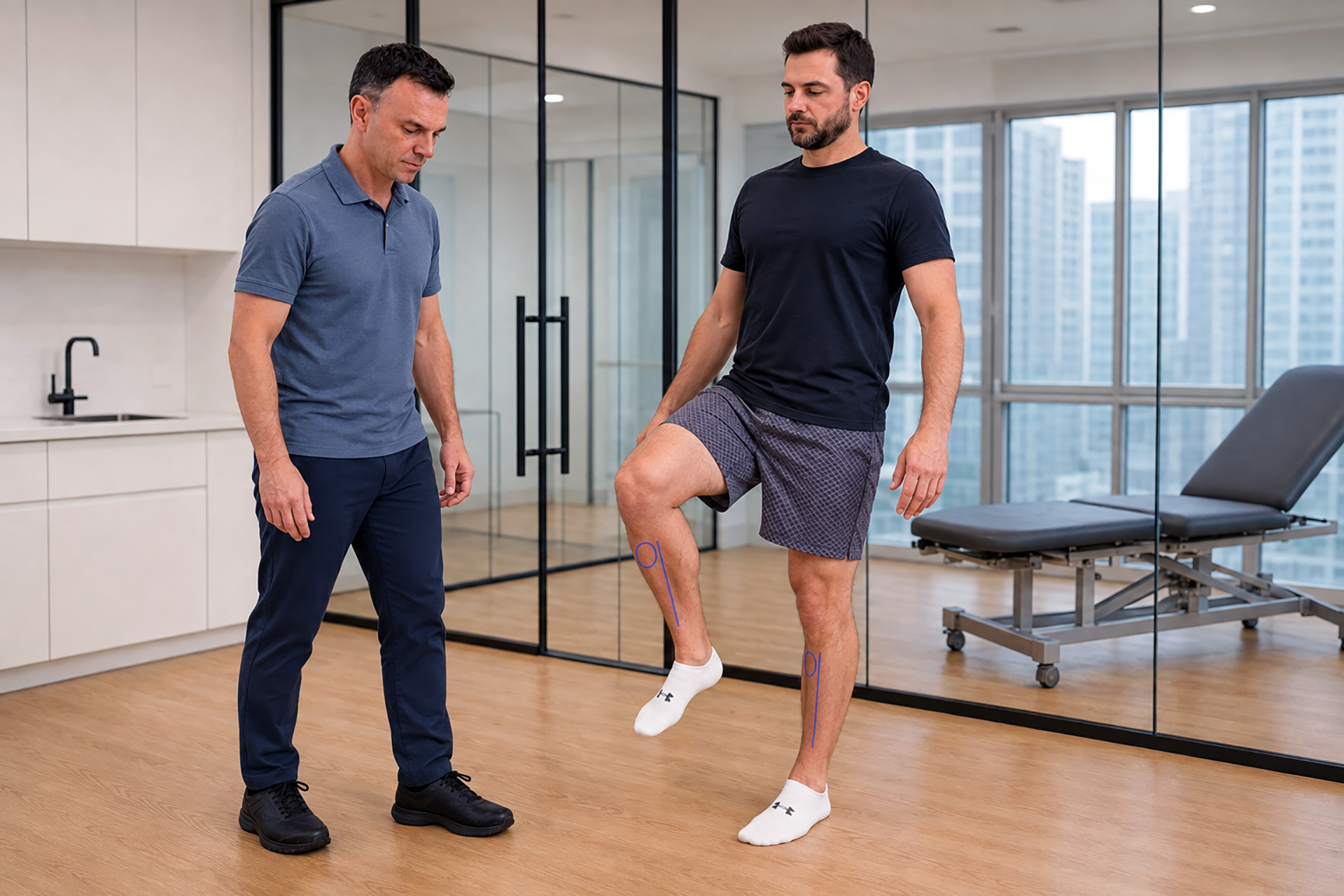
What Is an Anterior Shin Splint?
Pain at the front of the shin can have several causes, including muscle or bone stress problems. Medial tibial stress syndrome usually affects the inner edge of the shin; an assessment is needed to identify the cause of a particular person’s pain.
The tibialis anterior muscle lifts the foot and helps control it as the heel touches the ground. It can become painful with overuse, but front-of-shin pain can also arise from bone stress injury or compartment problems.
Shin pain during running can have several causes, including medial tibial stress syndrome and a bone stress injury. Persistent or focal pain needs assessment rather than an assumption that it is a simple shin splint. If you cannot bear weight or have severe pain, seek urgent medical care. Sudden severe pain with a tense swollen leg, numbness or weakness is an emergency; call 995 in Singapore.
Factors a clinician may consider in exercise-related shin pain include a sudden increase in running distance, an abrupt increase in hill or interval running, uneven or hard surfaces, worn-out running shoes, flat feet, overpronation, calf tightness, and lower-leg fatigue. These changes can occur during race preparation or a return to strenuous training after a break.

Symptoms
Shin splints symptoms usually include aching or sharp pain along the front of the shin that worsens with running, jumping, uphill walking, or fast walking. Symptoms often begin gradually. Some notice stiffness at the start of an activity that improves as they warm up, only to return later in the session.
Tenderness is often felt along the front or front-outer border of the tibia in the affected area. You may also have mild swelling, a sense of fullness in the lower-leg muscles, or fatigue in the muscles that lift the foot. Other symptoms can include cramping or weakness in the front of the ankle and foot, especially after harder sessions.
Pain location can provide useful information, but it cannot rule out a stress fracture. Persistent or focal shin pain, pain at rest or difficulty bearing weight needs medical assessment.
When to See a Podiatrist
Persistent or worsening shin pain deserves assessment. Severe pain, difficulty bearing weight or focal pain also needs medical assessment because a bone stress injury is one possible cause.
Focal shin pain, pain at rest or pain that persists despite reduced activity needs medical assessment. A bone stress injury or another condition may cause similar symptoms; shin pain does not inevitably progress to a fracture.
Diagnosis
Diagnosing shin splints starts with a careful review of your symptoms, training history, footwear, and lower-limb mechanics. A podiatrist will ask when the pain began, whether you’ve recently increased distance, hills, or speed, what running shoes you use, and whether you have changed them recently. They will also ask about risk factors such as low bone density, low energy availability, menstrual changes, Vitamin D deficiency, or previous stress injuries when relevant.
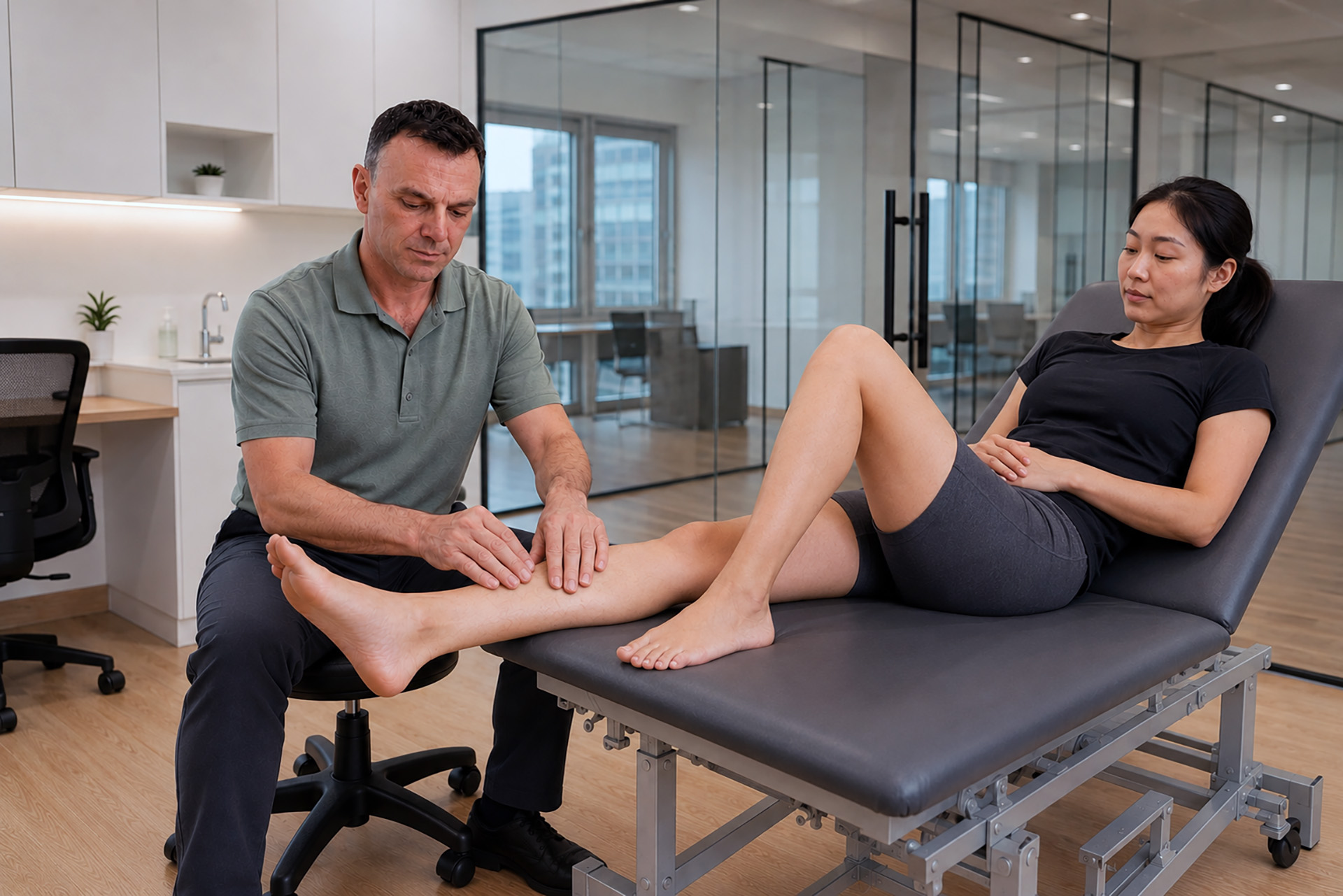
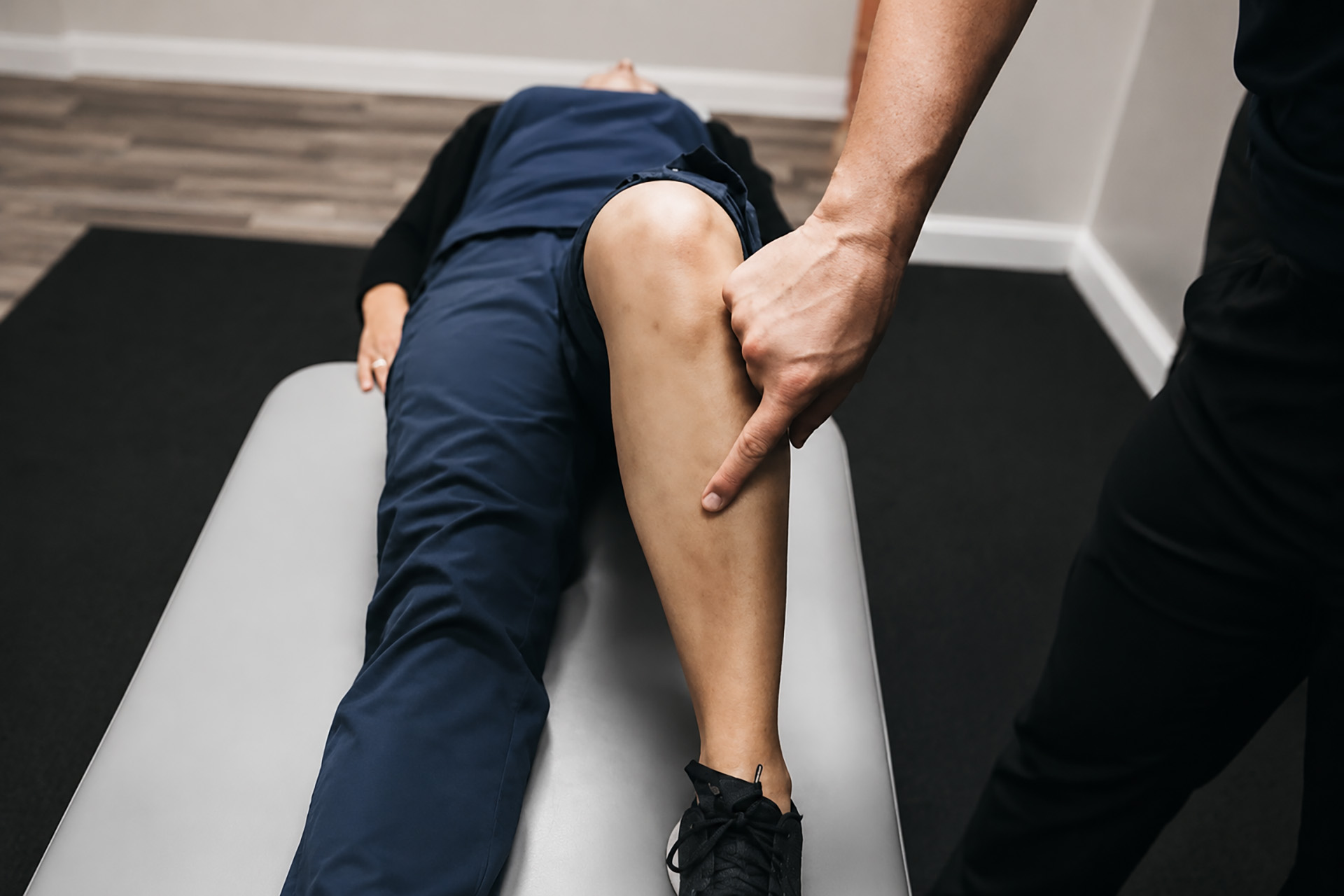
The examination usually includes pressing along the tibia to map the tenderness in the affected area, checking ankle motion, testing calf and tibialis muscle strength, and observing foot posture and gait. A podiatrist may watch you walk or run to see whether flat feet, flat arches, overpronation, running style or stride mechanics are adding stress to the front of the shin. As part of this assessment, gait assessment and footwear review may provide useful information but do not independently establish the diagnosis.
Imaging isn’t always needed, but we may recommend it if we suspect a bone stress injury, symptoms are severe, or progress isn’t as expected. X-rays are often the first step, but early stress fractures do not always show up on these scans. Magnetic Resonance Imaging (MRI) or a bone scan (a nuclear imaging test) can help when the concern remains high.
Non-Surgical Management
Non-surgical management for shin splints focuses on reducing the overload, calming symptoms, and gradually rebuilding the lower leg muscles’ capacity. Home treatment often begins with relative rest, such as reducing painful running and jumping rather than stopping all exercise. Many runners can stay active by cross-training with low-impact exercises such as cycling or swimming while their shins settle. This helps because cross-training maintains blood flow and fitness with less impact than running, provided the activity remains comfortable, giving your shins a rest without compromising your overall activity. A wrapped cold pack may provide temporary comfort if skin sensation and circulation are normal. Avoid direct skin contact and stop if the skin becomes painful or numb.
Comfortable, well-fitting footwear may be considered alongside an individual return-to-activity plan. Shoes or insoles do not reliably prevent shin splints or distribute force evenly for everyone.
As the pain settles, exercise becomes central to treating shin splints. Anterior shin splints stretches may include calf stretching, Achilles tendon stretching, and ankle mobility work, especially when calf tightness limits ankle movement and increases strain on the muscles at the front of the leg. Anterior shin splints exercises often include progressive strengthening exercises for the tibialis anterior and tibialis posterior muscles, the Achilles tendon, the lower leg and calf muscles, and the foot muscles, as well as balance work and later hip and core strength to improve whole-limb mechanics and reduce stress on the shin bone.
Some patients also ask about taping for anterior shin splints. Taping can sometimes help relieve pain, especially during the transition back to exercise, but it is not a stand-alone solution. Use it with other intervention strategies, such as strengthening exercises or stretching routines. The same applies to compression sleeves or braces. These may help some patients with anterior shin splints feel more comfortable, but they do not correct the training errors or biomechanical factors that may have caused the problem. Management should follow the diagnosis rather than assume that every case has one mechanical cause.
A gradual return to activity can be planned with a clinician according to symptoms and the diagnosis. Progress varies, and no timeline guarantees that shin pain will not recur. Focal pain, pain at rest or difficulty bearing weight needs medical assessment.
Posterior shin splints and medial tibial stress syndrome follow a similar staged recovery approach. Treatment options for shin splints include rest, ice, physical therapy and progressive rehabilitation. Home treatment should include cross-training, stretching and avoiding sudden increases in load.
Surgical Options
Surgical options for shin splints are rarely needed and are not part of the routine care for straightforward cases. Most patients improve with load management, footwear changes, supportive care and a structured strengthening exercises programme. A surgeon may discuss treatment for a different confirmed diagnosis or, rarely, persistent symptoms that have not responded to appropriate non-surgical care.
For example, if ongoing lower leg pain is caused by exertional compartment syndrome rather than shin splints, orthopaedic surgeons may occasionally discuss surgical release of the involved compartment. If a tibial stress fracture is confirmed, the plan changes as well, with more protected healing rather than standard shin-splint-style management. These cases are relatively rare; shin splints are usually managed non-surgically through physical therapy and staged exercise programmes.
Risks and Recovery
Recovery varies with the diagnosis and individual circumstances. Persistent, focal or worsening pain needs reassessment; no fixed recovery time applies to everyone.
Persistent or focal shin pain needs assessment because several conditions, including a bone stress injury, can cause similar symptoms. Resting until pain settles and then resuming the same load may also lead to symptoms returning.
Get Help for Anterior Shin Splints
Persistent shin pain deserves assessment before continuing painful impact exercise. If you have shin splint symptoms along the front of your shin that keep returning, worsen with exercise, or make it harder to play sports and carry out daily activities, it may be time for a proper podiatry assessment.
At The Foot Practice in Singapore, our podiatrists assess not just the affected area, but also your gait, running shoes, foot posture and exercise load. This helps us build a personalised, holistic treatment plan around load modification, footwear advice, orthotic support where appropriate, progressive stretching routines, and strengthening exercises. Contact The Foot Practice today to arrange a consultation and get a clearer path towards recovery and discuss suitable care.