

What is Black Nail Fungus?
Black nail fungus is a fungal nail infection that causes black, brown, or grey discolouration. Other common causes of black toenails include injury, bleeding or changes in nail pigment. Colour alone cannot confirm the cause. This fungal nail infection is also called onychomycosis.
Have a new or changing dark band assessed before starting treatment for toenail fungus, even if you suspect a black spot from nail fungus.
Symptoms
Fungal nail symptoms usually develop gradually and may affect the entire nail. Your toenail may have:
- Brown, grey or black areas, sometimes alongside white or yellow discolouration
- Thickening or a change in toenail shape
- Brittle, splitting or crumbly toenail edges
- Fungal debris beneath the infected nail
- Lifting of the nail plate away from the nail bed
Odour can occur, but it does not confirm a fungal infection. Redness, swelling, pus or marked pain may indicate a bacterial infection or another problem.
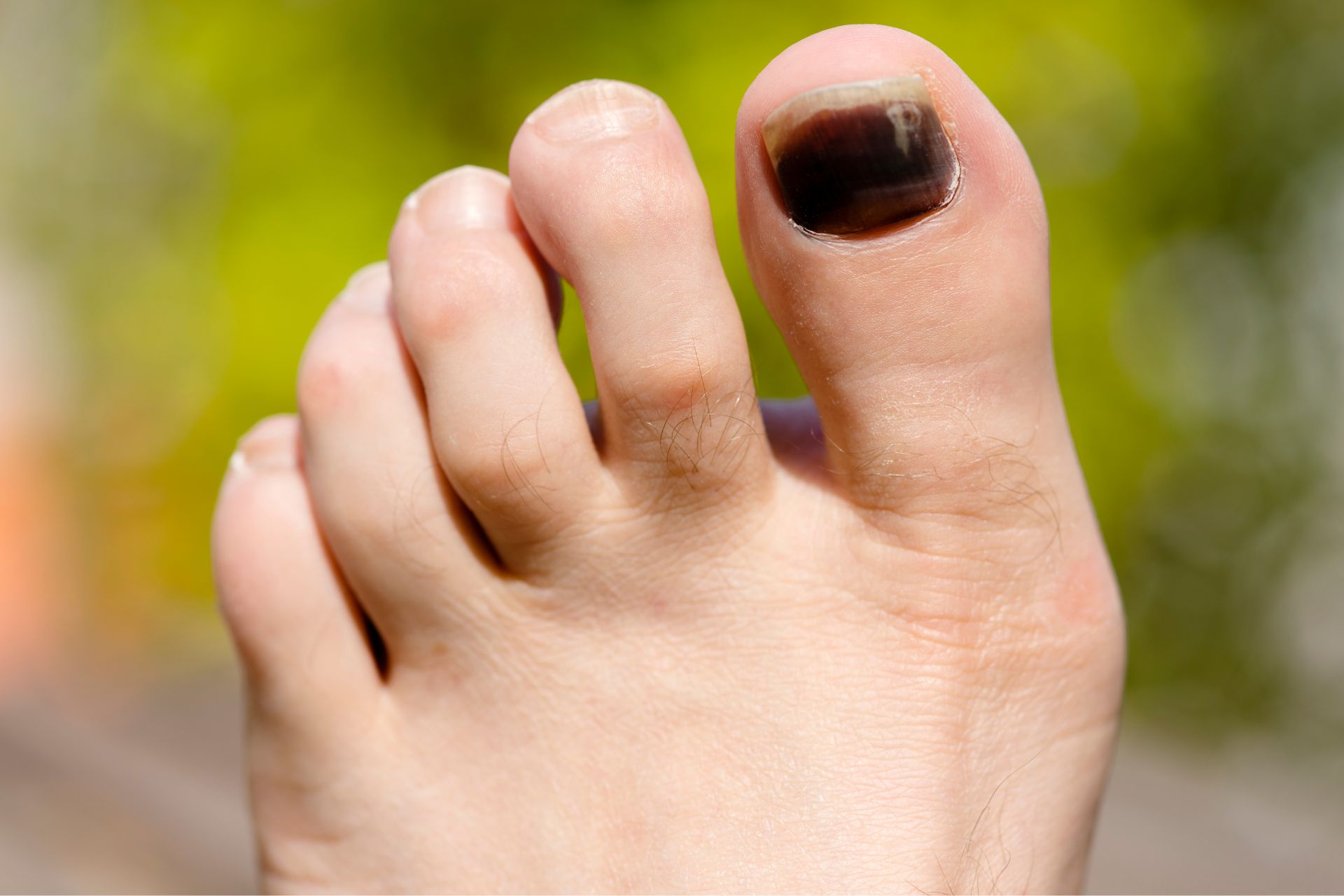
Why Can Nail Fungus Look Black?
Black toenail fungus under the nail may be caused by dark debris between the nail plate and nail bed. Dermatophytes, moulds and yeasts can cause a fungal toenail infection. Some fungi produce dark pigment, and fungal infection can also stimulate pigment production and darken the nail. Pigmented fungal nail infection is called fungal melanonychia, an uncommon form of onychomycosis.
Dark colour does not necessarily mean the infection is severe. A black toenail after running or an impact may develop when blood collects between the nail and nail bed, called a subungual haematoma, rather than fungus. A dark band may also have a pigment-related cause, including, in rare cases, nail melanoma, a type of skin cancer.
Causes and Risk Factors
Warm, damp environments encourage fungal growth. Fungal spores can reach feet through direct contact with infected skin or contaminated surfaces. Damp footwear, sweaty socks, nail damage and untreated athlete’s foot can increase your risk of a toenail infection. Diabetes, impaired blood flow and a weakened immune system also put you at higher risk of infection or complications. Toenail fungal infections are more common in older adults.
Tight shoes and repetitive stress from running can damage a toenail and make fungal infection more likely. However, a runner’s black toenail is often caused by bleeding after repeated impact.

When to Seek Care
See a podiatrist for symptoms such as:
- A dark band or spot appears without a clear cause
- The dark area widens, changes colour or does not move towards the tip as the nail grows
- Pigment spreads onto the cuticle or surrounding skin
- The toenail becomes distorted, develops an unexplained sore, or repeatedly bleeds
- Changes persist despite appropriate treatment
These changes do not prove melanoma, but they need assessment. A dermatologist may examine the nail with magnification and recommend a biopsy if the findings are suspicious. Do not wait for pain.
Seek prompt medical care for severe pain, spreading redness, increasing warmth or swelling, pus, fever or an open wound. If you have diabetes, poor circulation or reduced sensation, seek advice before attempting self-care.
Diagnosis
Your podiatrist or doctor will examine the affected nail, nail bed, and other nails, and ask about injury, footwear, medicines, and underlying health conditions. They may test toenail clippings or scrapings to confirm fungus, especially before starting oral antifungal treatment.
Blood beneath the nail, psoriasis and pigment disorders can resemble fungal infection. A fungal test does not replace assessment of a suspicious dark band. Further examination or dermatology referral may still be needed.

Management of Black Nail Fungus
Treatment for a black toenail fungal infection depends on the diagnosis, how much of the toenail is affected and your general health. Black toenails alone are not a reason to remove the nail.
- Topical treatments with nail-specific antifungal lacquers or solutions may help selected mild fungal infections in the early stages. Ordinary antifungal creams for skin often do not penetrate a thick toenail sufficiently. A pharmacist or doctor can advise whether a product is suitable.
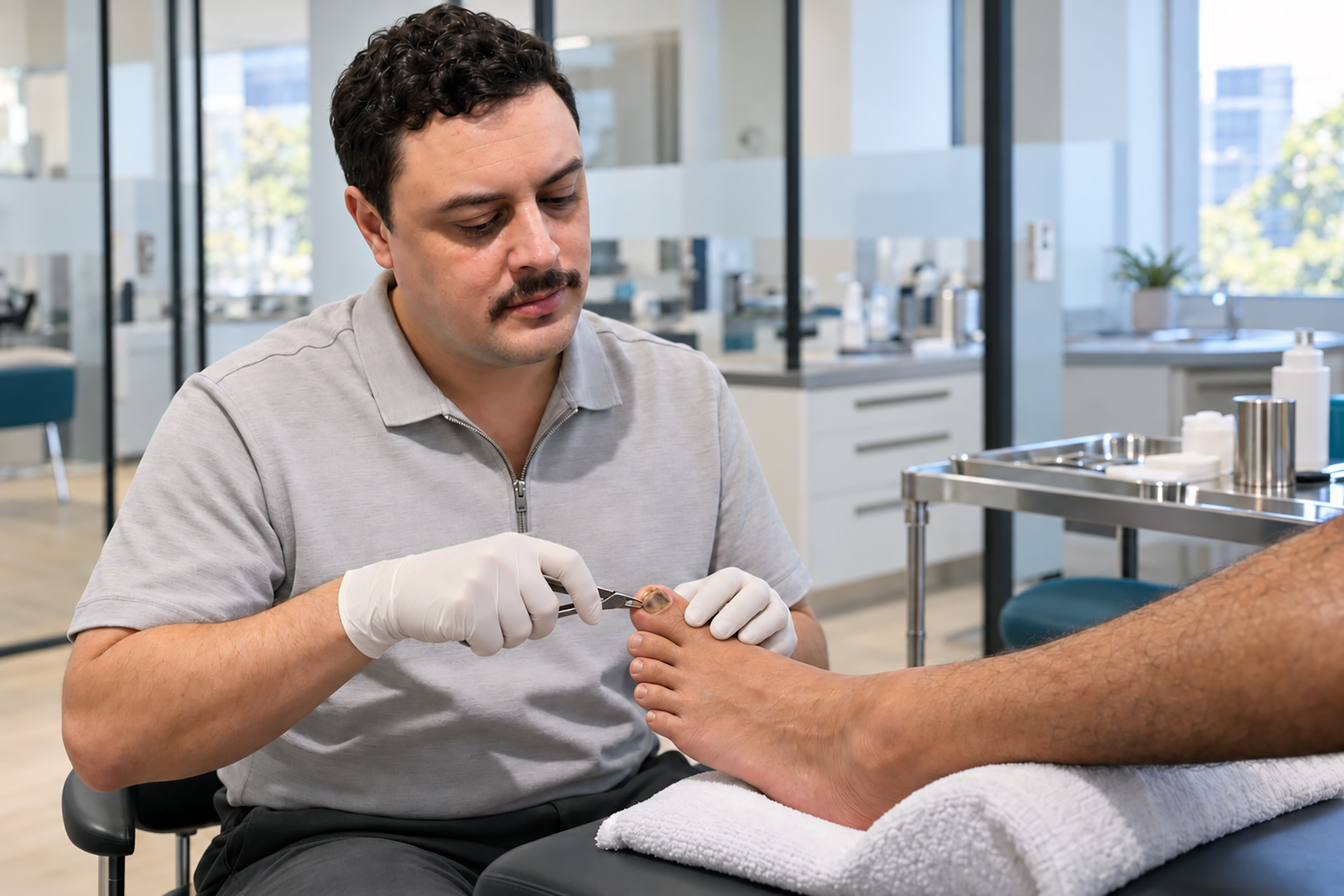
- A podiatrist can trim and thin fungal nails to reduce pressure, pain and discomfort. This may also help topical treatments reach the affected area. Debridement alone does not reliably clear the fungal infection.
- A doctor may prescribe oral antifungal medications for more extensive or persistent fungal infection. Before you use these prescription medications, your doctor will check for drug interactions and underlying health issues and may arrange blood tests.
- Nail removal is reserved for selected severely damaged or troublesome toenails. Removing the nail alone does not eliminate fungus, and infection can return.
Evidence for laser treatment and other light-based therapies is less consistent than for established antifungal medicines. They should not be described as guaranteed cures. Vinegar and tea tree oil are not established substitutes for antifungal care.
Read more about the assessment process and treatment options for toenail fungus.
Recovery and Recurrence
Improvement appears as healthy nail grows from the base. Because toenails grow slowly, it may take about 12 to 18 months to grow out fully. You may see improvement early, but the nail does not return to normal immediately after the infection is controlled.
Follow the prescribed treatment course and arrange follow-up if symptoms persist or worsen. Fungal infection can return after successful treatment.
Reducing the Risk of Recurrence
- Keep your feet clean and dry them thoroughly, especially between the toes
- Change damp socks to keep feet dry and let shoes dry between uses
- Wear shoes that are breathable and fit properly, with room for your toes
- Trim toenails straight across without cutting them too short or damaging the surrounding skin
- Wear sandals or flip-flops in communal showers, changing areas and around swimming pools. Do not walk barefoot in these areas
- Do not share nail clippers, shoes or towels, and clean foot care tools after use
- Seek care for athlete’s foot and recurring nail damage
These steps reduce risk but cannot prevent every fungal infection of the feet. If fungal nails are difficult to trim safely, ask for professional nail care.
Podiatry Assessment in Singapore
The Foot Practice can assess black or thickened toenails, review footwear pressure and provide skin and nail care advice. Your podiatrist can identify when you need medical testing, prescription medicine or dermatology assessment.
Frequently Asked Questions
How do you treat black nail fungus?
First, confirm that fungus is causing the dark colour. Depending on the extent of infection, treatment may include nail-specific topical medicine, doctor-prescribed oral antifungals and professional thinning of an affected fungal toenail. A suspicious dark band needs medical assessment before treating toenail fungus.
Does nail fungus turn black when dying?
No. Black colour is not a reliable sign that fungus is dying. Improvement usually appears as a clearer nail growing from the base. Reassess persistent or changing dark pigmentation, especially if it forms a band or extends onto the surrounding skin.
What happens if black toenail fungus is left untreated?
A confirmed fungal toenail infection may persist, thicken or damage the toenail and spread to other nails or nearby skin. Some cases remain mild, while others cause discomfort. People with health conditions such as diabetes, poor circulation or a weakened immune system need particular care because complications can be more serious.