What Is Shockwave Therapy for Achilles Tendonitis?
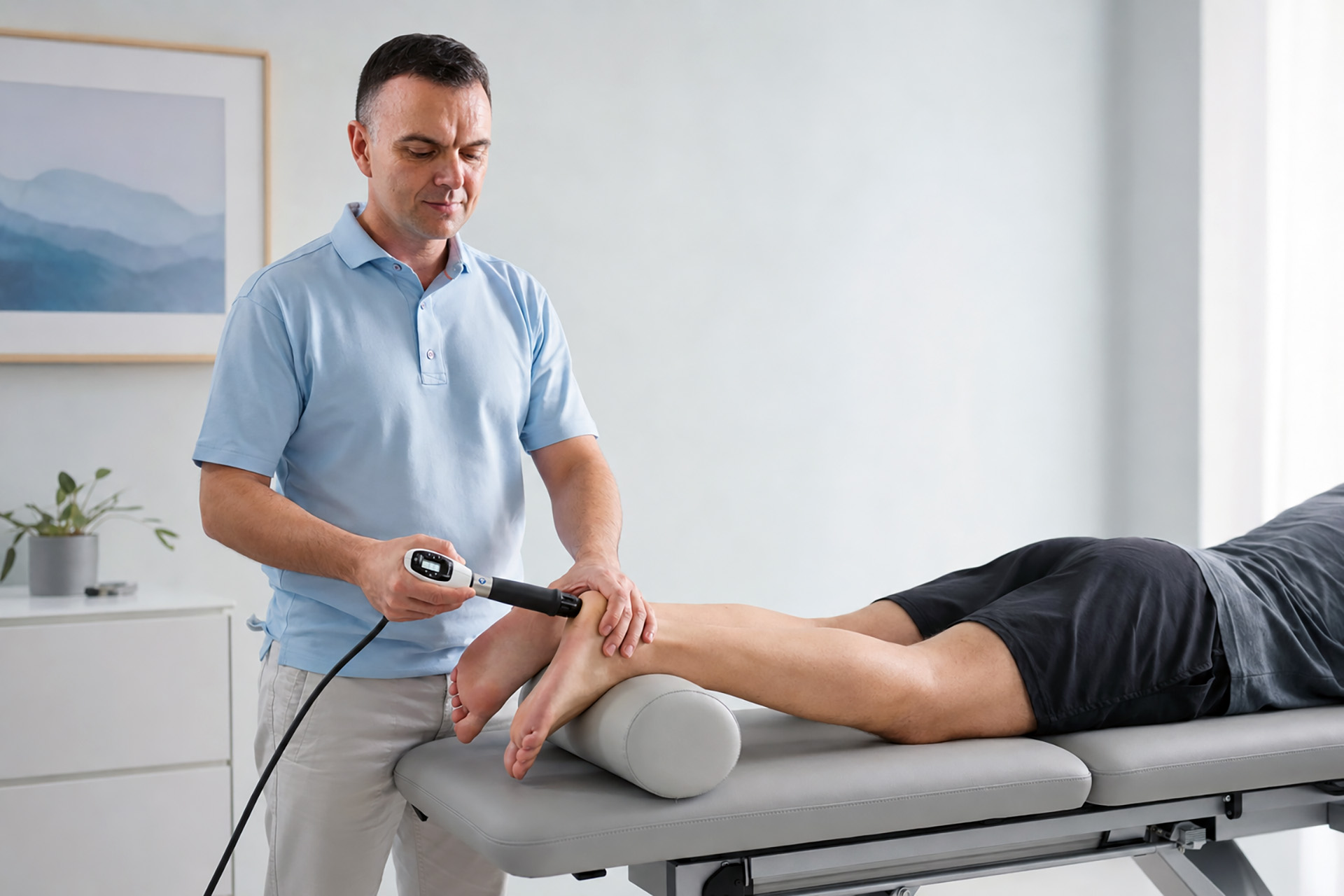
Shockwave Therapy for Achilles tendonitis is a non-surgical, non-invasive approach that uses acoustic waves to support tissue healing. Also called Extracorporeal Shockwave Therapy (ESWT), this innovative treatment delivers high-energy sound waves through the skin to the affected area using a handheld device. It can treat many conditions, and physiotherapists have found it highly useful for Achilles tendonitis, a common condition that affects runners, athletes, and Singaporeans who enjoy walking.
The Achilles tendon connects the calf muscles to the heel bone and plays a central role in walking, running and push-off. When this tendon becomes overloaded by repetitive strain or a sudden increase in training load, it can become painful, stiff, and slow to settle. This can worsen if symptoms have been present for weeks or months, creating a vicious cycle and potentially altering a person’s gait to compensate for Achilles tendon pain or stiffness.
Many people look into Shockwave Therapy when rest, stretching, and traditional treatments have not brought substantial improvement for Achilles tendonitis. In podiatric care, Shockwave Therapy is usually considered for persistent Achilles tendinopathy rather than a very recent flare-up. However, Shockwave Therapy is not a one-size-fits-all solution, nor is it an immediate remedy. It is best viewed as one part of a broader treatment plan rather than a stand-alone answer.
When Might Shockwave Therapy Be Recommended?
Shockwave Therapy may be recommended when Achilles tendon pain has not improved enough with other forms of conservative care. This usually means Achilles tendonitis symptoms have persisted despite activity modification, progressive loading exercises, footwear changes, and, where appropriate, orthotic support.
At The Foot Practice, our podiatrists decide whether to use Shockwave Therapy based on the tendon’s behaviour, symptom duration, and the severity of the factors driving overload. This matters because Achilles tendonitis affects people differently, so treatment plans must match each person’s condition.
Some people have pain in the mid-portion of the tendon, a few centimetres above the heel. Others have insertional pain at the tendon’s attachment to the heel bone. Both patterns of Achilles tendinopathy may respond differently to Shockwave Therapy, so the treatment plan should be tailored to the person rather than applied generically.
How Does Shockwave Therapy Work?
Shockwave Therapy sends controlled acoustic shockwaves into the injured area to stimulate a healing response, encourage tissue regeneration and help reduce pain. In simple terms, it delivers mechanical stimulation to tissue stuck in an unhealthy overload cycle. This may encourage scar tissue remodelling, improve blood flow to the affected area, and reduce pain sensitivity over time. By promoting increased blood flow, Shockwave Therapy for Achilles tendinopathy helps the body initiate a natural healing response in the injured tendon.
A course of Shockwave Therapy often involves several sessions spaced over a few weeks. The procedure is done in the clinic, allowing patients to return home straight afterwards. Most patients experience mild soreness during the session, which is usually manageable; if it becomes too uncomfortable, let your podiatrist know. The goal is not instant pain relief on the day, but gradual improvement in function and outcomes over the following weeks.
Focal and Radial Shockwave
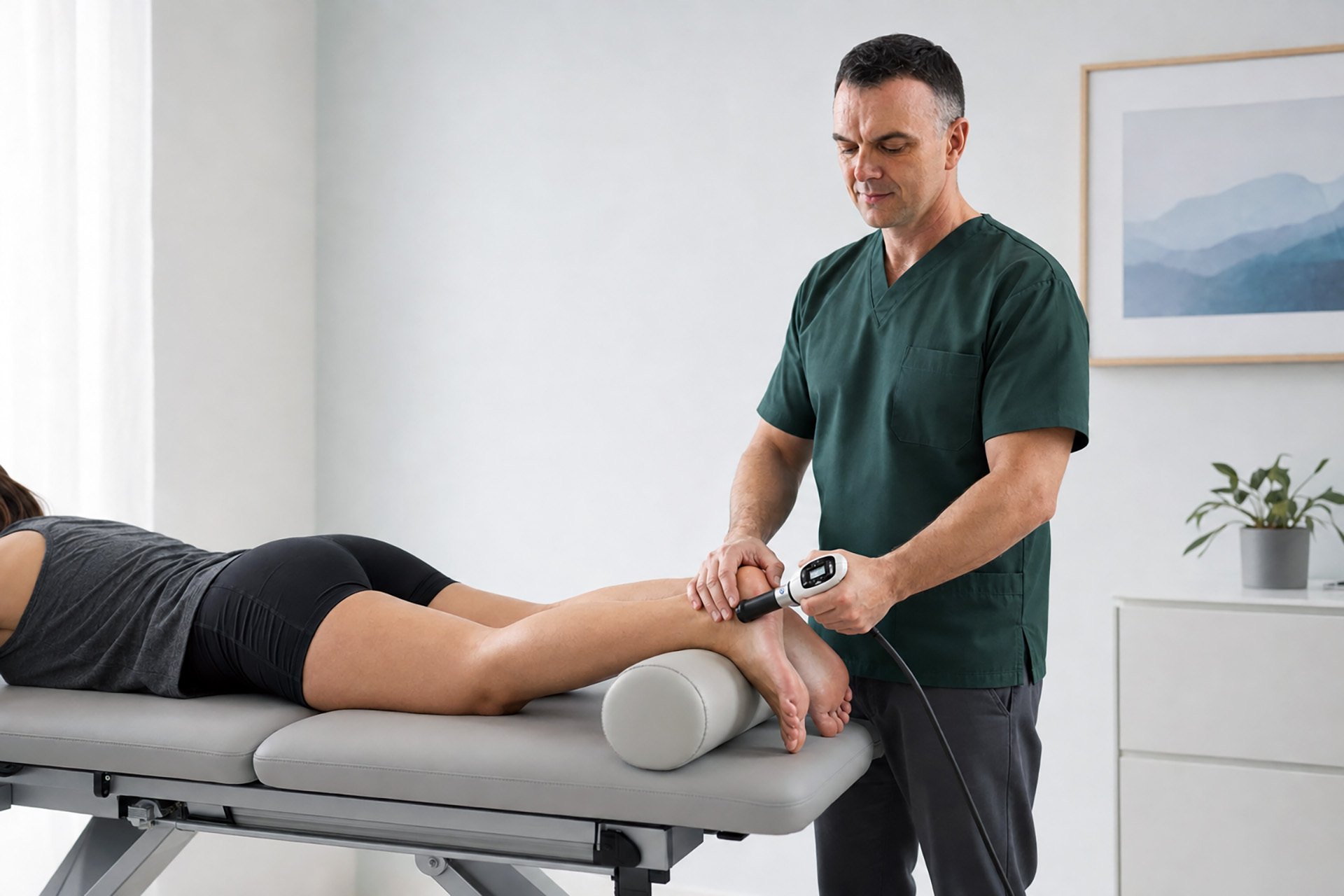
Focal and Radial Shockwave Therapy are two different ways of delivering acoustic energy to the Achilles tendon. Both may help treat Achilles tendinopathy, but they are not identical.
Radial Shockwave Therapy
Radial Shockwave Therapy spreads pressure shockwaves over a broader area. Specialists often use it when they want to address a wider tender region or surrounding soft tissue. Because the energy is delivered more diffusely, it is commonly used in repeated lower-intensity sessions. This can help patients with more widespread tenderness, stiffness, or swelling, or when surrounding calf muscles and soft-tissue tightness also contribute to symptoms.
Focal Shockwave Therapy
Focal Shockwave Therapy concentrates energy more precisely at a chosen depth within the tissue. This allows the specialist to target a smaller, more specific injured area. Focal Shockwave Therapy may be more suitable when the painful zone is clearly localised or when deeper precision is needed.
In practice, the choice between Focal and Radial Shockwave Therapy depends on the symptom location, tissue depth, and your overall goal. Your specialist will talk you through your options.
What Happens at The Foot Practice?
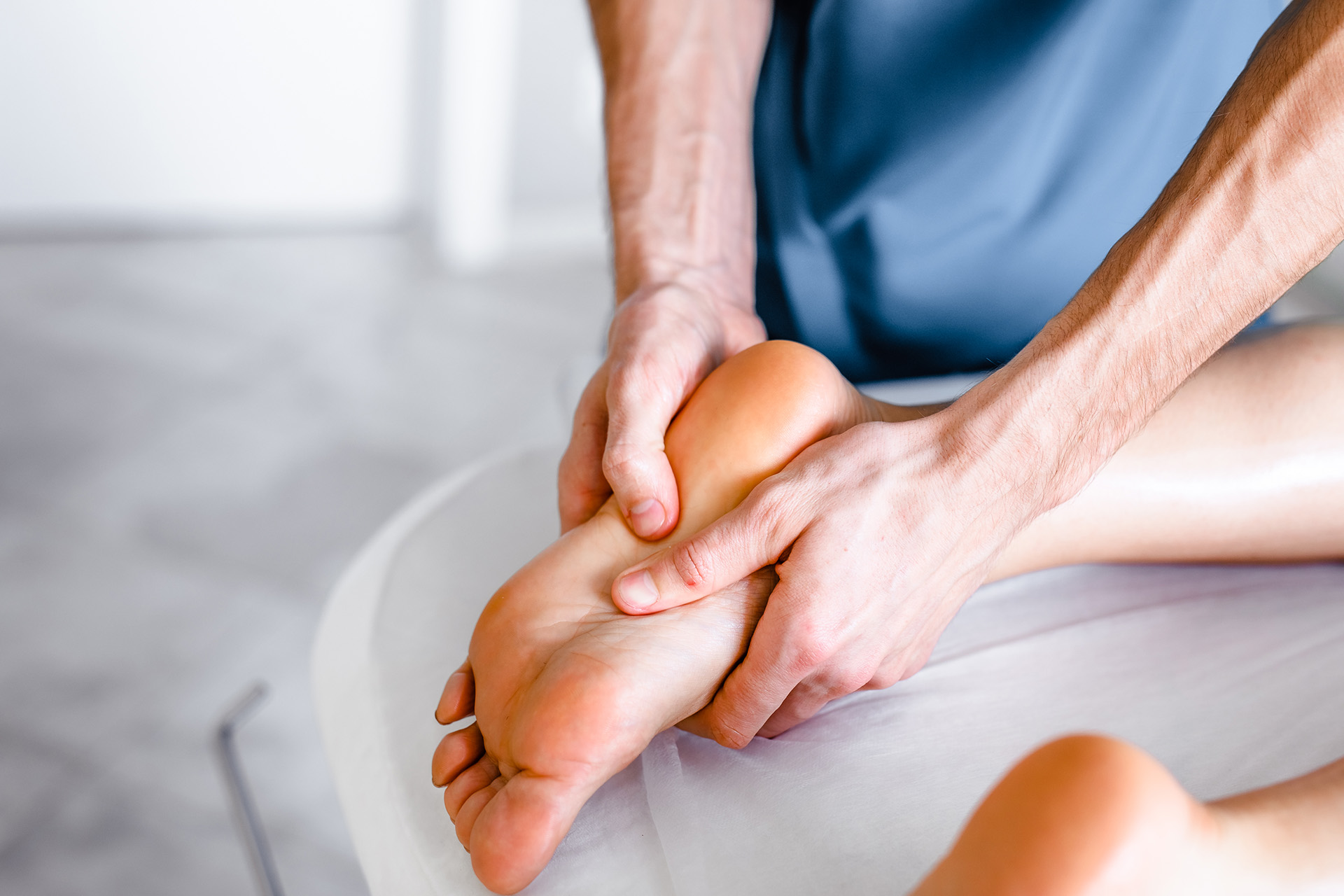
Shockwave Therapy at The Foot Practice forms part of a broader podiatry management plan that addresses why the Achilles tendon became overloaded in the first place. This matters because Shockwave Therapy can address the issue, but if you don’t address the root cause, Achilles tendinopathy will keep recurring. Before recommending or applying Shockwave Therapy, our podiatrists confirm a diagnosis of Achilles tendinopathy and assess the tendon, ankle movement, calf muscle strength, foot posture and walking or running mechanics.
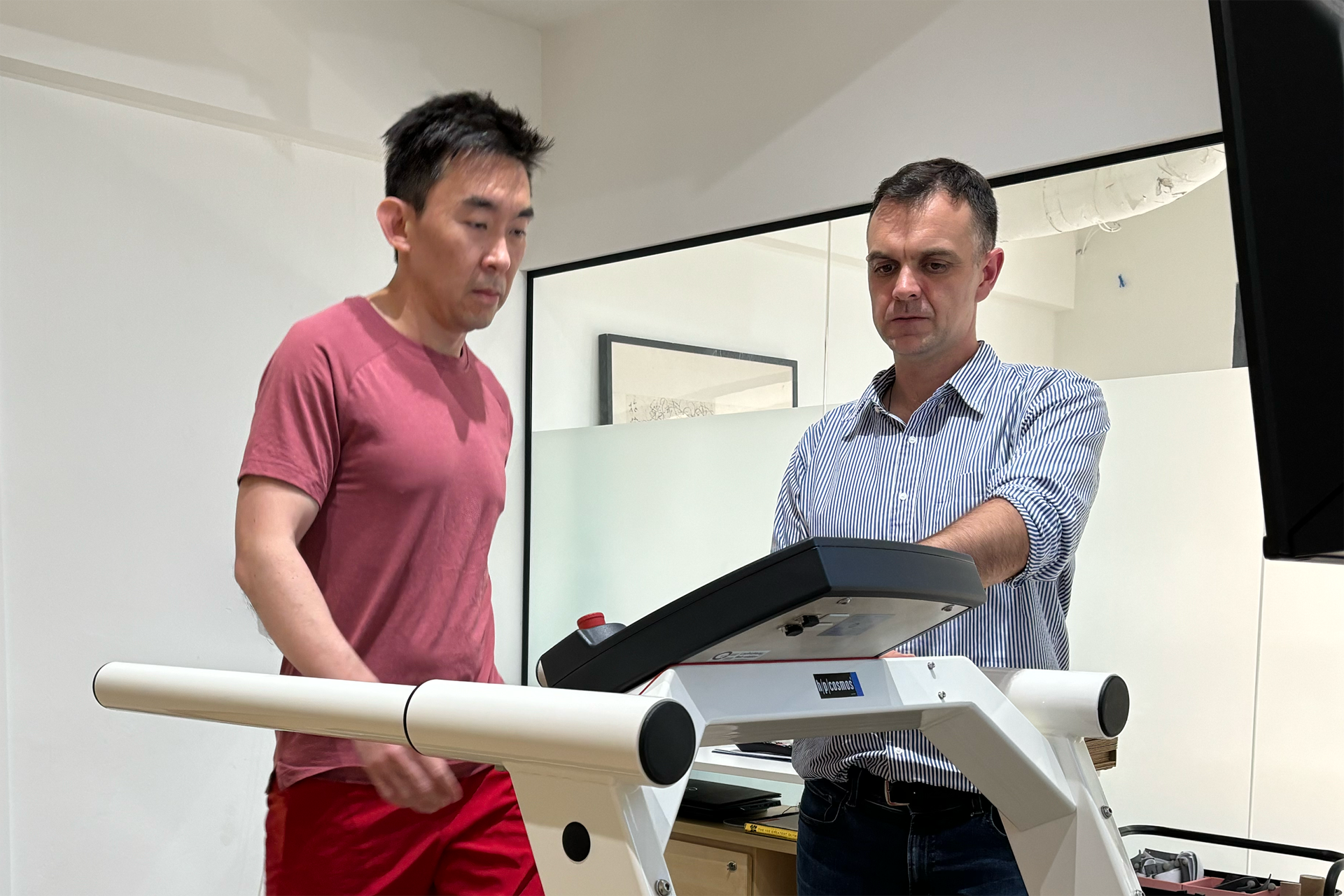
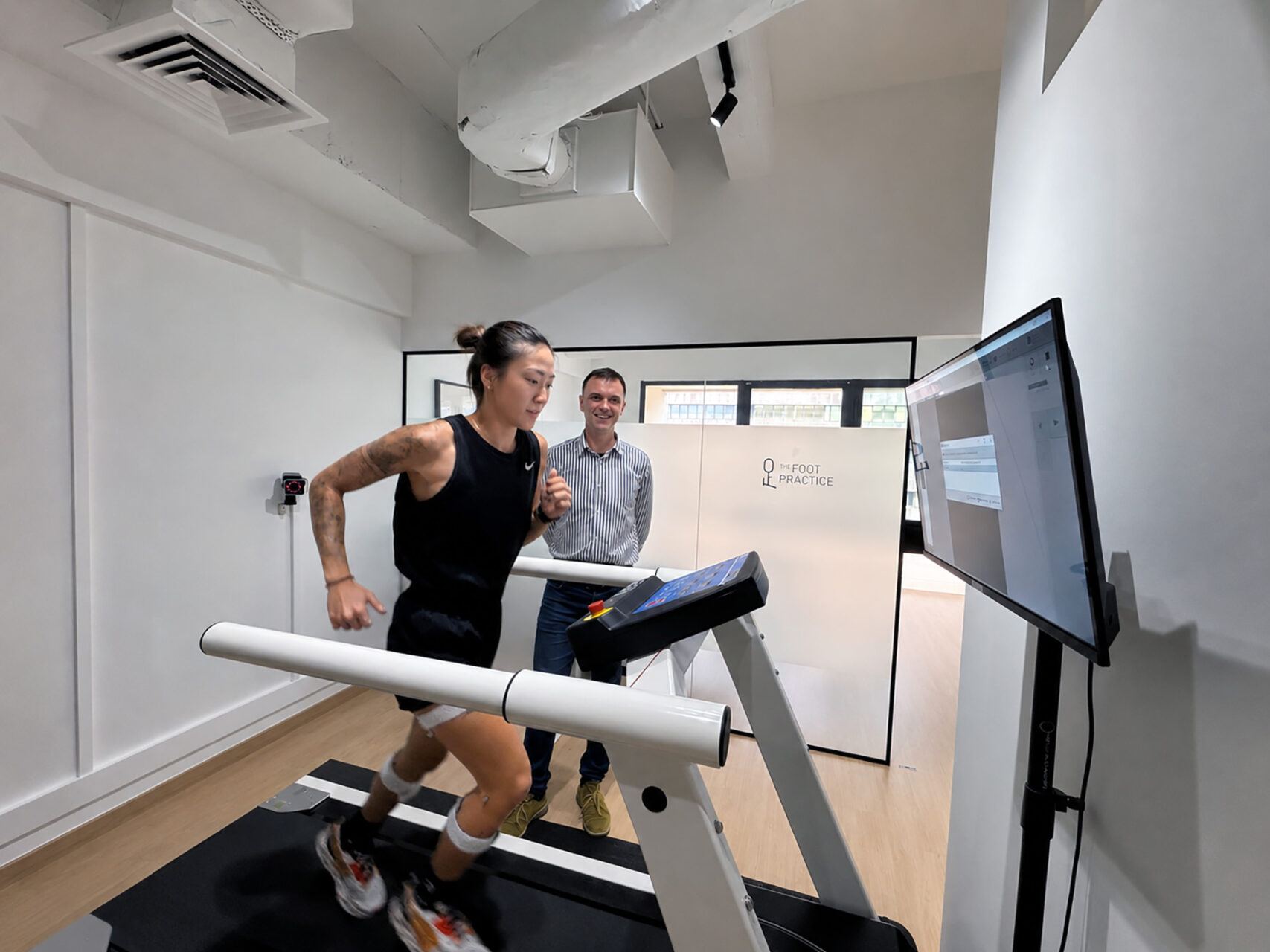
RehaWalk® Gait Analysis can help identify loading patterns that continue to stress the injured tendon, such as overpronation, asymmetrical loading, or an inefficient push-off. This matters because persistent Achilles problems are rarely limited to a single injury site in the tendon. In many cases, the tendon reacts to a combination of improper footwear, biomechanics, training load, and calf function.
We will also review your footwear carefully. In Singapore, this is especially relevant for runners training in the heat, people walking long distances on hard surfaces, and those spending long hours in unsupportive shoes. Where appropriate, custom orthoses, heel lifts, physical therapy, and mobilisation exercises may be used alongside Shockwave Therapy to reduce tendon strain and support a more durable recovery.
Does Shockwave Work on Its Own?
Shockwave Therapy usually works best when combined with exercise-based rehabilitation rather than a stand-alone solution. Achilles tendons generally heal best when the pain is reduced, and the tendon is gradually strengthened through progressive loading. That is why exercises remain central to management.
Shockwave Therapy for Achilles tendonitis may help settle a stubborn tendon, but long-term relief and lasting improvement usually depend on correcting the factors that caused the overload. The benefits of Shockwave Therapy for Achilles tendinopathy are best sustained within a structured physiotherapy and loading programme. If the original cause is ignored, whether it is improper footwear, an excessive running load, flat feet or weak calf control, the pain may improve for a time and then return with a vengeance.
This also helps answer a question many patients have: Does Shockwave Therapy offer an effective treatment and cure for Achilles tendonitis? In reality, there is rarely a single cure for Achilles tendinopathy. The better goal is to reduce pain, restore function, and reduce the chance of recurrence through a properly structured podiatric treatment plan. Shockwave Therapy offers an effective treatment pathway when used as part of this broader approach, helping the body heal and supporting improved daily activities over time.
Risks, Side Effects and Recovery
Shockwave Therapy for Achilles tendonitis is non-invasive, but it can cause short-term side effects and isn’t suitable for everyone. During or after the Shockwave Therapy session, the treated area and surrounding skin may feel sore. Some patients experience mild soreness, and others may notice temporary redness, swelling, bruising, or numbness around the heel. These effects usually settle within a few days, and inflammation in the treated area typically resolves as healing progresses.
Shockwave Therapy may also not be appropriate in some situations. A healthcare provider must carefully assess suitability for those who are pregnant, have certain clotting problems, use blood-thinning medication, have an infection in the area, have had a recent steroid injection, or have a history of Achilles rupture. In more severe cases of Achilles tendinopathy, the session intensity may be adjusted accordingly. Speak with your podiatry specialist if any of these apply.
Recovery from Achilles tendonitis is usually gradual rather than immediate. Some patients notice an early improvement, but more often change builds over several weeks as the injured tendon responds to the combined programme of Shockwave Therapy, strengthening exercises, footwear modification and biomechanical support.
Most patients can walk after the session and go home the same day, although sports and heavier loads may require a temporary adjustment to load or intensity. There is no guarantee of success, but for stubborn cases, Shockwave Therapy is a useful part of care, with most patients reporting reduced stiffness, swelling and discomfort over time.
Get Help for Achilles Tendon Pain
If your Achilles tendon pain is not settling, a more structured approach may help. At The Foot Practice in Singapore, our podiatrists assess not just the tendon itself but also how you move, the shoes you wear, and the forces through the foot and ankle before recommending the most appropriate Shockwave Therapy for Achilles tendonitis.
When appropriate, Shockwave Therapy for Achilles can be integrated with RehaWalk® Gait Analysis, orthotic support, footwear advice, and progressive exercises to give the tendon the best chance to heal. Contact The Foot Practice today to arrange a consultation and find out whether Shockwave Therapy for Achilles is right for your Achilles tendinopathy.