A foot callus is a broad area of thickened skin that develops when the same area of the foot is repeatedly exposed to pressure or friction. A callus will commonly form on the heel, ball of the foot, underside of the toes, or the side of the big toe.
A callus is the skin’s way of protecting the tissue beneath it. Most foot calluses are not serious, but they can become uncomfortable when the skin grows very thick, dries out or cracks. Callus care focuses on reducing the pressure, protecting healthy skin and addressing underlying causes linked to foot structure or footwear.
Corns and calluses are among the many conditions covered by skin and nail care. If you have diabetes, poor circulation or reduced feeling in your feet, do not cut, file or chemically treat a callus yourself. Ask a healthcare professional for advice.
Symptoms
A foot callus may look or feel like:
- A broad, flat patch of thickened skin or hard skin.
- Rough, flaky or waxy dry patches.
- Skin that appears yellowish, greyish or darker than the surrounding skin.
- Reduced sensitivity over the thickened patch.
- Tenderness or pain over the underlying tissue when you stand, walk, or wear certain shoes.
- A crack, called a fissure, within dry or thick skin.
Some corns and calluses are painless in the early stages. Pain may arise when thick skin increases pressure on the tissue beneath it, or when a crack forms. In severe cases, an untreated fissure may bleed, become infected, or lead to further complications.
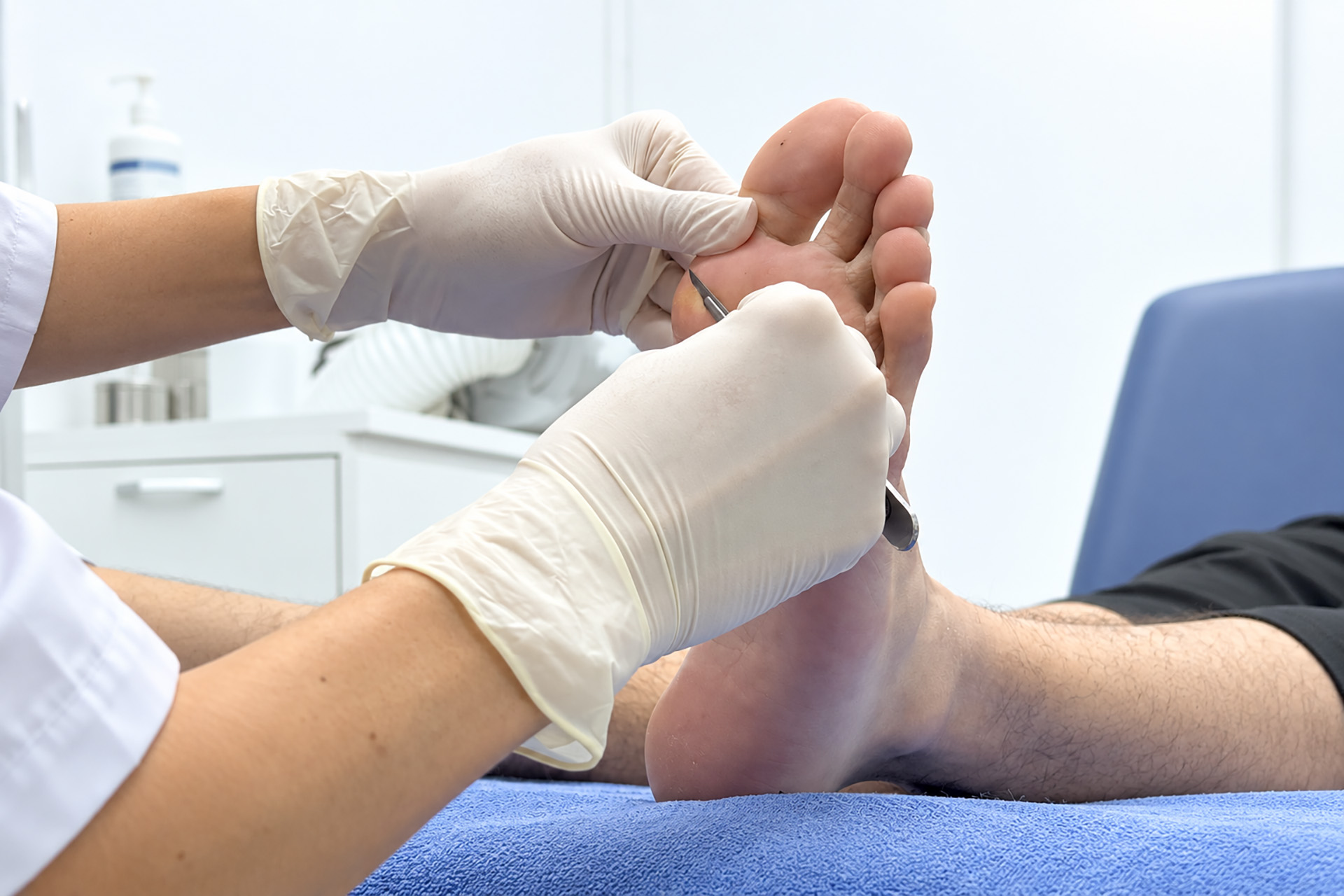
Where Foot Calluses Form
The position of a callus on the foot often hints at the source of the pressure.
Callus on the Bottom of the Foot
Plantar calluses are commonly found beneath the heel or the metatarsal heads, which make up the ball of the foot. These weight-bearing areas absorb pressure during standing and walking. Running, prolonged standing, a thin shoe sole, or reduced natural cushioning can create high-pressure areas. In some, these factors cause excessive weight-bearing forces.
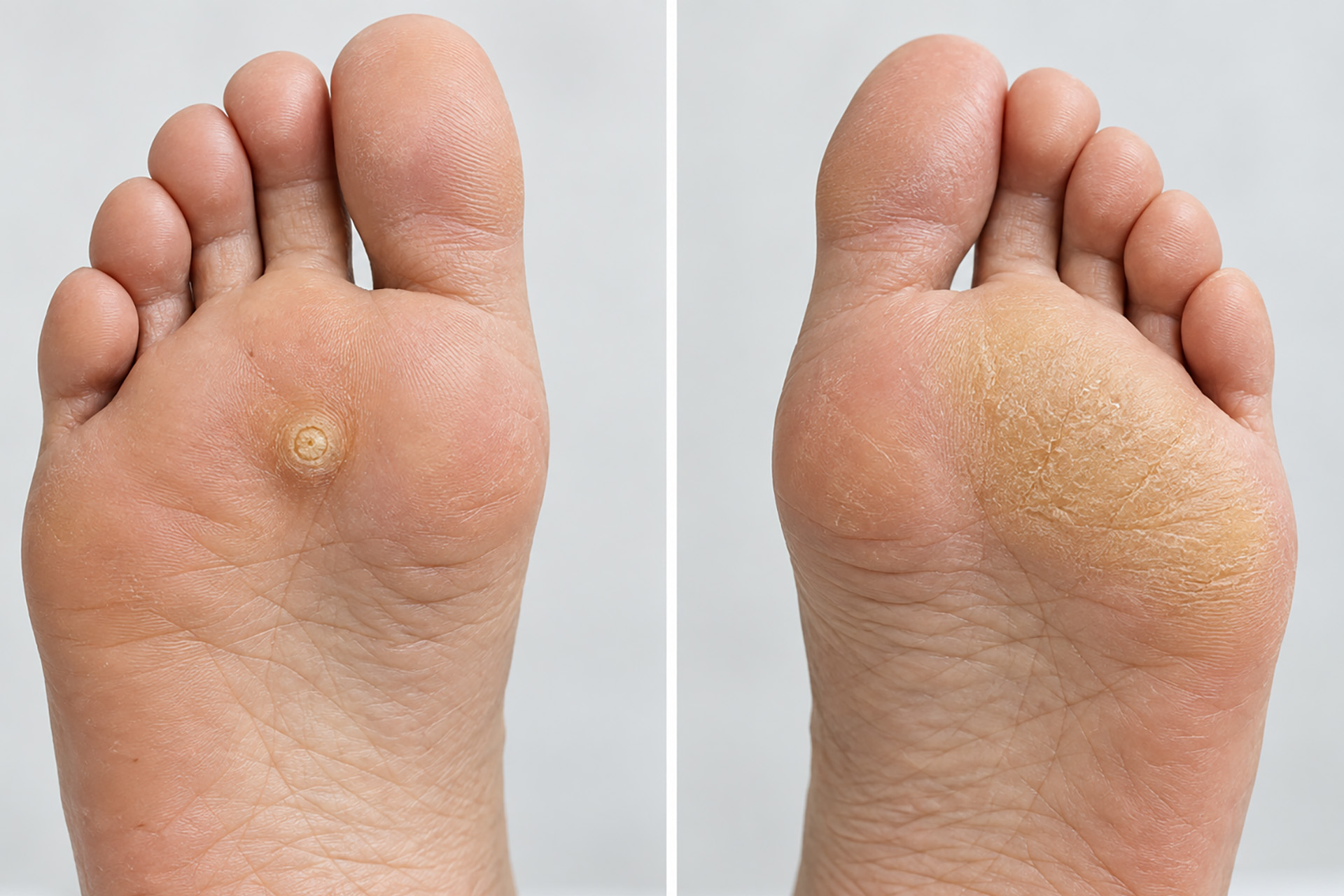
Some plantar calluses have distinctive patterns. A diffuse shearing callus appears as a larger lesion of relatively even thickness. A discrete nucleated callus is smaller and contains a central keratin plug. Some clinicians use the term plugged callus for hardened areas with a dense core. These labels can overlap with foot corn terminology, though management strategies will differ.
A painful callus on the ball of the foot may feel like a firm or bruised area when you push off during walking. Pain in this area can have other causes, so an examination may be useful if the discomfort persists.
Callus on the Toe or Big Toe
A painful callus on a toe can form where the toe rubs against a shoe or another toe. A callus on the big toe often develops along its inner edge or underneath the joint, where pressure increases during push-off.
Narrow shoes, shoe seams, bunions, hammertoes and limited joint movement can concentrate pressure in the toes. Ill-fitting footwear and high heels can also add more pressure. Long toenails can also push the toes against the front or top of a shoe.
Heel Callus
A heel callus is a rim or patch of thick, dry, hard skin around the heel. It can become extremely painful if the heel skin loses flexibility and splits. A deep or bleeding heel crack needs a professional assessment, especially if you have diabetes or poor circulation.
Flat Feet and Callus Formation
Flat feet can change how pressure moves across the sole during walking. This may contribute to callus formation along the inner heel, forefoot, or the big toe in some people. Flat feet do not always cause calluses on the feet, and a callus alone does not prove that you have abnormal foot mechanics.
Foot deformities such as high arches, bunions, and hammertoes also create concentrated pressure. The natural ageing process may reduce the foot’s fat padding beneath the heel or forefoot. If a callus returns in the same place, a podiatrist may assess contributing factors such as foot shape, joint movement, footwear and walking pattern.
Causes
Corns and calluses form because the skin responds to repeated friction or pressure by producing a thicker outer layer. Common foot callus causes include:
- Shoes that are tight, loose, narrow or poorly cushioned.
- High-heeled shoes that shift more weight towards the forefoot.
- Active lifestyles that involve walking, standing, running or dancing for long periods.
- Walking without socks, or wearing socks that bunch or rub the skin.
- Foot problems, including bunions, hammertoes, flat feet, high arches or prominent joints.
- A walking pattern that repeatedly loads the same part of the foot.
- Age-related loss of cushioning beneath the heel or forefoot.
Daily walking does not automatically cause a harmful callus. The skin is more likely to thicken when repeated pressure or rubbing affects one area.
Corn or Callus?
Corns and calluses both develop from repeated pressure or friction, but they are not the same. Deciding whether a lesion is a corn or callus depends on its size, depth and location. A callus is usually broad, flat and found on a weight-bearing area. A callus usually has no central core. A foot corn is smaller, more localised, and may have a hard centre surrounded by swollen skin, causing focused pain.
Hard foot corns often form on the tops or sides of toes. Soft foot corns develop between toes, while plantar foot corns form on the sole. A foot corn usually causes more focused pain than a diffuse callus.
If you are unsure whether you have a foot corn or callus, see foot corn symptoms and causes and the full comparison of corns and calluses.
Diagnosis
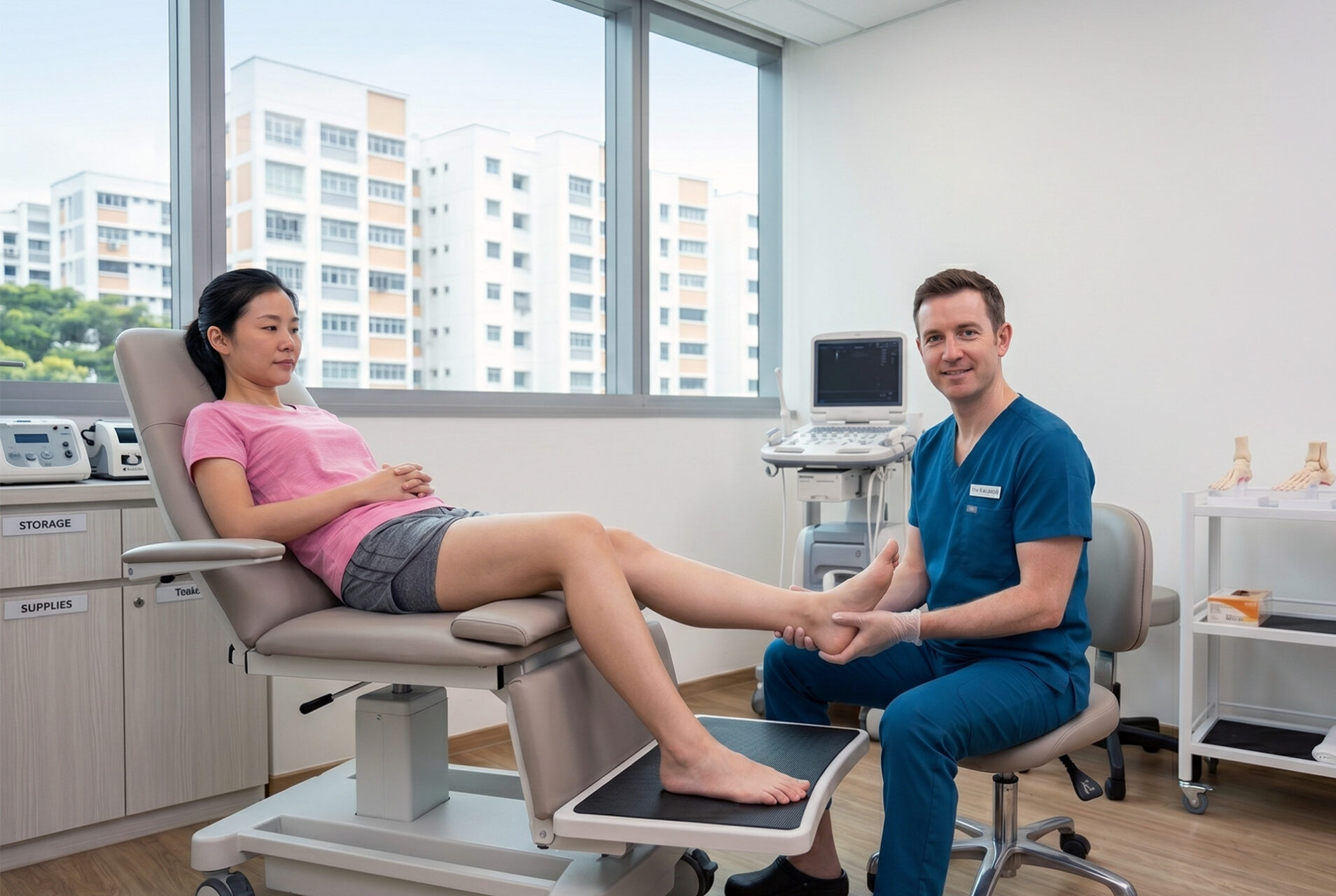
A podiatrist diagnoses corns and calluses by examining the feet, checking where the area forms and asking about pain, footwear, activity and medical history. The assessment may also include foot shape, joint movement and pressure distribution.
Not every foot condition is easy to identify. A plantar wart can interrupt normal skin lines and may show small dark points. Psoriasis, eczema, a foreign body, a cyst, and some inherited skin conditions can also cause or resemble thickened skin. Seek an assessment if the area looks unusual, changes, bleeds or does not respond to simple care.
Safe Home Care
For foot corns and calluses, gentle home care may be suitable if you are healthy, have normal circulation and sensation, and the skin is not broken. Warm water can make hardened skin easier to manage. Please note that proper care should be gradual.
- Soak the foot. Place the foot in warm water for about 5 to 10 minutes, or until the hardened skin softens.
- File gently. Use a wet pumice stone to gently remove a thin layer of dead skin. A foot file is another option, but use it lightly. Stop if the area becomes sore, raw or starts to bleed. Do not try to remove the whole callus at once.
- Moisturise daily. Apply a moisturising cream to the tops and soles of the feet to keep the skin soft and supple. Keep the spaces between the toes dry.
- Reduce pressure. Wear comfortable, well-fitting, cushioned shoes. Non-medicated corn pads may provide relief by cushioning a friction point, whether for calluses or corns.
Home callus removal should never involve a razor, scissors, callus shaver or another sharp object, as cutting the skin can cause bleeding and infection.
Some over-the-counter callus treatments contain urea or ammonium lactate, which may soften thick callused skin over time. Other products for corns and calluses contain salicylic acid, which can break down keratin but will also damage healthy skin if used incorrectly. Medicated corn plasters can have the same problem. Ask a pharmacist, podiatrist or doctor whether a keratolytic product is suitable for your feet.
Do not use a pumice stone, foot file, sharp tool, acid product or medicated plaster if you have diabetes, neuropathy, poor circulation, fragile skin or an open wound. These underlying conditions can increase medical risks. Seek professional help before self-care if you have any of these conditions.
When to See a Podiatrist
Not all foot calluses require treatment, and callus removal is not always necessary. Consider professional care if:
- The callus is painful or affects your ability to walk.
- It returns despite changing shoes and reducing the friction.
- The skin is cracked, bleeding or broken.
- You notice redness, warmth, swelling, discharge or an unpleasant smell.
- You are not sure whether the area is a corn, callus, or wart.
- You have diabetes, poor circulation, reduced sensation or a weakened immune system.
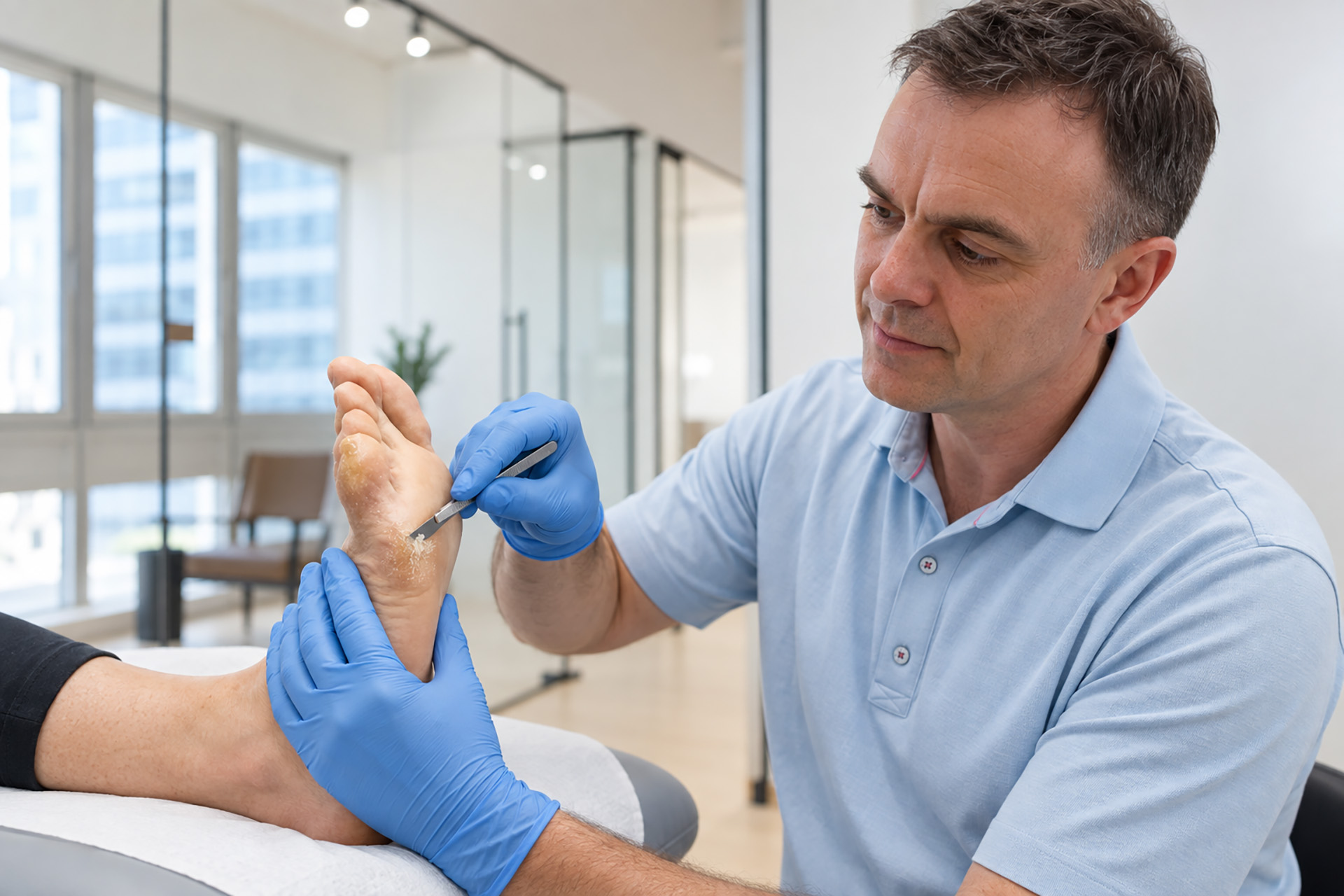
A podiatrist can assess the callus, your foot health and the pressure that caused it. When appropriate, professional callus removal may include sterile debridement. Very thickened layers may need more than one appointment. After callus removal, local pressure may decrease, but results and the need for follow-up may vary.
Repeated callus removal without addressing the root cause may not provide long-term relief. Professional podiatric care may include footwear advice, protective padding or pressure assessment. Custom foot orthoses may help redistribute pressure in selected cases. They are not needed for every callus and cannot guarantee that the callus will not return.
Preventing Calluses
To prevent calluses:
- Wear comfortable shoes that fit well and have adequate cushioning.
- Avoid footwear that is tight, narrow, poorly cushioned or allows the foot to slide.
- Wear socks that fit smoothly and reduce friction.
- Moisturise the soles and heels each day, but avoid moisturising between the toes.
- Use non-medicated pads or insoles when recommended.
- Trim your toenails straight across so they do not add pressure inside the shoe.
- Check your feet regularly for new pressure points, thick skin, or cracks.
These measures may support long-term relief, but calluses can return if pressure or friction continues. Persistent corns and calluses may reflect a repeated pressure point from footwear, foot structure or walking mechanics. When clinically relevant, The Foot Practice may use a pressure-sensor gait assessment to examine where load builds during walking.
To discuss a painful or recurring callus, arrange a podiatry assessment at The Foot Practice, which has provided foot care for adults and children in Singapore since 2004.
Frequently Asked Questions
How do you get rid of calluses on your feet?
First, reduce the pressure or friction that caused the callus. If you have normal circulation, sensation, and intact skin, soak your foot in warm water for 5 to 10 minutes, gently file with a pumice stone, and moisturise daily. Do not cut the callus. Seek professional care if it is painful, recurrent or difficult to identify.
Why is a callus painful?
A thick callus can increase pressure on the tissue beneath it. Pain may also come from a crack in the dry skin, inflammation, or another condition beneath the thickened area. Assess any persistent or focused pain.
What triggers callus growth?
Callus growth is triggered by repeated pressure or friction. Common sources include poorly fitting shoes, prolonged walking or standing, sports, foot deformities and a walking pattern that concentrates load in one area.
Is Vaseline good for a callus?
Vaseline, which is petroleum jelly, can help reduce dryness and soften the surface of a callus. It does not remove the pressure that caused the callus and may not be enough for very thick or painful skin. Apply it to the sole or heel, not between the toes, and take care when walking, as it can make the floor or footwear slippery.
Can calluses on feet go away?
A mild foot callus may gradually become thinner when the pressure or friction stops. A persistent callus may remain or return if the same area continues to bear excessive pressure. Recurrent, painful, or cracked calluses will need professional assessment to resolve.