
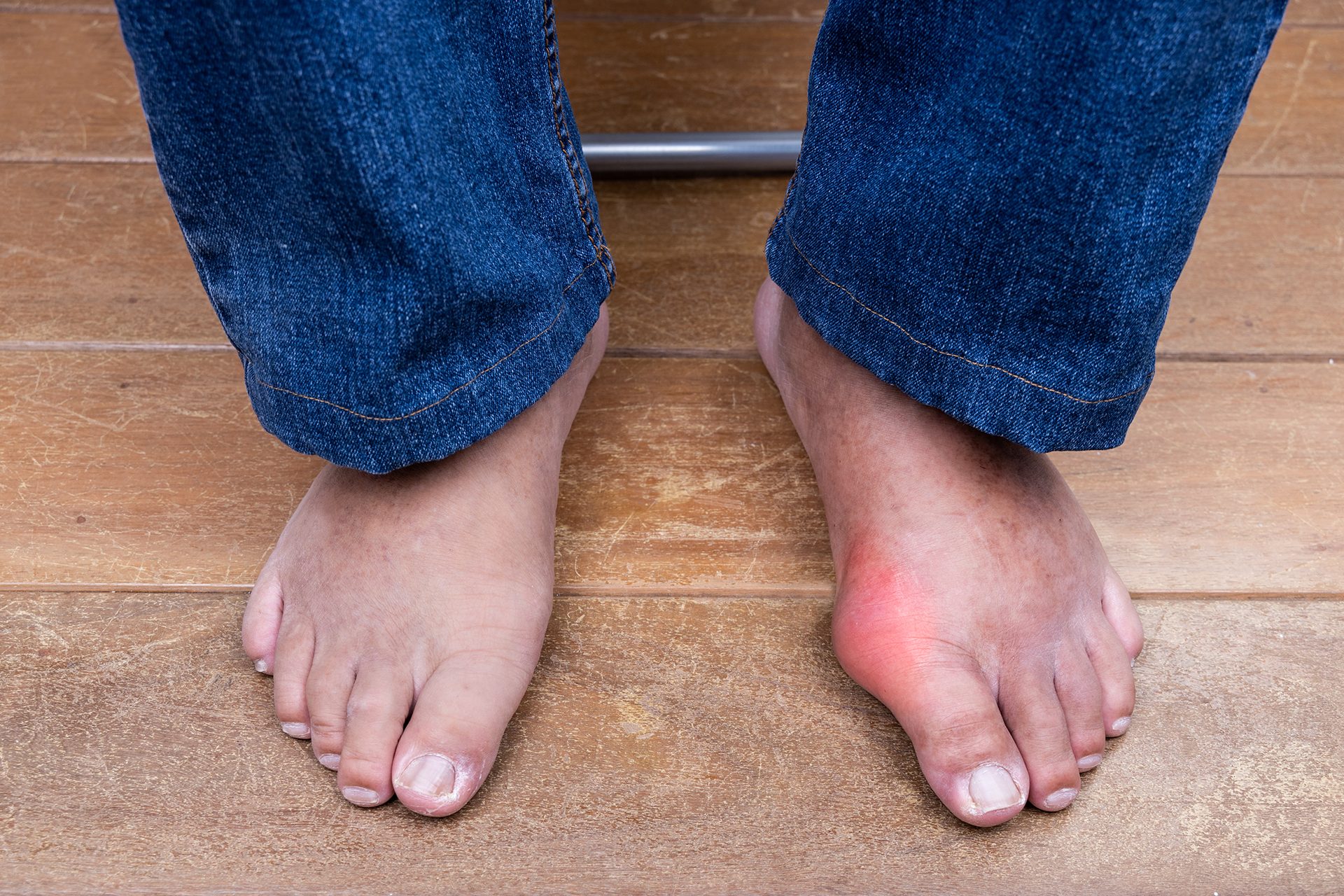
Gout is an inflammatory arthritis caused by urate crystals in a joint. Flares cause sudden pain and swelling and may last one to two weeks without treatment. Medicines can help manage an attack, and some people need long-term treatment to reduce urate.
Gout can affect mobility during a flare. Recurrent or prolonged symptoms deserve medical review; the course differs between people.
The time between gout flares varies. Recurrent attacks should be discussed with a doctor.
A flare usually causes marked joint pain, tenderness, warmth and swelling. Fever or feeling unwell with a hot, swollen joint is a warning sign of possible infection, not something to assume is simply gout.
What Is the Main Cause of Gout in Feet?
What causes gout in feet? Gout forms due to an increase of uric acid in the body. Uric acid forms when the body breaks down purines, which occur naturally in the body and in some foods. It is a substance naturally found in your blood that is usually filtered by the kidneys. If these acid levels are elevated in your bloodstream, known as hyperuricaemia, urate crystals can form in the affected joints, causing erosion to occur. Raised urate can be associated with reduced kidney clearance, certain medicines, inherited factors and excess body weight.
Gout is associated with a build-up of urate. Risk can be affected by genetics, other health conditions, medicines, alcohol and some foods. A healthcare professional can discuss the factors relevant to you.

Gout is one possible cause of foot pain. A doctor can diagnose gout and discuss medicines for an attack and, when appropriate, long-term urate-lowering treatment to reduce future attacks and complications. Podiatric care can help manage foot symptoms alongside medical care.
How Long Does Gout Last? The Four Stages of Gout
Gout commonly affects the big-toe joint, but it can also affect other joints. Symptoms and the pattern of attacks vary between people.
- High urate without symptoms: Some people have raised urate without experiencing gout. High urate does not mean a flare is inevitable.
- Gout flare: Urate crystals can trigger sudden pain, swelling and warmth in a joint. Other conditions can cause similar symptoms and require assessment.
- Between flares: Symptoms may settle while urate crystals remain. A doctor can discuss whether long-term urate-lowering treatment is appropriate.
- Long-standing gout: Some people develop tophi or joint damage over time. The course varies, and medical treatment can reduce future problems.
Alcohol, some foods and certain medicines can contribute to gout risk or flares. A suddenly painful, hot or swollen joint needs medical assessment; if infection is suspected, urgent treatment is essential.
Accurate diagnosis and appropriate treatment can help manage gout and reduce the risk of future attacks and joint damage. Other conditions, including joint infection, can resemble a gout flare and may need urgent medical assessment.
Poorly controlled gout can cause recurrent flares, tophi and joint damage over time. Several conditions can cause joint pain and inflammation so patients will undergo a clinical assessment to determine if gout is the underlying cause of their foot pain.
How Is Gout Diagnosed?
Gout can resemble calcium pyrophosphate crystal arthritis, sometimes called pseudogout, and a joint infection can look similar. A clinician may need tests to distinguish these conditions; a suspected joint infection requires urgent assessment.
A doctor considers the history and examination and may arrange blood tests, imaging or joint-fluid analysis. A urate level during a flare does not by itself settle every diagnosis.
A clinician assesses symptoms and examines the joint. Blood urate can be lower during a flare; depending on the circumstances, a doctor may arrange blood tests, imaging or joint-fluid analysis to clarify the diagnosis.

Conservative Gout Treatments & Prevention
Podiatry can support foot comfort and mobility, while a GP or specialist manages the underlying gout.
A doctor may recommend an anti-inflammatory medicine, colchicine or a corticosteroid for a flare, depending on your circumstances. Some people also need long-term urate-lowering medication prescribed and monitored by a doctor. Podiatric care can support foot comfort and mobility alongside medical treatment.
Reducing alcohol intake may help some people manage gout. Lifestyle changes do not replace prescribed urate-lowering treatment where this is recommended; discuss treatment and follow-up with your doctor.
A balanced diet, gradual weight loss when appropriate, and limiting sugary drinks may help reduce gout risk alongside prescribed treatment. Staying hydrated is sensible, but it is not a substitute for urate-lowering medicine. A wrapped cold pack may provide short-term comfort during an attack.
Podiatry care for gout-related foot symptoms may include footwear, pressure management and advice on mobility. Diagnosis and medicines to manage gout should be directed by a GP or specialist; podiatry does not replace medical treatment for gout.
Persistent or severe gout symptoms may need review by a GP, rheumatologist or orthopaedic specialist. A podiatrist can refer when appropriate and support conservative foot care within scope.
Seek urgent medical assessment for a suddenly painful, hot or swollen joint. A podiatrist can discuss footwear and foot comfort alongside medical care.