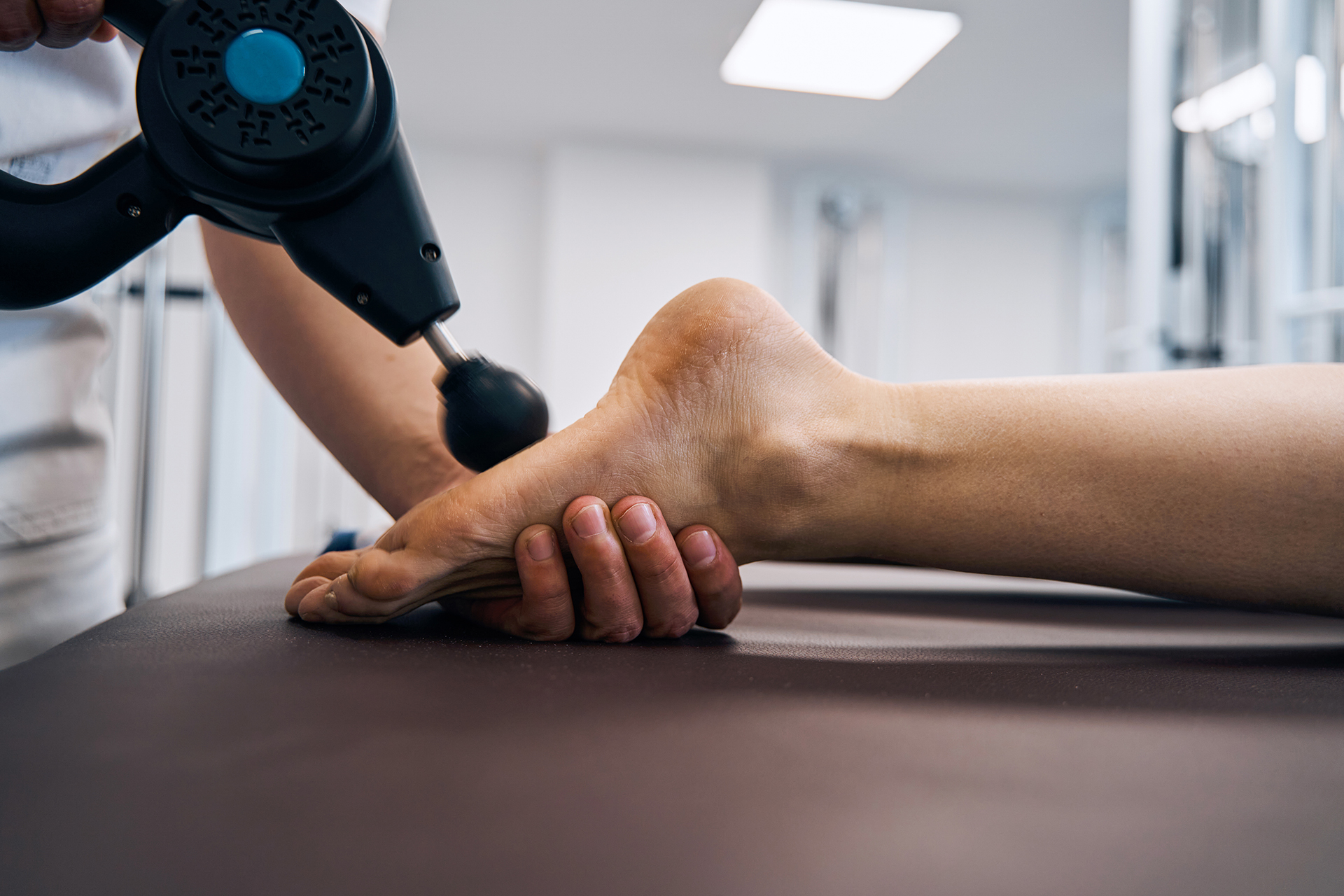
Pain under the foot may affect the heel, arch or forefoot. Several conditions can produce similar symptoms, so location alone is not enough for a diagnosis. Persistent or worsening pain deserves assessment.
What Causes Pain Under the Bottom of Your Foot?
Both the foot’s strength and vulnerability come from its complex anatomy comprising 26 bones, 33 joints and over 100 muscles, tendons and ligaments. These intricate parts can cause pain in the foot, whether stemming from overuse, injury, or underlying health conditions. Here are the most frequent culprits behind bottom-of-foot pain:

1. Plantar Fasciitis
Plantar heel pain commonly involves the plantar fascia, the tissue beneath the arch. It is often worst with the first steps after rest. The condition involves load-related tissue changes, not simply inflammation.
2. Flat Feet (Fallen Arches)
Many flat feet are painless and need no treatment. A painful, stiff or newly changing arch warrants assessment for tendon, joint or other problems.
3. Heel Spurs
A heel spur is a bony projection that may be seen alongside plantar heel pain. Many are painless, and finding a spur on an X-ray does not prove it is causing symptoms.
4. Metatarsalgia
Metatarsalgia describes pain under the ball of the foot rather than one specific disease. Pressure, joint problems and other causes may contribute.
5. Neuroma (Morton’s Neuroma)
A neuroma is a thickening of nerve tissue commonly occurring between the third and fourth toes. It’s associated with a burning or tingling pain that can radiate to the bottom of the foot. Tight or poorly fitting shoes often exacerbate this condition.
6. Stress Fractures
Stress fractures are tiny cracks in the foot’s bones, often caused by repetitive stress or overuse. Athletes and individuals engaged in high-impact activities, such as sprinting or jumping, are particularly at risk. Symptoms include localised pain in the bottom of the foot, that worsens with activity.
7. Tarsal Tunnel Syndrome
This nerve compression condition affects the posterior tibial nerve and causes tingling, burning, or sharp pain radiating through the bottom of the foot. Tarsal tunnel syndrome often results from overuse, trauma, or structural foot abnormalities.
8. Tendonitis
Inflammation of tendons, such as the posterior tibial tendon, can lead to bottom-of-foot pain. Tendonitis is often accompanied by swelling, stiffness and discomfort, particularly after physical activity or long periods of standing.
How to Address Bottom of Foot Pain
Management depends on the diagnosis. The following options may be discussed after assessment; they are not appropriate for every cause of pain:

- Insoles: Custom or ready-made insoles may improve comfort or change pressure under the foot for some people. They do not guarantee relief or correction of gait.
- Exercise and rehabilitation: Suitable exercises may improve strength, mobility or tolerance of loading. The programme should match the diagnosis.
- Shockwave therapy: This may be discussed for persistent plantar heel pain when initial care has not helped. Results vary and it is not established to treat every cause of pain.
- Gait assessment: Movement and pressure measurements can inform an assessment alongside symptoms and examination; they cannot by themselves establish the cause of pain.
For mild symptoms without a significant injury or warning signs, the following measures may help while awaiting assessment:
- Relative rest and a wrapped cold pack: Reduce aggravating activity. Do not apply ice directly to skin or use it where sensation or circulation is impaired without advice.
- Footwear: Comfortable, well-fitting shoes may help reduce pressure or discomfort. The best fit varies, and no shoe prevents every cause of pain.
- Exercises: Use exercises suited to an assessed condition. Do not stretch or load a suspected fracture or acute tendon tear.
- Pain relief: Ask a pharmacist or doctor which medicine is suitable, especially if you have other conditions or take regular medicines.
Seek urgent medical assessment if you cannot bear weight, have a deformity, a hot swollen foot with fever, or new numbness or colour change. With diabetes or reduced sensation, new wounds, swelling or warmth need prompt advice.
Preventing Bottom of Foot Pain
Comfortable footwear, gradual activity changes and an appropriate body weight may help manage load on the feet. These measures do not prevent every cause of pain.

Increase activity gradually and use comfortable footwear. Stretching may help selected conditions, but it does not prevent every cause of pain. Persistent symptoms need assessment rather than repeated self-treatment.
Taking these proactive measures can significantly reduce your risk of developing foot pain and improve your overall mobility and comfort.
The Foot Practice can assess ongoing bottom-of-foot pain and discuss appropriate management or referral.