

Understanding and Managing Ankle Sprains
A sprained ankle is one of the most common musculoskeletal injuries, affecting people of all ages and activity levels. Whether you’ve twisted your ankle stepping off a kerb or rolled it during sports, the pain and inconvenience of an ankle sprain can significantly impact your daily life. This comprehensive guide will help you understand what happens when you sprain your ankle, how to recognise the severity, and most importantly, how to treat a sprained ankle effectively.

What Is an Ankle Sprain?
When you sprain your ankle, you stretch or tear the ligaments that connect the bones in your ankle joint. These ligaments provide stability and support, preventing excessive movement that could damage the joint. Most commonly, ankle sprains occur when the foot rolls inward (inversion sprain), affecting the lateral ligaments on the outside of the ankle. Less frequently, the foot may roll outward (eversion sprain), damaging the medial ligaments on the inside of the ankle.
An ankle sprain often occurs during physical activity, but can also happen during everyday movements, such as walking on uneven surfaces or descending stairs. The sudden twisting or rolling motion forces the ligaments beyond their normal range, resulting in damage that varies from mild stretching to complete tearing.
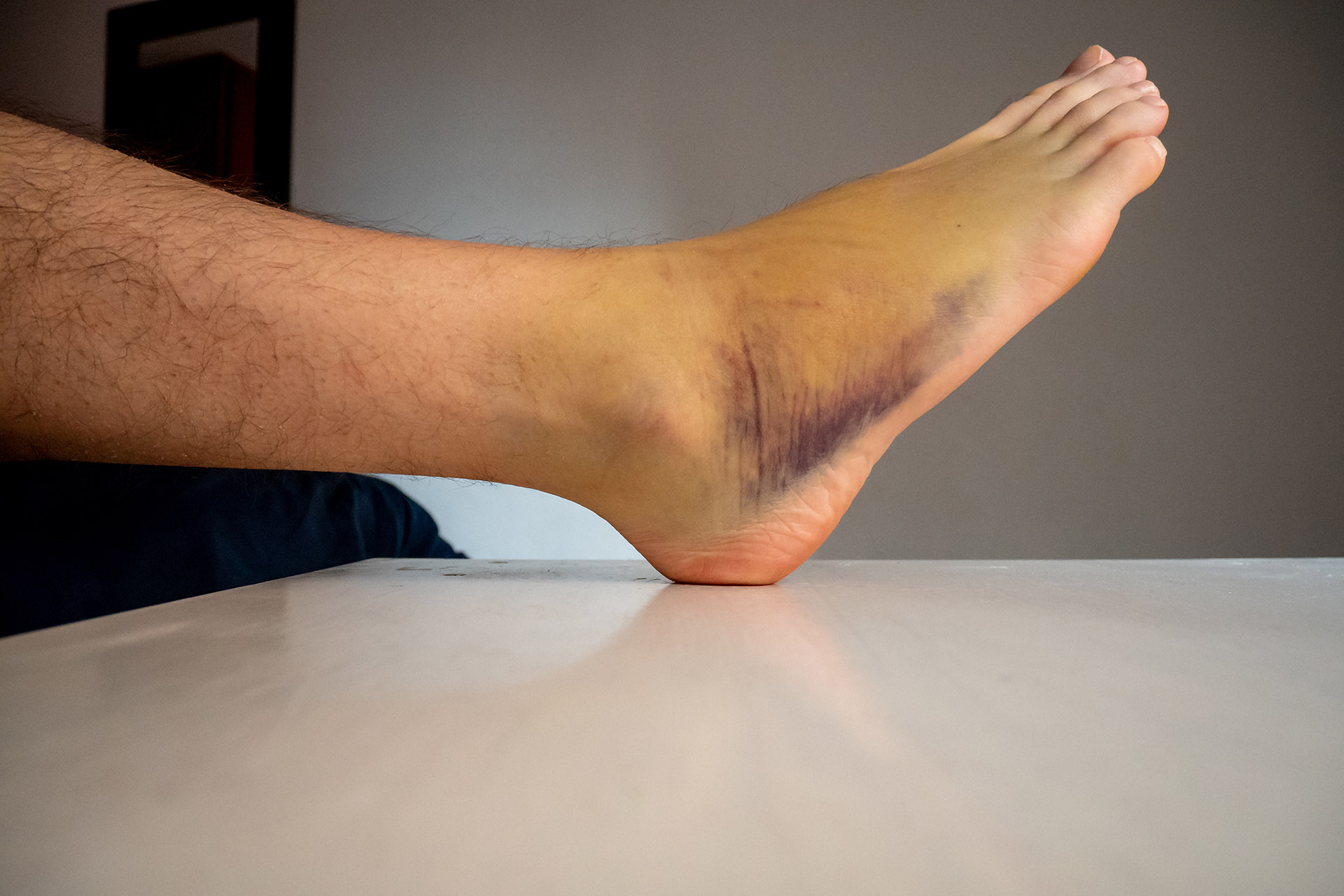
Grades of Ankle Sprain
Clinicians grade ligament damage after examination. The descriptions below are general patterns, not a way to self-diagnose severity or rule out a fracture.
Grade I Ankle Sprain
A Grade I ankle sprain involves stretching or minor partial tearing of the ligaments. While uncomfortable, this is the mildest form of ankle sprain. You’ll notice:
- Mild swelling and tenderness around the ankle
- Slight discomfort when walking
- Minimal loss of mobility
- Generally stable ankle joint
- Some stiffness, particularly in the morning
A mild sprain may improve over a few weeks. Return to sport should depend on comfort, strength and balance rather than a fixed deadline.
Grade II Ankle Sprain
A Grade II ankle sprain represents a more significant injury, with partial tearing of at least one ligament, commonly the anterior talofibular ligament (ATFL). The symptoms are more pronounced:
- Moderate to severe swelling and pain
- Visible bruising developing within 24-48 hours
- Difficulty bearing weight and noticeably limping when walking
- Tenderness when the injured area is touched
- Limited range of motion in the ankle
A partial ligament tear may take several weeks or longer to recover. A clinician can advise on support and progressive activity.
Grade III Ankle Sprain
A Grade III ankle sprain is the most severe, involving complete tearing of one or more ligaments. This serious injury results in:
- Extreme swelling extending up the leg
- Significant bruising and discolouration
- Inability to bear weight without severe pain
- Marked instability of the ankle joint
- Potential long-term complications if not properly treated
A complete ligament tear may take months to rehabilitate. Most sprains are initially managed without surgery; persistent instability or associated injuries may need specialist review.

Immediate Treatment for Ankle Sprains
When you first sprain your ankle, implementing prompt and appropriate treatment can significantly affect your recovery timeline. The standard approach to initial sprained ankle treatment follows the PRICE protocol:
- Protection: Avoid activities that cause pain and protect the ankle from further injury.
- Relative rest: Reduce painful activity initially, then progress supported weight-bearing and movement as tolerated once a serious injury has been excluded.
- Ice: Apply ice wrapped in a thin towel for 15-20 minutes every 2-3 hours during the first 48-72 hours to reduce swelling and pain.
- Compression: A comfortably fitted bandage or support may help swelling. Loosen it if toes become numb, cold or discoloured.
- Elevation: Keep your ankle elevated above heart level when possible to reduce swelling.
In addition to the PRICE approach, non-steroidal anti-inflammatory medications such as ibuprofen or naproxen sodium can help manage pain and reduce inflammation. However, it’s advisable to consult with a healthcare professional before starting any medication regimen.

Comprehensive Ankle Sprain Treatment
Beyond immediate care, treating a sprained ankle effectively requires a structured approach tailored to the injury’s severity:
Mild (Grade I) Sprained Ankle Treatment
For mild ankle sprains, self-care measures are often sufficient:
- Continue with the PRICE protocol for the first 48-72 hours
- Use over-the-counter pain relievers as needed
- Begin gentle range-of-motion exercises once pain allows
- Gradually return to normal activities as comfort permits
- Consider an ankle support when returning to physical activity
Symptoms may settle before strength and balance have fully recovered. Increase activity gradually and seek review if progress stalls.
Moderate (Grade II) Ankle Sprain Treatment
A moderate sprained ankle requires more comprehensive treatment:
- Protection and symptom relief followed by progressive movement, not prolonged complete rest
- Possible use of crutches or a walking boot for a short period
- Professional assessment by a podiatrist or physiotherapist
- Structured rehabilitation exercises to restore strength and stability
- Gradual, monitored return to physical activities
Recovery varies. Rehabilitation should progress according to symptoms and function rather than a fixed number of weeks.
Severe (Grade III) Sprained Ankle Treatment
A Grade III ankle sprain demands intensive treatment:
- A short period of immobilisation may be prescribed for a severe sprain; the clinician determines its duration
- Crutches or protected weight-bearing if needed, with advice on when to increase loading
- Professional evaluation to rule out associated injuries
- Comprehensive rehabilitation programme supervised by healthcare professionals
- Possible surgical intervention if conservative treatment proves insufficient
Recovery from a severe ankle sprain can take several months. Rehabilitation can help restore strength and function and reduce some risks, but full recovery and prevention of instability cannot be guaranteed.

Ankle Sprain Rehabilitation and Recovery
Rehabilitation is adapted to the injury and stage of recovery. It can support a return to activity and reduce the risk of another sprain, although outcomes vary:
Phase 1: Protection and early movement
Initially reduce painful loading and control symptoms. After assessment, supported weight-bearing and gentle movement usually progress as tolerated; severe injuries may need brief immobilisation.
Phase 2: Recovery of Motion
As pain and swelling subside, begin gentle range-of-motion exercises to prevent stiffness and promote healing. These might include:
- Ankle circles
- Gentle flexion and extension movements
- Towel stretches for the Achilles tendon
Phase 3: Strength Building
Once basic movement is restored, focus on strengthening the muscles that support the ankle:
- Resistance band exercises in multiple directions
- Calf raises
- Toe curls and extensions
Phase 4: Balance and Proprioception
Restoring proprioception (your body’s awareness of its position in space) is crucial for preventing future sprains:
- Single-leg standing exercises
- Balance board training
- Walking on different surfaces
- Functional movements specific to your usual activities

Preventing Ankle Sprains
Once you’ve experienced an ankle sprain, you’re at higher risk for recurrence. Preventive measures include:
- Wearing appropriate footwear for your activities
- Using ankle supports during high-risk activities, especially if you have a history of sprains
- Maintaining strength and flexibility in the ankle through regular exercises
- Being mindful of surfaces you walk or run on
- Warming up properly before physical activity
- Gradually increasing intensity when returning to sports or exercise

When to Seek Professional Help for a Sprained Ankle
While many ankle sprains can be managed at home, certain symptoms warrant professional assessment:
- Inability to bear any weight on the affected foot
- Severe swelling or bruising
- Pain directly over the ankle bones
- No improvement after 5-7 days of home treatment
- Recurring ankle sprains or persistent instability
- Numbness or tingling in the foot
An ankle injury should be assessed when pain or swelling is significant or recovery is not progressing. If you cannot bear weight or a fracture is suspected, see a doctor or go to an emergency department; imaging may be needed.
Ankle Sprain Cure: Is Complete Recovery Possible?
Many people return to their usual activities after an ankle sprain, but some develop persistent pain or instability. Follow-up is important if the ankle keeps giving way.
Care combines initial protection with progressive strength and balance rehabilitation. A severe sprain is not guaranteed to heal completely, and persistent symptoms may require further assessment.
For persistent ankle issues following a sprain, specialised interventions might include:
- Insoles may be considered for comfort when appropriate; an ankle brace and rehabilitation exercises may also be discussed based on the assessment.
- Specialised taping techniques for additional support
- Advanced physiotherapy modalities
- In rare cases, surgical repair for severely damaged ligaments

Take a Step towards Recovery from an Ankle Sprain
An ankle sprain should be assessed according to its severity. Appropriate care and rehabilitation can support recovery, although some people experience persistent symptoms or instability.
Whether you’re dealing with a mild twist or a severe sprained ankle, the keys to successful recovery include prompt initial treatment, appropriate rest, and progressive rehabilitation. If you’re unsure about the severity of your injury or if symptoms persist despite home treatment, consulting with a podiatrist or other healthcare professional is always advisable.
Each ankle injury is different. Adjust activity with guidance from your treating clinician, and seek review if pain, swelling or instability persists.
If you’re experiencing ankle pain or instability, contact The Foot Practice today to schedule a comprehensive assessment. Our experienced team can provide personalised guidance for your injured ankle remedies and help you develop strategies to prevent future sprains.