

Toenail fungus, also called onychomycosis, is a fungal nail infection that can make a toenail discoloured, thick, brittle or crumbly. These changes can resemble nail injury, psoriasis and other nail disorders. A toenail fungus assessment helps confirm the likely cause before any treatment begins.
Care depends on how much of the affected toenail is involved, whether the nail base is affected, how many toenails have changed, and the patient’s general health. Options may include topical antifungal nail medicine, reducing a thick toenail, doctor-managed oral antifungal medication, and, in selected cases, light-based therapy.
Onychomycosis treatment takes time. Improvements appear as healthy nail grows from the base. A toenail may take about 12 to 18 months to grow out fully, even when care has fully controlled the toenail fungus.
When to Arrange an Assessment
Consider a podiatry or medical assessment if:
- a toenail remains yellow, white, brown, thick or crumbly
- the affected nail is painful, lifting or difficult to trim
- changes are spreading to other nails
- non-prescription toenail fungus treatment has not helped
- you are unsure whether the change is a fungal infection
- you have diabetes, poor blood circulation, reduced sensations or a weakened immune system
See a doctor or other healthcare provider promptly if a toe becomes red, hot, swollen, increasingly painful, or if you notice pus, an open wound, fever, or spreading redness. A new dark streak or an unexplained black area also needs an assessment because not every dark toenail is a fungal infection and may signal a different condition.
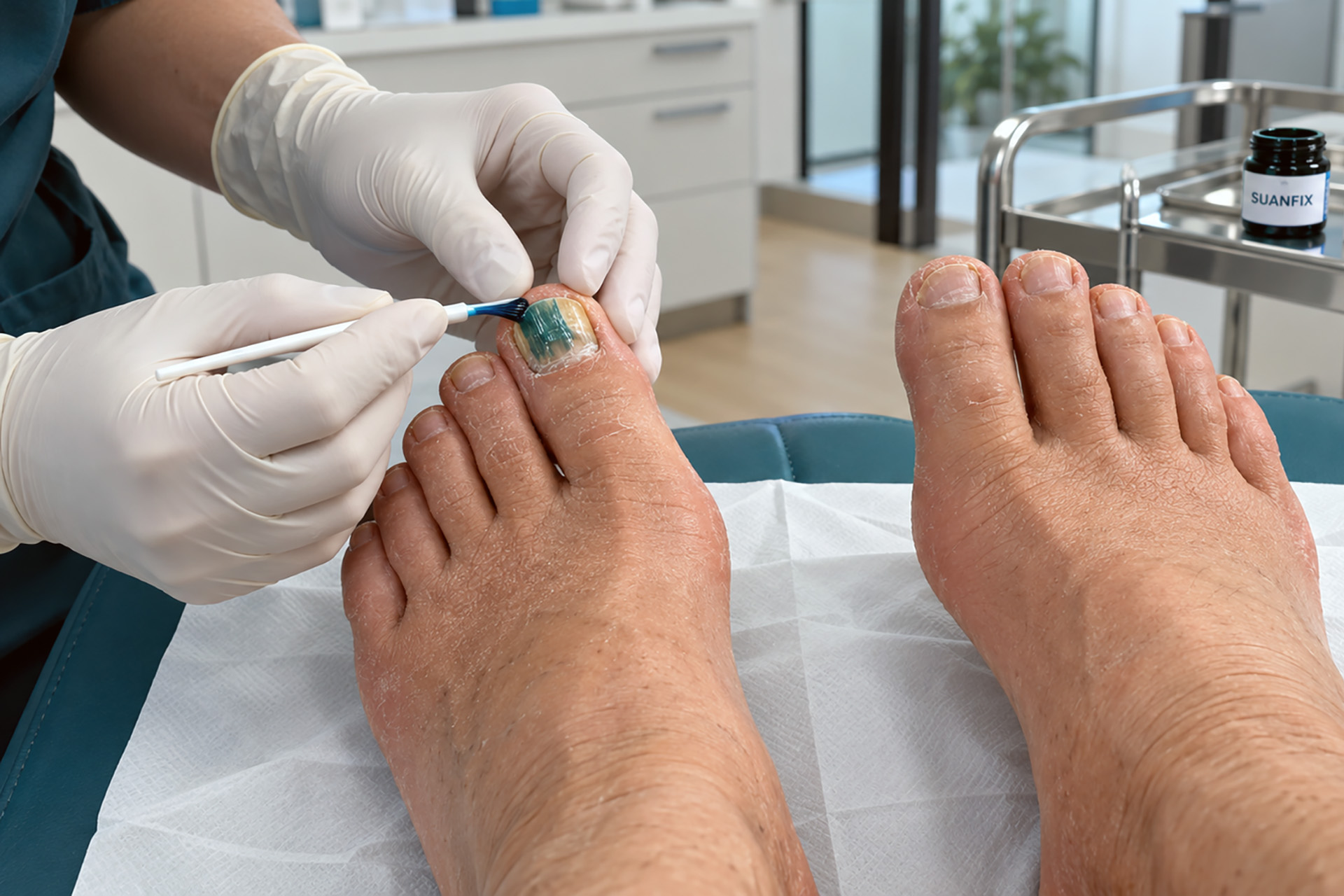
What Happens during a Toenail Fungus Assessment
Health and nail history
Your podiatrist will ask when the change began, whether other nails or nearby skin are affected and what you have already tried. Your health conditions, medicines, footwear, previous nail injury and history of a fungal infection on the skin may affect the skin and nail care plan.
Nail and skin examination
The nail plate, nail bed, and surrounding skin are examined. A fungal infection may begin as a white or yellow-brown area near the outer edge of a toenail and spread inwards. Other patterns may occur. Onychomycosis may eventually involve the whole nail plate or nail bed. A foul odour, redness, drainage or marked pain is not specific to toenail fungus and may suggest a bacterial infection or another problem. Thickening toenails alone does not confirm a toenail fungus infection.
Testing when needed
A toenail clipping or scraping may be sent for microscopy, culture or another test. It can identify fungal organisms when the appearance is uncertain, previous toenail fungus care has not worked, or if oral onychomycosis medication is being considered.
Fungi cause only some abnormal-looking toenails. Trauma, psoriasis and bacterial infection may require different care. Testing can help a healthcare provider distinguish onychomycosis or tinea unguium from other disorders, and manage an intervention plan accordingly.
A plan based on severity and health
The care plan for a fungal nail infection considers:
- how much of each affected nail is involved
- whether the toenail base, nail bed or growth area appears involved
- the number of affected toenails
- toenail thickness, lifting, pressure and pain
- previous toenail fungus treatment and recurrence
- diabetes, circulation, sensation and immune system health
- possible medicine interactions and personal preferences

Toenail Fungus Treatment Options
Nail reduction and debridement
A podiatrist may trim and thin a thick or distorted toenail using sterile instruments. This may reduce pressure, make the infected nail easier to manage and help topical medication reach the toenail more effectively. A professional must do this, as the goal is not to affect any healthy part of the nail.
Nail debridement is supportive care. It usually does not clear toenail fungus on its own. Clinical nail and foot care may form part of a wider toenail fungus plan.
Topical antifungal nail medicine
A medicated nail fungal infection lacquer or solution may suit mild toenail fungal infections or some superficial infections, especially when the base is not involved. Topical treatments for onychomycosis require regular use, often for many months. Apply the topical nail fungal infection cream as directed.
A fungal infection of the skin between the toes is called athlete’s foot. Dermatophyte fungi can also cause ringworm and tinea cruris (jock itch). Ordinary antifungal creams can help with this fungal infection, but they usually do not penetrate deep into an infected nail plate. Follow the instructions for the nail fungal infection medicine and ask a pharmacist or healthcare provider whether it is suitable for you.
Oral antifungal medicine
Prescription oral antifungal medication generally has a higher chance of clearing confirmed toenail fungus than topical treatments. A doctor decides whether antifungal pills are appropriate for more extensive toenail infections.
Oral antifungal medication can interact with other medicines and may not suit everyone. A healthcare provider may request blood tests before and sometimes during treatment. Do not use another person’s antifungal pills, or change a prescribed course without medical advice.
Light-based therapy
Some clinics use light-based, or photodynamic, approaches to treat toenail fungus. These vary and are not necessarily onychomycosis laser treatments. Some use a topical photosensitiser and require several sessions.
The Foot Practice may discuss ToeFX Therapy Light as part of a care plan. Be realistic about potential results from light therapy for toenail fungus, as the evidence for this intervention is less established than for oral and topical medicines.
Nail removal
Partial or complete toenail removal is uncommon. Consider this only when an infected nail is severely damaged or painful and other care has not helped. Removal does not prevent the toenail fungus from returning, though.

What to Expect during Recovery
Treating toenail fungus and toenail regrowth follow different timelines. Medicines and clinic sessions may last for weeks or months, but the damaged part must grow out before the toenail looks clear.
Early improvement appears when a healthy nail grows from the base. A full toenail can take about 12 to 18 months to replace, though onychomycosis treatment duration can vary depending on the condition. The toenail may remain discoloured or thick after the fungal infection has responded. A clear nail develops as new growth replaces the damaged area.
Toenail fungal infections can return. Athlete’s foot, exposure to fungi, nail trauma, slow growth and certain health conditions can contribute. Follow-up check-ups with a podiatrist help assess nail health and whether toenail fungus care needs to change.
Care for Your Feet during Treatment
Preventing fungal nail infections is not always possible. Several factors allow fungi to persist in warm, moist environments, which are plentiful in humid Singapore. These measures may reduce exposure and help prevent toenail fungus from returning:
- Wash your feet and dry carefully between the toes, because fungi favour warm, moist environments
- If you have excessive sweating, change damp socks and wear shoes that fit well and allow ventilation
- Let footwear dry fully between uses, clean it according to the manufacturer’s instructions and replace old shoes that cannot be kept clean and dry
- Wear flip-flops in communal showers, changing rooms and around swimming pools
- Keep toenails short, with the nails trimmed straight across to reduce avoidable injury
- Clean nail clippers after use and do not share nail clippers, files, towels or shoes
- Treat athlete’s foot promptly because toenail fungus can spread to other toenails
- Follow the instructions for topical nail medicine and nail polish during treatment
- Choose a nail salon that sterilises its tools, and avoid nail polish or artificial nails over an affected toenail unless advised
Tea tree oil and vinegar soaks have limited evidence for treating toenail fungus. This form of home care can irritate the surrounding skin and should not replace established care.
If you have diabetes, reduced sensation, poor blood circulation or a weakened immune system, do not cut away an abnormal toenail or apply a prescription medication without advice. Learn how to prevent nail fungus when you have underlying health conditions.
Podiatry Care at The Foot Practice
The Foot Practice’s podiatrists can examine your toenails, consider other causes, arrange testing when appropriate, reduce troublesome thickness and discuss suitable next steps. We offer tailored toenail fungus solutions in Singapore. A doctor or healthcare provider may be involved if you need oral antifungal medication or medical monitoring. Book a podiatry appointment with us if a toenail is painful, recurrent, difficult to trim or not improving.
Frequently Asked Questions
How is toenail fungus diagnosed?
A podiatrist or doctor examines the toenail and surrounding skin. They may test a clipping or scraping for fungi because other disorders can resemble a fungal infection. Testing may identify fungal organisms causing tinea unguium.
What is the most effective treatment for fungal nail infection?
Prescription oral antifungal medication generally has the highest chance of clearing a confirmed fungal infection, but it is not suitable for everyone. You may manage limited toenail infections with a medicated nail lacquer or solution. Debridement may support either approach. Your medical specialist will determine the right treatment for your foot.
How long does treatment take?
Treating toenail fungus often takes a few months. A toenail may need about 12 to 18 months to grow out fully, so its appearance may improve slowly even after the infection responds.
Can a podiatrist remove the fungus by thinning the nail?
Thinning a thick toenail can reduce pressure and support topical care, but debridement alone does not usually treat nail fungus or eradicate the infection.
Is ToeFX a laser treatment?
No. ToeFX Therapy Light is a light-based therapy, not a laser treatment. Evidence for light-based treatment is less established than evidence for established medicines, and you may need several sessions to see results.
Can toenail fungus return after treatment?
Yes. Recurrence can occur. To help prevent toenail fungus, keep your feet dry, treat athlete’s foot, avoid shared nail tools, and protect your toenails from repeated injury.
Should I use tea tree oil or vinegar?
Evidence for these onychomycosis home remedies is limited, and they may irritate the skin. They are not proven to treat nail fungus and should not delay assessment or replace recommended care.