What Is an Anterior Shin Splint?
Anterior shin splints are a common overuse injury that causes pain along the front of the shin, usually where the tibialis anterior muscles and nearby tissues attach to the shin bone. This pattern is also sometimes called anterior tibial stress syndrome or medial tibial stress syndrome when it involves a broader tibial overload. It is less often discussed than the classic inner-shin pattern of shin splints, but it can be just as disruptive for runners, dancers, court-sport athletes and those who suddenly increase walking or exercise volume.
The tibialis anterior is the main muscle at the front of the lower leg that helps lift the foot and control its descent to the ground. When exercise load rises too quickly, these tibialis muscles and their attachment to the shin bone can become irritated, causing inflammation. This means that repeated running, hills, jumping, speed work, or long walks can overload the front of the shin faster than the muscles and tissues can adapt.
In the early stage, the problem is mostly irritation of the muscles, connective tissues and the bone lining, with inflammation as the main driver. If the load continues and recovery is not adequate, it can progress towards a tibial stress syndrome injury or stress fracture. Early recognition helps prevent further injury.
Common causes of anterior shin splints include a sudden increase in running distance, an abrupt increase in hill or interval running, uneven or hard surfaces, worn-out running shoes, flat feet, overpronation, calf tightness, and lower-leg fatigue. In Singapore, podiatrists often see this in runners increasing mileage for race season, such as the Standard Chartered Marathon, or National Servicemen trainees returning to harder physical activity after a break.

Symptoms
Shin splints symptoms usually include aching or sharp pain along the front of the shin that worsens with running, jumping, uphill walking, or fast walking. Symptoms often begin gradually. Some notice stiffness at the start of an activity that improves as they warm up, only to return later in the session.
Tenderness is often felt along the front or front-outer border of the tibia in the affected area. You may also have mild swelling, a sense of fullness in the lower-leg muscles, or fatigue in the muscles that lift the foot. Other symptoms can include cramping or weakness in the front of the ankle and foot, especially after harder sessions.
One of the most useful clues for distinguishing shin splints from other lower-leg injuries, such as stress fractures, is the pain pattern. Shin splints usually cause pain that spreads over a broader area. By contrast, a stress fracture is more likely to cause sharp, localised tenderness over a small patch of bone, severe pain that worsens even with reduced activity, or pain at rest or at night.
When to See a Podiatrist
See a podiatrist if shin splints keep returning, are getting worse, or start to affect your walking, including when playing sports. Mild cases often improve faster when you identify the cause early. If the pain has lasted longer than a short period, returns every time you run, or doesn’t settle with simple rest, it is sensible to have a specialist, such as a podiatrist, assess it.
Seek earlier assessment if the pain is localised to a specific point on the leg, if you have night pain, or if the symptoms of shin splints continue despite cutting back on your activity. Left untreated, shin splints can progress and increase the risk of further injury and stress fractures. A review is also important if the lower leg feels unusually tight, swollen, or weak, as this may indicate another problem, such as exertional compartment syndrome.
Diagnosis
Diagnosing shin splints starts with a careful review of your symptoms, training history, footwear, and lower-limb mechanics. A podiatrist will ask when the pain began, whether you’ve recently increased distance, hills, or speed, what running shoes you use, and whether you have changed them recently. They will also ask about risk factors such as low bone density, low energy availability, menstrual changes, Vitamin D deficiency, or previous stress injuries when relevant.
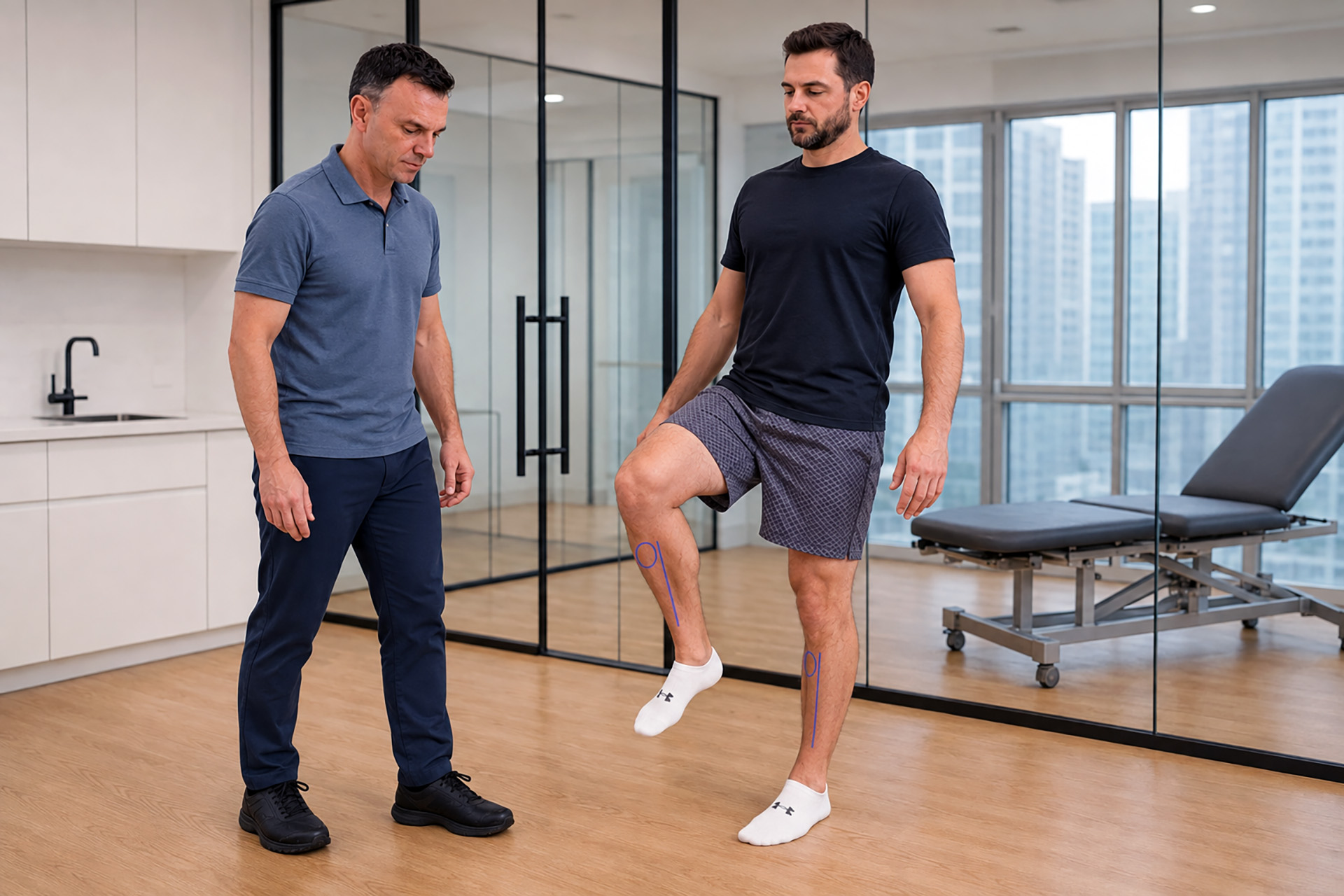
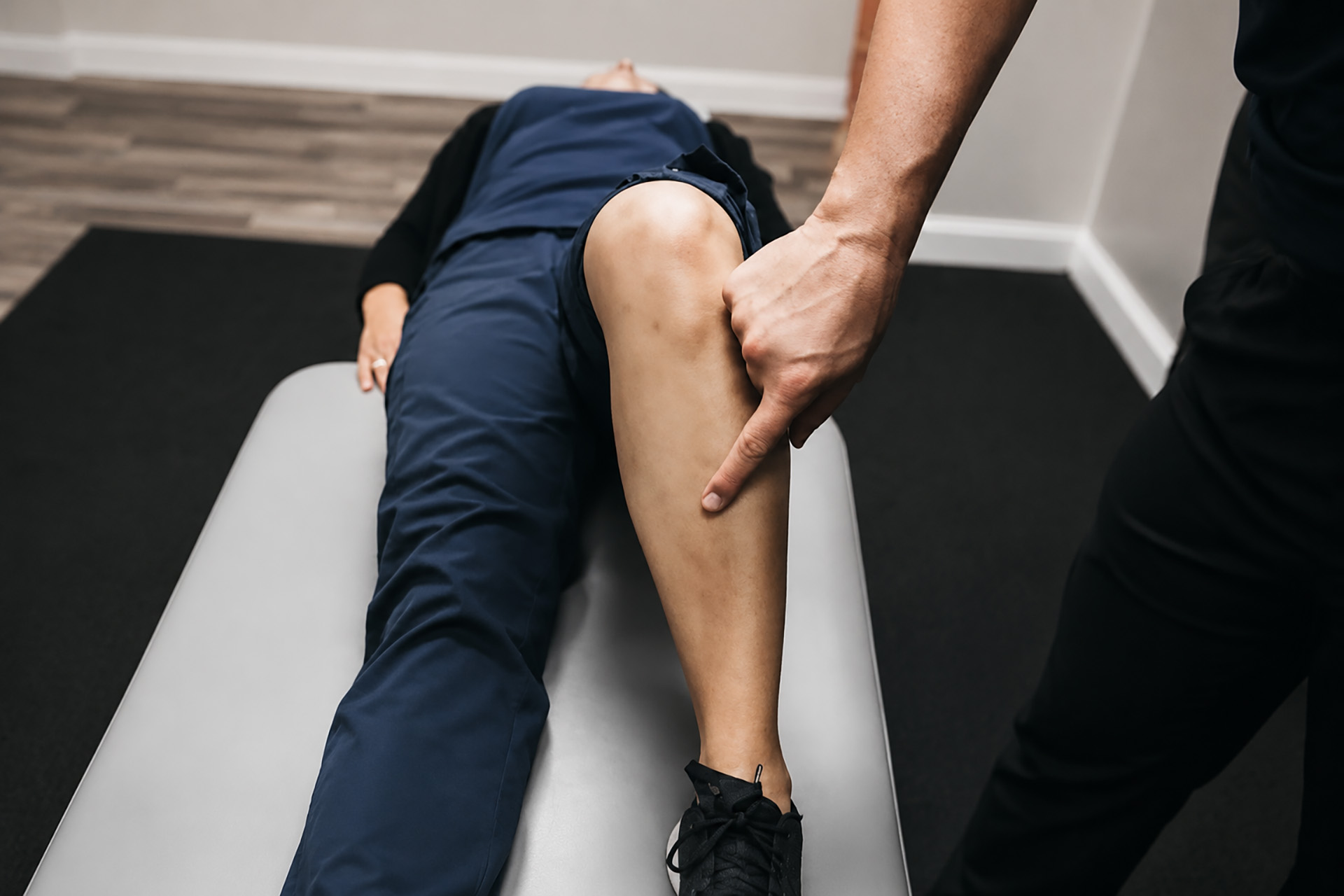
The examination usually includes pressing along the tibia to map the tenderness in the affected area, checking ankle motion, testing calf and tibialis muscle strength, and observing foot posture and gait. A podiatrist may watch you walk or run to see whether flat feet, flat arches, overpronation, running style or stride mechanics are adding stress to the front of the shin. At The Foot Practice, we have found that gait assessment and footwear review can be especially useful for managing shin splints effectively.
Imaging isn’t always needed, but we may recommend it if we suspect a bone stress injury, symptoms are severe, or progress isn’t as expected. X-rays are often the first step, but early stress fractures do not always show up on these scans. Magnetic Resonance Imaging (MRI) or a bone scan (a nuclear imaging test) can help when the concern remains high.
Non-Surgical Management
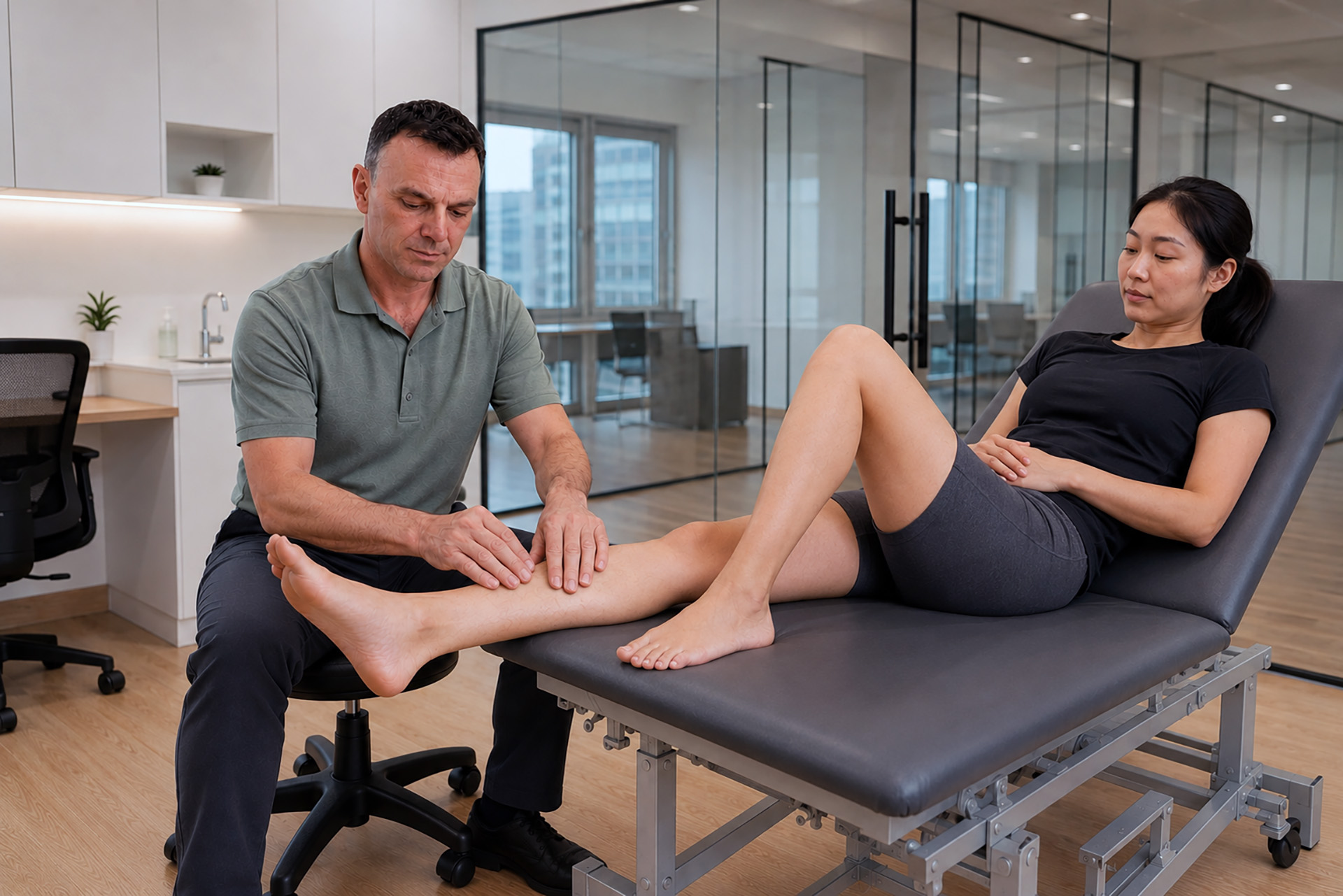
Non-surgical management for shin splints focuses on reducing the overload, calming symptoms, and gradually rebuilding the lower leg muscles’ capacity. Home treatment often begins with relative rest, such as reducing painful running and jumping rather than stopping all exercise. Many runners can stay active by cross-training with low-impact exercises such as cycling or swimming while their shins settle. This helps because cross-training maintains blood flow and fitness without loading the affected area, giving your shins a rest without compromising your overall activity. Applying ice to the affected area after exercise may ease the pain and help reduce swelling, though it is only a temporary aid.
Footwear matters more than many people realise. Worn-out or poorly cushioned running shoes increase the risk of shin splints by promoting poor biomechanics and reducing shock absorption. Supportive running shoes, shock-absorbing insoles, shoe inserts and, in selected cases, orthotic support can improve load distribution and help distribute force more evenly across the foot and ultimately, the leg. This is particularly relevant for people with flat feet or overpronation.
As the pain settles, exercise becomes central to treating shin splints. Anterior shin splints stretches may include calf stretching, Achilles tendon stretching, and ankle mobility work, especially when calf tightness limits ankle movement and increases strain on the muscles at the front of the leg. Anterior shin splints exercises often include progressive strengthening exercises for the tibialis anterior and tibialis posterior muscles, the Achilles tendon, the lower leg and calf muscles, and the foot muscles, as well as balance work and later hip and core strength to improve whole-limb mechanics and reduce stress on the shin bone.
Some patients also ask about taping for anterior shin splints. Taping can sometimes help relieve pain, especially during the transition back to exercise, but it is not a stand-alone solution. Use it with other intervention strategies, such as strengthening exercises or stretching routines. The same applies to compression sleeves or braces. These may help some patients with anterior shin splints feel more comfortable, but they do not correct the training errors or biomechanical factors that may have caused the problem. An intervention strategy that addresses the root cause is essential for managing shin splints effectively.
The return to exercise should be gradual to prevent anterior shin splints from recurring. A staged approach often starts with walking, then walk-jog intervals, followed by progressive increases in running time; then speed, hills, and harder surfaces are reintroduced, typically over three to four weeks or longer, depending on the severity of your anterior shin splint. This is also done simultaneously with physical therapy and a structured management plan.
Posterior shin splints and medial tibial stress syndrome follow a similar staged recovery approach. Treatment options for shin splints include rest, ice, physical therapy and progressive rehabilitation. Home treatment should include cross-training, stretching and avoiding sudden increases in load.
Surgical Options
Surgical options for shin splints are rarely needed and are not part of the routine care for straightforward cases. Most patients improve with load management, footwear changes, supportive care and a structured strengthening exercises programme. Surgery is considered only when the diagnosis turns out to be a different condition entirely, or when another condition is driving the symptoms that cause anterior shin splints.
For example, if ongoing lower leg pain is caused by exertional compartment syndrome rather than shin splints, orthopaedic surgeons may occasionally discuss surgical release of the involved compartment. If a tibial stress fracture is confirmed, the plan changes as well, with more protected healing rather than standard shin-splint-style management. These cases are relatively rare; shin splints are usually managed non-surgically through physical therapy and staged exercise programmes.
Risks and Recovery
Shin splint recovery is usually good, but the timeline depends on how early you address the problem and whether you correct the underlying cause. Mild cases may improve within a few weeks with adjustments to exercise load and running shoes. In severe cases, longer-standing symptoms or cases edging towards bone stress injury can take several months before the pain disappears.
The main risk of ignoring shin splints is the progression to a stress fracture. If left untreated, shin splints can lead to further injury and longer recovery times. Recurrence is also common when patients rest until the pain settles, then return straight to the same exercise load, running shoes and training pattern that caused the problem in the first place.
Get Help for Anterior Shin Splints
Shin splints respond best when you identify the source of the overload early and manage it properly. If you have shin splint symptoms along the front of your shin that keep returning, worsen with exercise, or make it harder to play sports and carry out daily activities, it may be time for a proper podiatry assessment.
At The Foot Practice in Singapore, our podiatrists assess not just the affected area, but also your gait, running shoes, foot posture and exercise load. This helps us build a personalised, holistic treatment plan around load modification, footwear advice, orthotic support where appropriate, progressive stretching routines, and strengthening exercises. Contact The Foot Practice today to arrange a consultation and get a clearer path towards recovery before a smaller shin problem becomes a longer-term setback.