

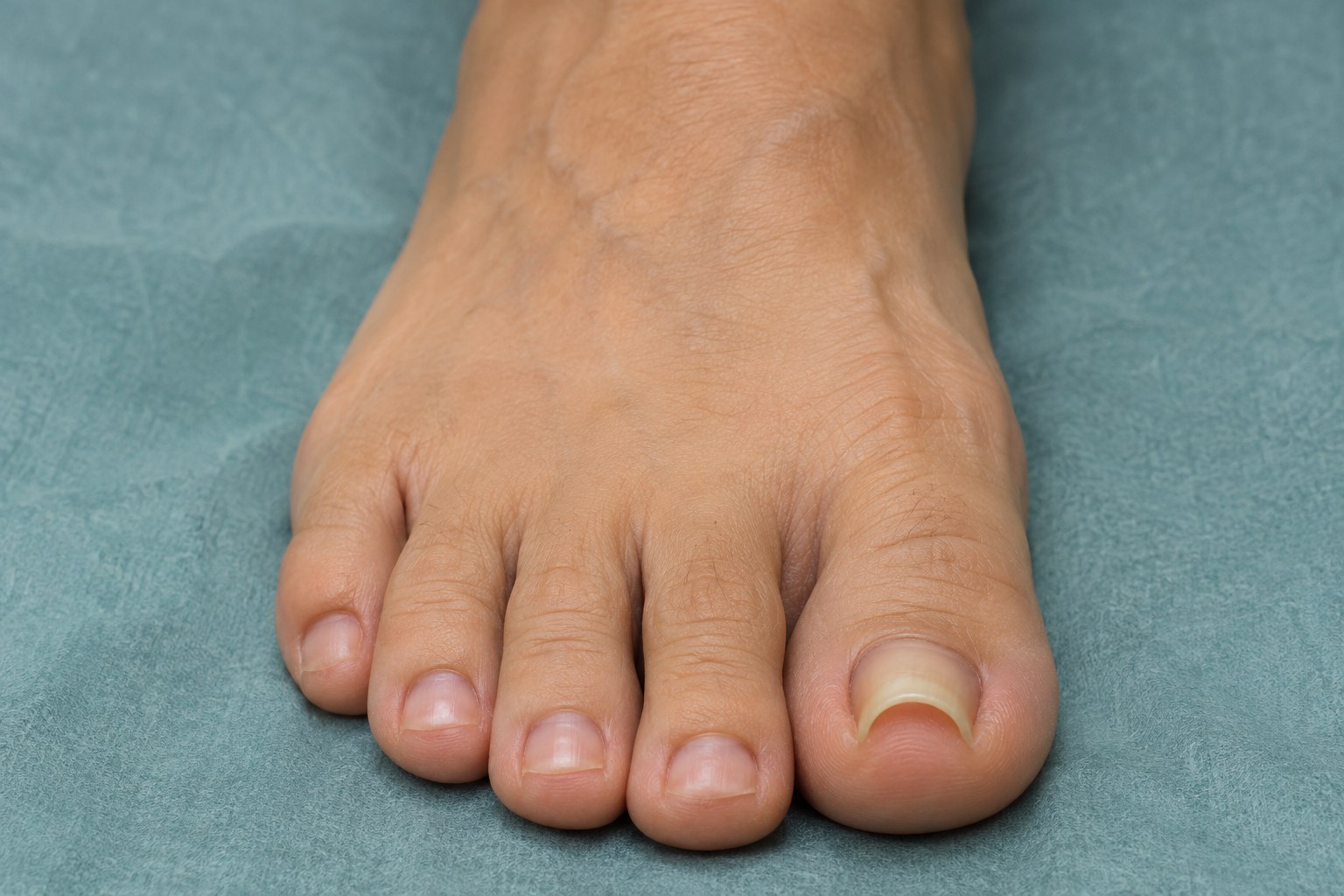
A pincer nail deformity is an excessive side-to-side curve of the nail plate, the hard, visible nail. Its lateral edges, or sides, draw closer together toward the tip and squeeze the nail bed beneath it. This condition commonly affects big toenails (hallux toenails) and can cause pain even when the skin is unbroken. The nail matrix is the nail unit’s growth centre.
Involuted nails are nails whose sides curve inward. The term often overlaps with pincer nails. A tightly rolled, pinched shape may be called a trumpet nail or omega nail. Not all curved toenails indicate this nail disorder.
What Are the Symptoms of a Pincer Nail?
A tightening transverse curve and pinching discomfort are the main signs of pincer nail deformity. Symptoms may include:
- A nail plate that looks increasingly arched or narrow at its free edge.
- Tenderness along one or both sides of the nail, especially in closed or tight shoes.
- Thickening or difficulty trimming the nail plate.
- Pain at the nail bed when walking or pressing on the nail plate.
A symptomatic pincer nail can cause mild discomfort or severe pain, although some pincer nails remain painless. Persistent pressure from the lateral edges can damage the lateral nail folds and the surrounding skin beside the nail plate, leading to inflammation or secondary infection.
What Causes Pincer Nails?
Pincer nail deformity can be inherited or acquired. Several factors may contribute to the change in shape.
Hereditary pincer nails often affect both big toes. Some families show an autosomal dominant pattern, meaning the tendency can be passed from an affected parent. An acquired pincer nail may be uneven or affect only one nail.
An acquired pincer nail may be associated with repeated pressure from ill-fitting or tight footwear, previous injury or repeated trauma, fungal nail infection, psoriasis and changes in the bone beneath the nail, including osteoarthritis. These associations do not establish the cause of pincer nail deformity in every person.
Pincer nails have also been reported with long-term beta-blocker use and conditions such as kidney failure. Your clinician will consider your medical history. Do not stop a prescribed medicine without speaking to your doctor.
Is a Pincer Nail the Same as an Ingrown Toenail?
No. Pincer and ingrown nails differ. A curved ingrown toenail has both excessive nail curvature and nail edges that irritate the surrounding skin.
| Nail problem | Defining change |
|---|---|
| Pincer nail | Excessive inward curvature compresses the nail bed. The skin may remain intact. |
| Ingrown toenail | A nail edge presses into or penetrates adjacent skin, causing irritation and sometimes infection. |
Downward curved toenails are not automatically pincer nails. The defining transverse curve is across the nail plate’s width, rather than simply a long nail bending over the end of the toe.
How Is a Pincer Nail Assessed?
A podiatrist usually recognises pincer nail deformity by examining the nail plate and lateral nail folds from above and from the tip. Assessment also considers pain, footwear, previous injury, medicines and whether other toenails are affected.
Circulation and sensation may influence which care options are suitable. Thick or discoloured nail plates may need fungal testing. A hard lump, rapid change or unusual findings under one nail may need imaging or medical referral. Thick toenails can have several causes and are not always fungal.

How to Fix a Toenail That Is Curving In
Management of pincer toenails aims to reduce pressure on the nail bed and, when possible, improve the nail’s shape. The choice depends on the cause, severity, nail condition and your foot health.
Pressure relief and nail reduction
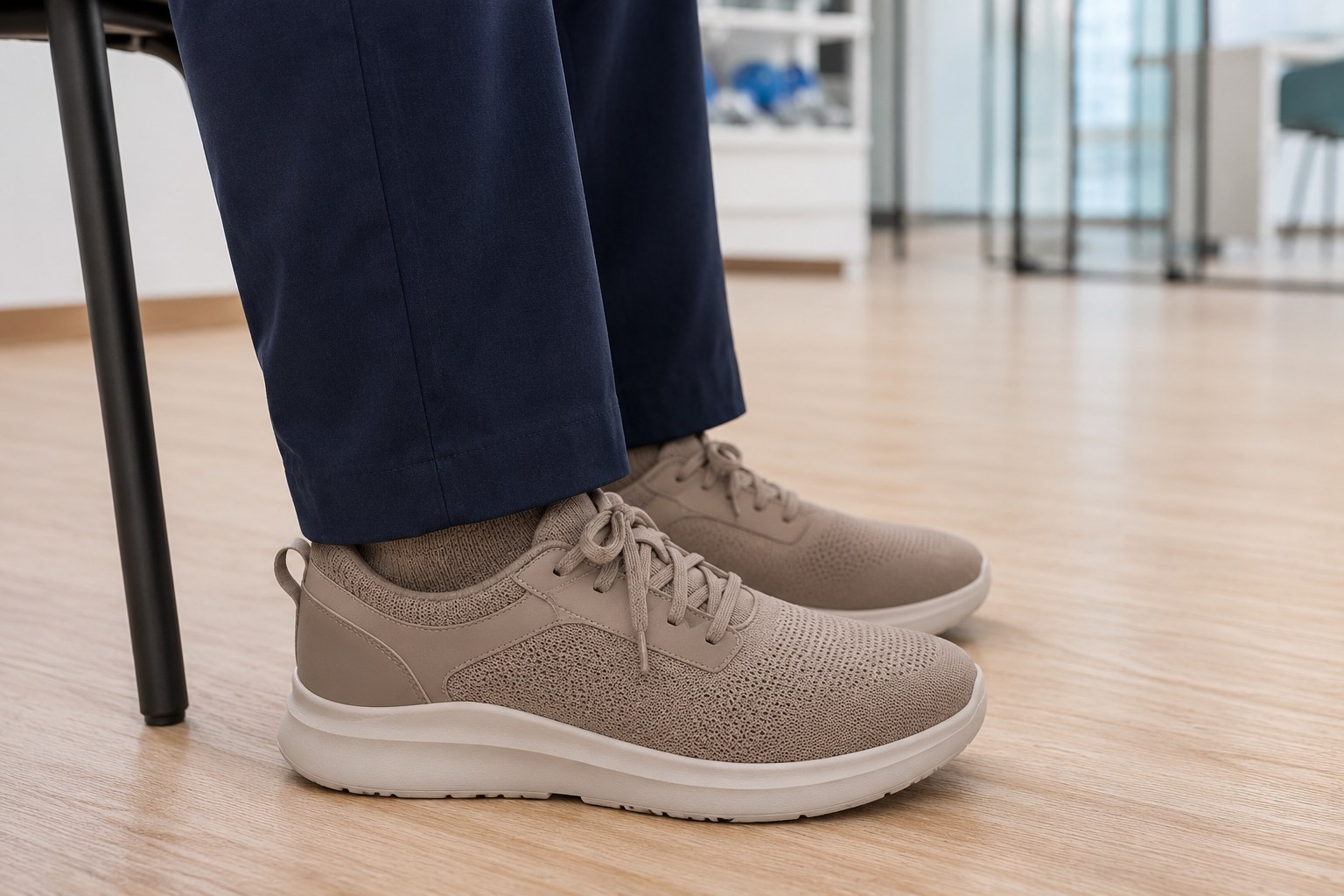
Roomier footwear and careful nail plate reduction can reduce compression of the nail bed. Wear shoes with a wide, deep toe box and socks that do not squeeze your toes.
A clinician may reduce excessive nail plate thickness using a nail grinder. This can make the nail easier to manage and reduce its tendency to curve. Do not try to grind a painful nail yourself.
How to straighten curved toenails
A nail brace can apply gentle mechanical force to the nail plate’s lateral edges as the nail grows. This method, called orthonyxia, may form part of your pincer nail correction.
Braces may use plastic or wire, including selected shape-memory alloys. Suitability depends on the nail and surrounding tissue. Follow-up allows adjustment and checks for irritation. The nail plate’s response varies, and the curvature can return.
When a nail procedure may be considered
Persistent pain, repeated skin injury, or a severe pincer nail deformity may need a procedural assessment or medical referral.
Partial nail avulsion separates the affected nail plate from the nail bed and removes the problematic section. Matricectomy addresses the matching part of the nail matrix, the nail’s growth centre, to limit regrowth. Nail avulsion alone leaves the nail matrix intact, so the nail plate may return with the same curve. If symptoms persist, an ingrown nail may need partial nail removal.
How to Cut Curved Toenails
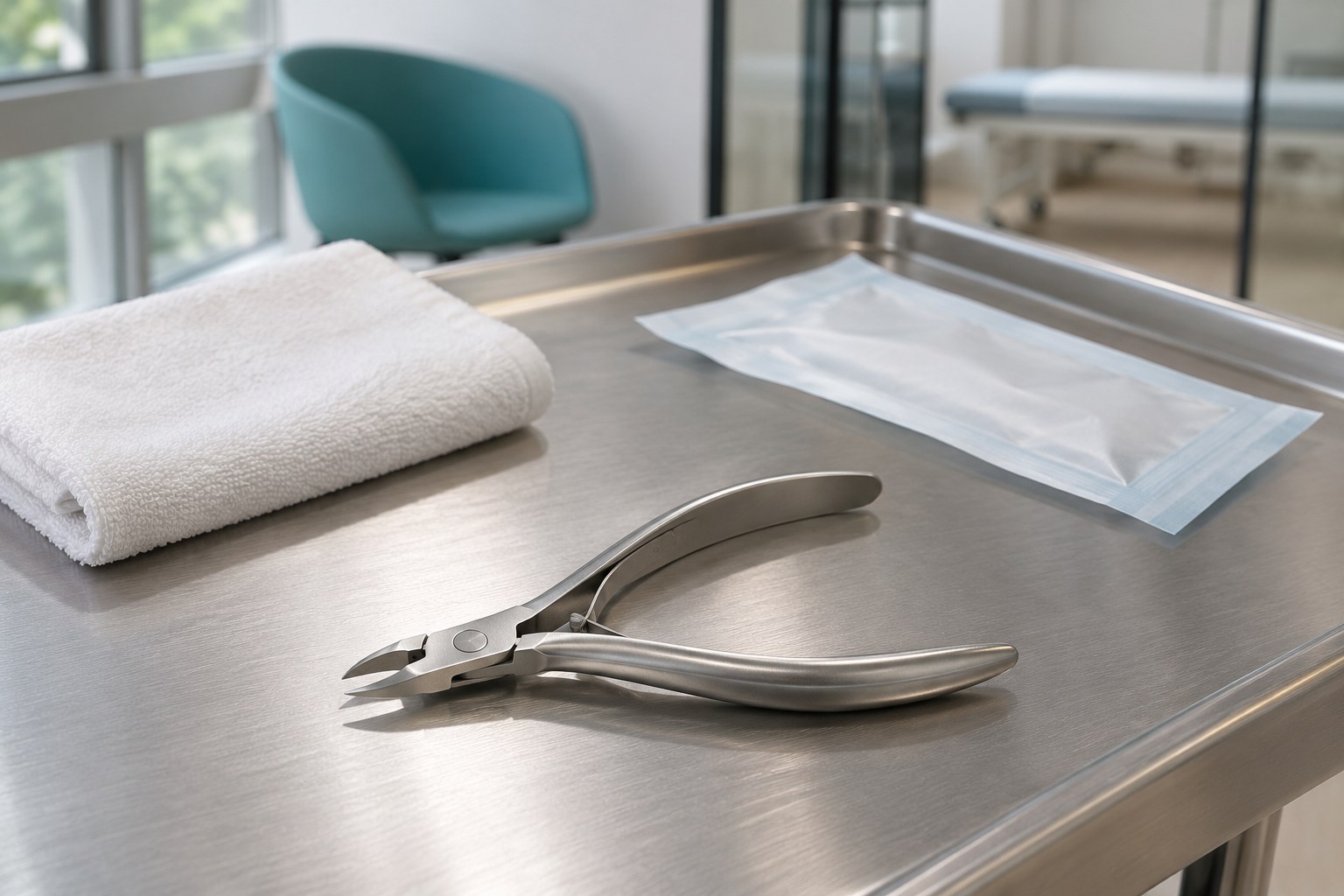
Trim only the accessible free edge of the nail plate straight across if you can do so comfortably and have no condition that makes self-care unsafe.
- Avoid cutting the nail plate too short or rounding deeply into its corners.
- Gently file a sharp free edge without digging beneath the nail.
- Do not cut a V into the nail plate or force its tightly curved edges upwards.
- Keep the area clean and dry.
If the curve prevents safe trimming, arrange professional nail care. Wider shoes and careful trimming can reduce pressure and the risk of an ingrown nail, but cannot reliably prevent hereditary pincer nails.
When Should You Seek Care?
Arrange an assessment if a pincer nail is painful, keeps worsening or is difficult to trim. Follow-up frequency depends on symptoms and how the nail grows.
Seek prompt medical care for spreading redness, increasing warmth or swelling, pus, an open wound, fever or severe worsening pain. Redness around a lateral nail fold may indicate paronychia, which can occur alongside a curved nail.
If you have diabetes, poor circulation or reduced sensation, seek professional advice before cutting or manipulating a painful curved nail.
Can a Podiatrist Fix Pincer Nails?
A podiatrist can assess pincer toenails and associated ingrown nails, advise on pressure relief and nail plate reduction, and determine whether bracing is appropriate. Some people need a medical or surgical referral for this nail deformity. Symptom relief does not always mean the nail will stay permanently straight.
If your nail is painful or changing, you can arrange a podiatry appointment for a skin and nail assessment at The Foot Practice in Singapore.
Frequently Asked Questions
How to get rid of a pincer toenail naturally?
Home care can reduce pressure on the nail bed and discomfort, but it has not been shown to permanently reshape an established pincer nail deformity. Avoid forcing the edges up or cutting into the sides.
Can pincer nails be reversed?
Some pincer toenails become less curved after bracing or addressing the cause of an acquired pincer nail. Others need ongoing care or a procedure. Improvement is possible, but a permanent change cannot be guaranteed.
What is the difference between a pincer nail and a plicatured nail?
A pincer nail has excessive side-to-side nail curvature. A plicatured, or plicated, nail has a sharply folded side edge. Some classifications include plicated nails within pincer deformities, so the terms can overlap.
Can vitamin deficiencies cause pincer toenails?
Vitamin deficiency is not a common, established cause of pincer toenails. If your diet or other symptoms suggest a deficiency, your doctor can assess it. Supplements have not been shown to straighten a pincer nail.
What is the most common cause of pincer toenails?
No single established cause explains most cases of pincer toenails. Assessment looks for inherited nail shape, local pressure, injury and associated nail or bone changes.