
What is Ingrown Toenail Removal?
Ingrown toenail removal is a minor surgical procedure that numbs the affected toe and removes the ingrown portion pressing into the surrounding skin. Nail avulsion separates the nail plate from the nail bed. If the ingrown toenail returns, the nail matrix may be managed to reduce regrowth. Most ingrown toenails do not require complete removal.
When Removal May Be Considered
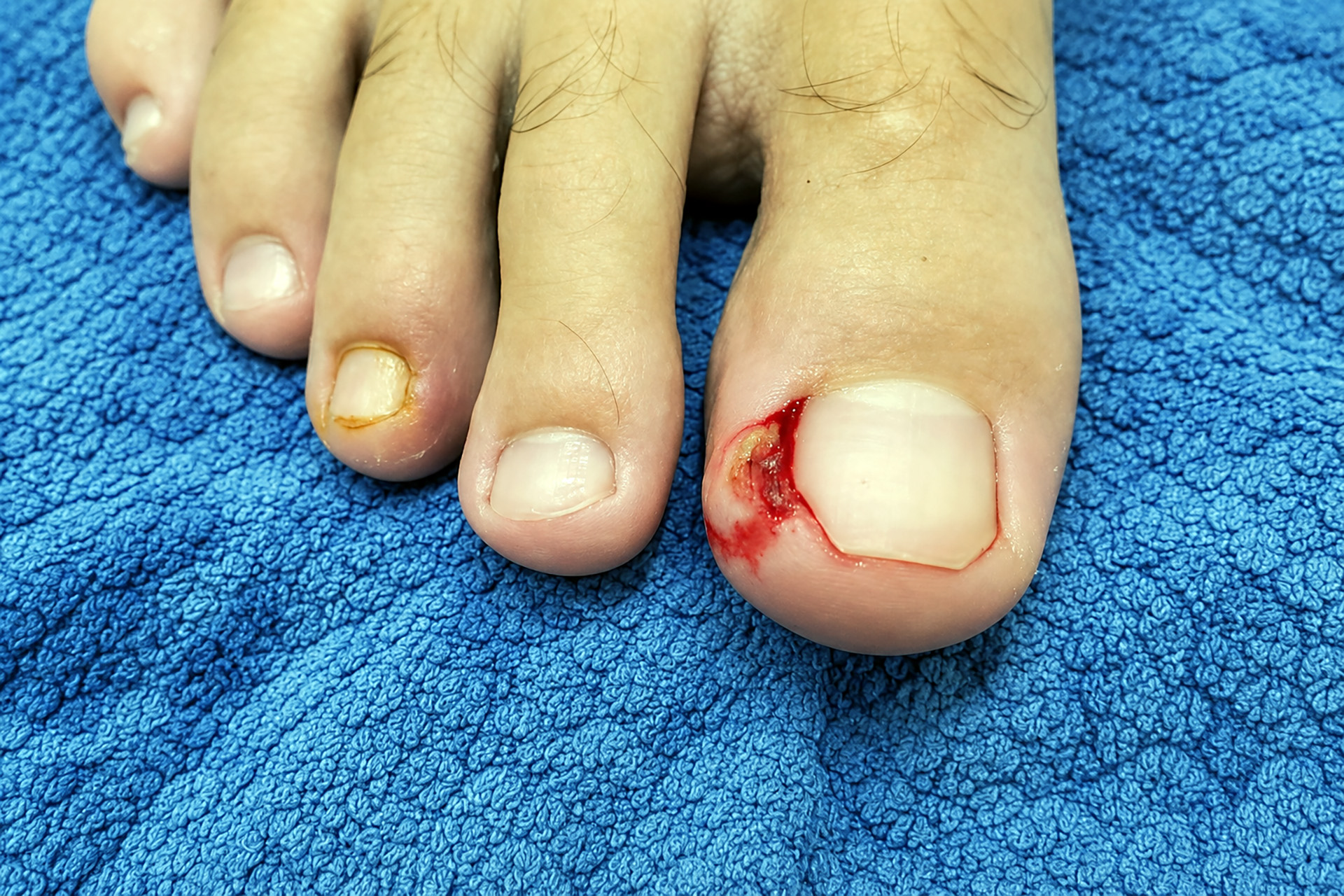
An ingrown toenail usually affects the big toe. The ingrown toenail develops when the edge of the nail presses into the skin surrounding the toenail. Causes of ingrown toenails include improper nail trimming, tight footwear, very curved or fan-shaped toenails, toe injuries, and fungal infections. Ingrown toenails are more likely if you do not cut toenails straight across or wear pointed shoes. Surgical treatment may be considered when:
- Pain, redness or swelling persists despite conservative treatments.
- Pus, bleeding or overgrown tissue develops beside the ingrown toenail.
- The ingrown nail repeatedly grows into the same area on the same toe.
- Toe pain makes it difficult to walk or wear shoes.
Treatment for ingrown toenails may begin with conservative options. Professional management may be needed for persistent or severe cases. Ingrown toenail treatment depends on symptoms and physical examination.
Can You Remove an Ingrown Toenail at Home?
Do not try to remove an ingrown toenail yourself. Cutting the ingrown toenail, digging beneath the nail edge, or using a removal tool may leave a fragment, injure the surrounding skin, and increase infection risk. A nail salon should not surgically remove an ingrown toenail.
For a mild ingrown toenail without pus or spreading redness, warm water soaks and roomy footwear may ease pain. Conservative ingrown toenail treatment may use tape, cotton, dental floss or a gutter splint. A gutter splint may provide immediate pain relief. Do not try these methods if you have diabetes, poor circulation, reduced sensation, or an infection. Arrange an assessment instead.
Antibiotic ointment or oral antibiotics are not routinely needed. A doctor may prescribe an antibiotic for cellulitis or a spreading infection.
How Ingrown Toenail Removal is Done
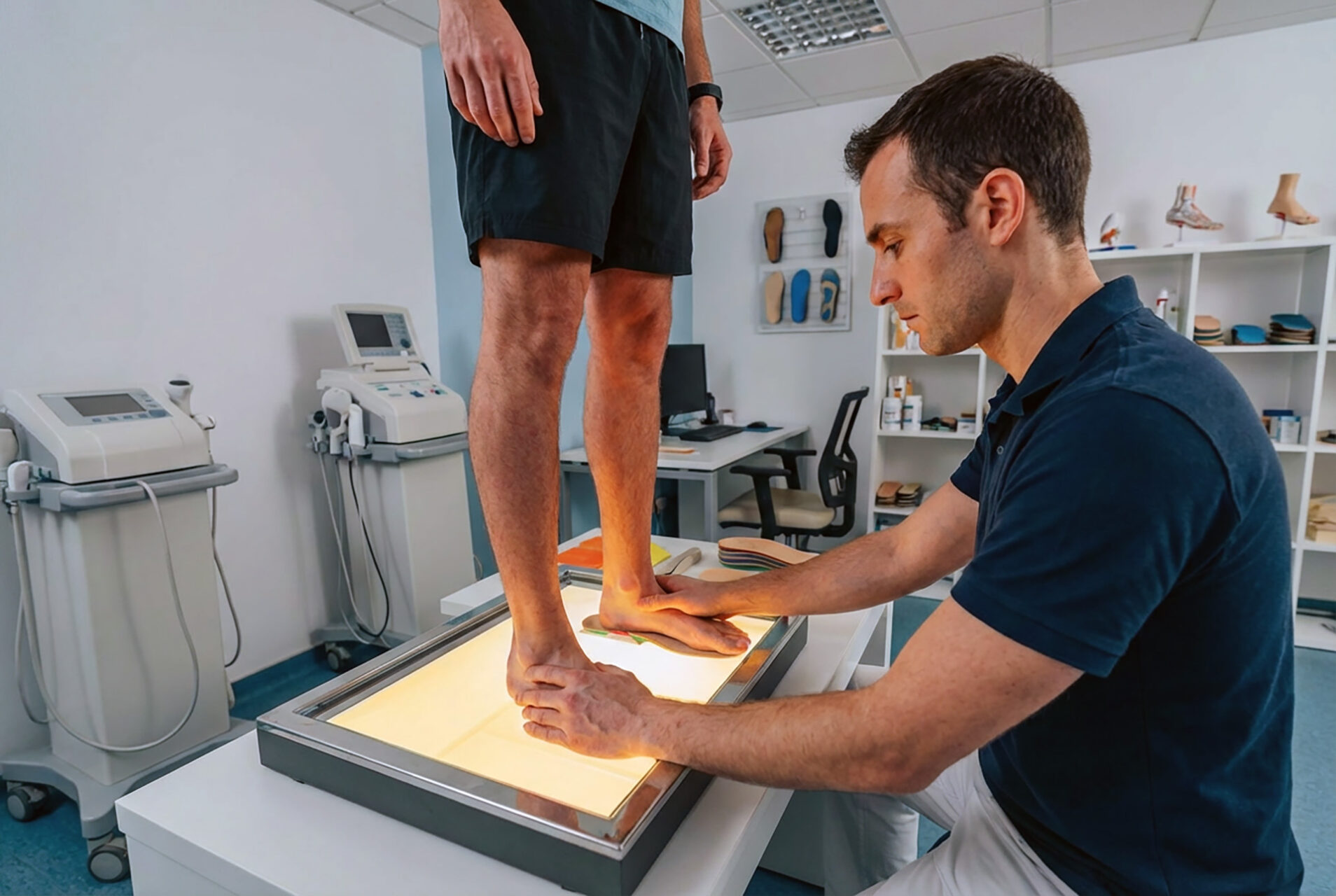
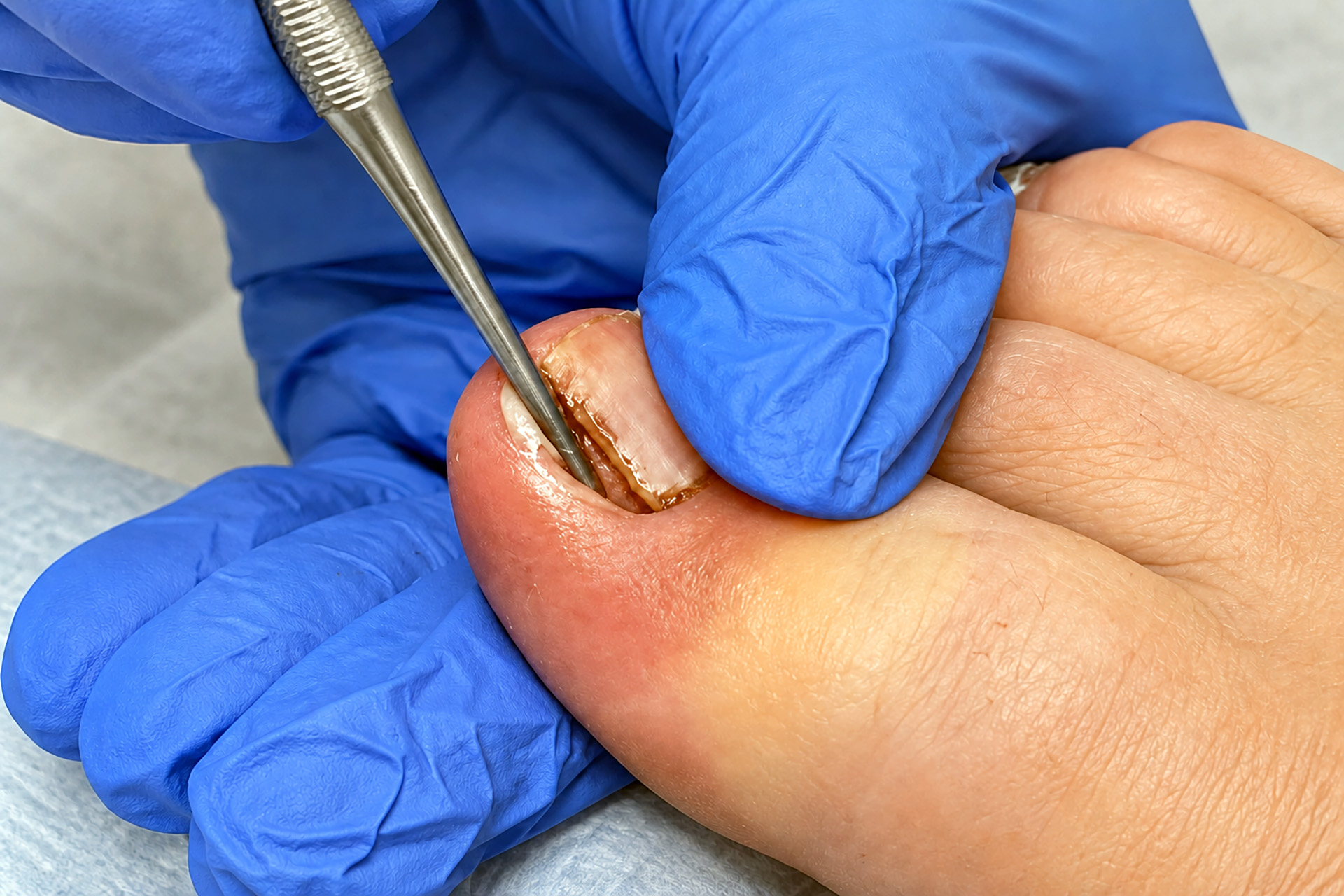
Before the procedure, the podiatrist asks about medicines, allergies and ingrown toenails. A physical examination checks the ingrown toenail, nail plate, nail bed, surrounding skin and circulation. This examination guides treatment and the overall plan. Mention diabetes, poor blood flow, reduced sensation and blood thinners.
A local anaesthetic blocks pain during the surgical procedure. Once the podiatrist has numbed the affected toe, they remove the affected section and dress the nail bed. Surgical treatment for an ingrown toenail aims to relieve pain. The aim is minimal pain during removal, but experience varies. Surgical treatment options depend on the ingrown nail, recurrence and underlying tissue.
| Procedure | What it involves | When it may be considered |
| Partial nail avulsion | A narrow strip along the ingrown edge is removed. It is the most common surgical approach. | A painful, inflamed or recurrent ingrown edge. |
| Partial nail avulsion with chemical matrixectomy | The nail edge is removed. Phenol is applied to the targeted part of the nail matrix to reduce regrowth of that edge. | Recurrent ingrown toenails, or cases where regrowth is likely to cause another problem. |
| Total nail avulsion | The entire nail plate is removed under local anaesthesia. The nail matrix is not automatically removed. | Selected severe cases, including extensive nail damage or involvement of both sides. |
| Winograd procedure | The affected nail edge, corresponding matrix and sometimes enlarged nail-fold tissue are removed through a small wedge resection. The area may be closed with stitches. | Selected recurrent or advanced cases. |
| Nail bracing | A brace gradually changes the nail’s curvature. This is not nail removal. | Selected mild or moderate cases when a non-invasive option is suitable. |
Matrixectomy is sometimes described as permanent ingrown toenail removal. No procedure can guarantee that an ingrown toenail will never recur.
Partial nail avulsion removes the ingrown portion while leaving most of the nail plate and nail bed. Complete removal of the entire nail is uncommon. Surgical treatment options include wedge resection. A wedge resection removes the affected section and growth tissue, but surgical intervention isn’t needed for every ingrown nail.
Is Ingrown Toenail Removal Painful?
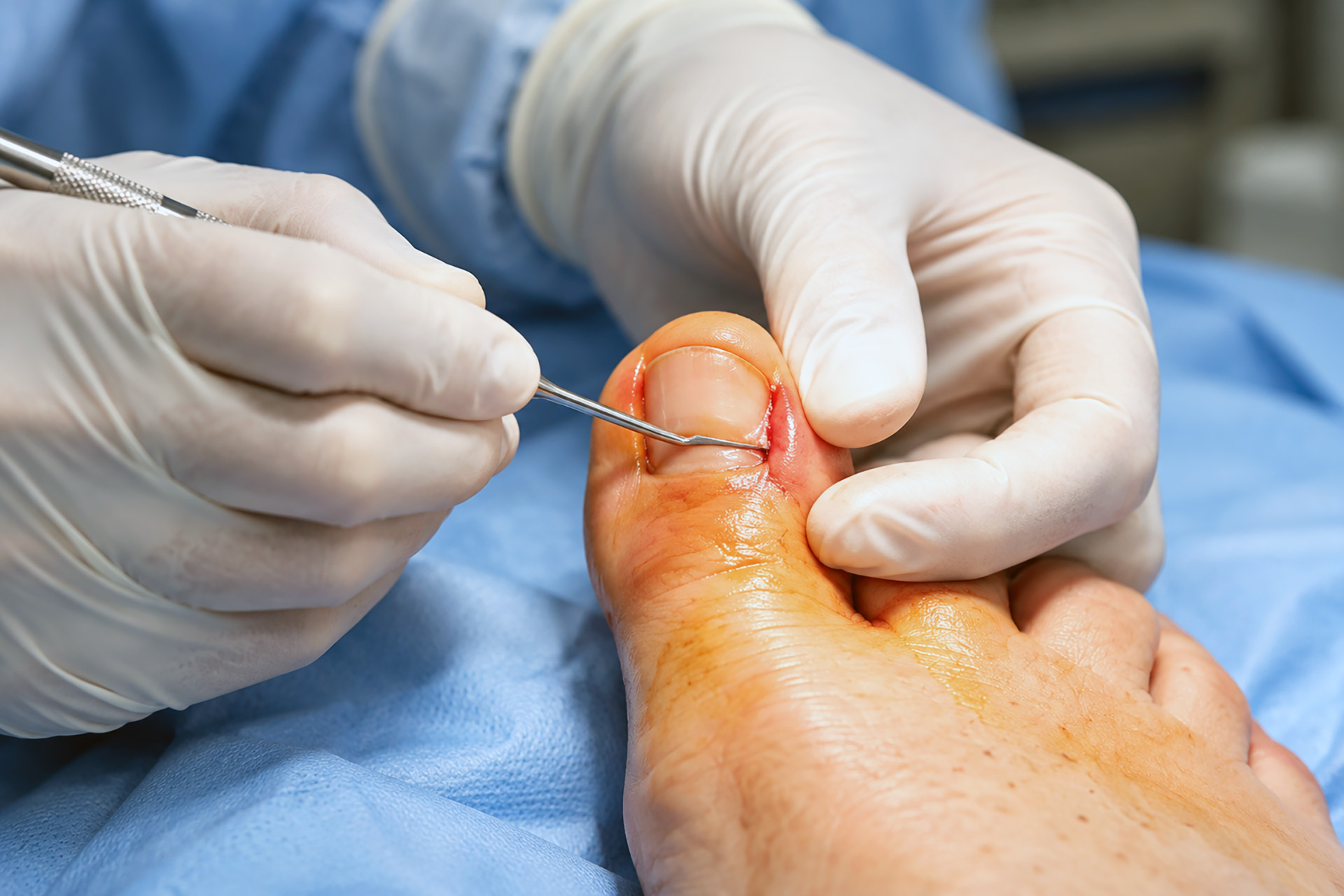
The local anaesthetic injection can sting briefly. After the toe is numb, you shouldn’t feel sharp pain, although you may feel pressure, movement, or mild discomfort. Tell the podiatrist if you feel pain during ingrown toenail removal.
Soreness for one or two days is common after the anaesthetic wears off. Paracetamol or ibuprofen may provide pain relief if these medicines are suitable for you. Follow the label and your clinician’s advice.
Aftercare and Recovery
Follow instructions for your ingrown toenail procedure. In general:
- Rest and elevate the foot for the first 12 to 24 hours.
- Keep the first dressing and affected area clean and dry. Replace it as instructed, often every one or two days.
- Clean or soak the toe only if advised. Salt water bathing is not needed for every wound.
- Wear roomy shoes that do not press on the dressing. When you wear shoes, avoid pressure on the affected area.
- Avoid running, contact sports, swimming and other activities that irritate or wet the wound until it has healed.
- Do not pick at the wound or remaining nail.
Healing time varies. After ingrown toenail treatment involving nail surgery with phenol, the wound often heals in about four to six weeks. Recovery may take longer after a severe ingrown toenail, or if you have diabetes, infection or poor blood flow.
Light-yellow fluid may be normal after phenol. Seek care if redness spreads, pain or swelling worsens, the wound smells, discharge becomes green or brown, bleeding continues, or you develop a fever.
Will the Ingrown Toenail Come Back?
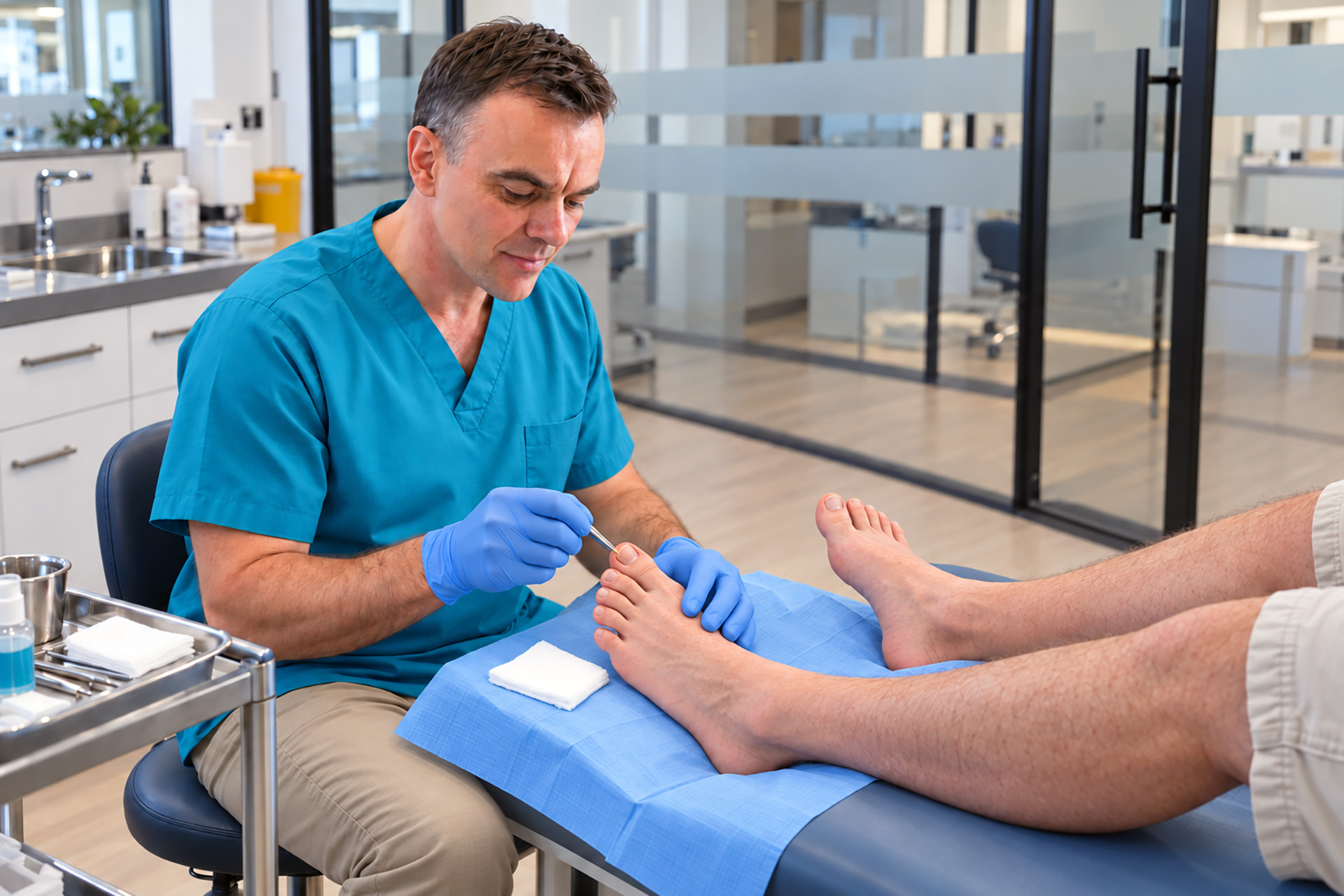
After ingrown toenail treatment, an ingrown nail can return. The removed edge usually grows back after a simple partial nail avulsion. A chemical matrixectomy reduces the chance that the targeted edge will regrow, but recurrence remains possible. Total nail avulsion also allows the entire toenail to regrow unless you manage the matrix.
To reduce pressure on an ingrown toenail as it grows:
- To prevent ingrown toenails, keep toenails straight across. Do not follow a curved shape or cut nails too short.
- Replace tight footwear with well-fitting shoes that have enough room in the toe box.
- Practise good foot hygiene. Keep your feet clean and dry.
- Use protective footwear for sport or work when toe injury is possible.
These steps may prevent ingrown toenails. Treating ingrown toenails early may prevent complications. Good foot hygiene lowers infection risk but cannot correct an ingrown nail. Ask for help if you cannot trim toenails straight across safely. Avoid tight footwear.
When to Seek Prompt Care
Arrange an assessment for persistent pain, increasing redness or swelling, pus, bleeding, overgrown tissue, difficulty walking or repeated ingrown toenails. In severe cases, an ingrown toenail infection can reach the underlying bone and cause serious complications. Seek care promptly for spreading redness, fever or severe pain.
If you have diabetes, poor circulation or poor blood flow, do not attempt to remove or lift the ingrown nail yourself. Early assessment is important because infection and delayed wound healing can be harder to detect. Learn more about diabetic foot care.
Ingrown Toenail Care at The Foot Practice
At an appointment, a podiatrist assesses the ingrown toenail, surrounding skin, circulation and health risks. Depending on the findings, an ingrown toenail treatment plan may include ingrown nail treatment, nail bracing, nail avulsion or an ingrown toenail removal procedure. If removal is suitable, the podiatrist will explain the method, expected recovery, risks and aftercare before you decide.
Book a podiatry appointment if your ingrown toenail is painful, infected or keeps returning.