Athlete’s foot, or tinea pedis, is a contagious fungal infection of the skin on the feet. This fungal condition often begins between the toes, but it can also affect the soles and sides of the foot. Common symptoms of athlete’s foot include itching, burning, scaling, peeling and cracked skin. Some types cause fluid-filled blisters.
Athlete’s foot can affect anyone, not only athletes. The fungus thrives in warm, moist environments, including sweaty shoes and damp socks. Athlete’s foot can often be treated with an antifungal cream, spray, or powder, along with steps to keep your feet clean and dry.
Symptoms of Athlete’s Foot
Athlete’s foot symptoms can affect one or both feet. You may notice:
- itching, stinging or a burning sensation, especially between the toes or after removing your shoes and socks
- white, peeling or cracked skin between the toes
- dry, flaky skin or scaly skin on the soles or sides of the feet
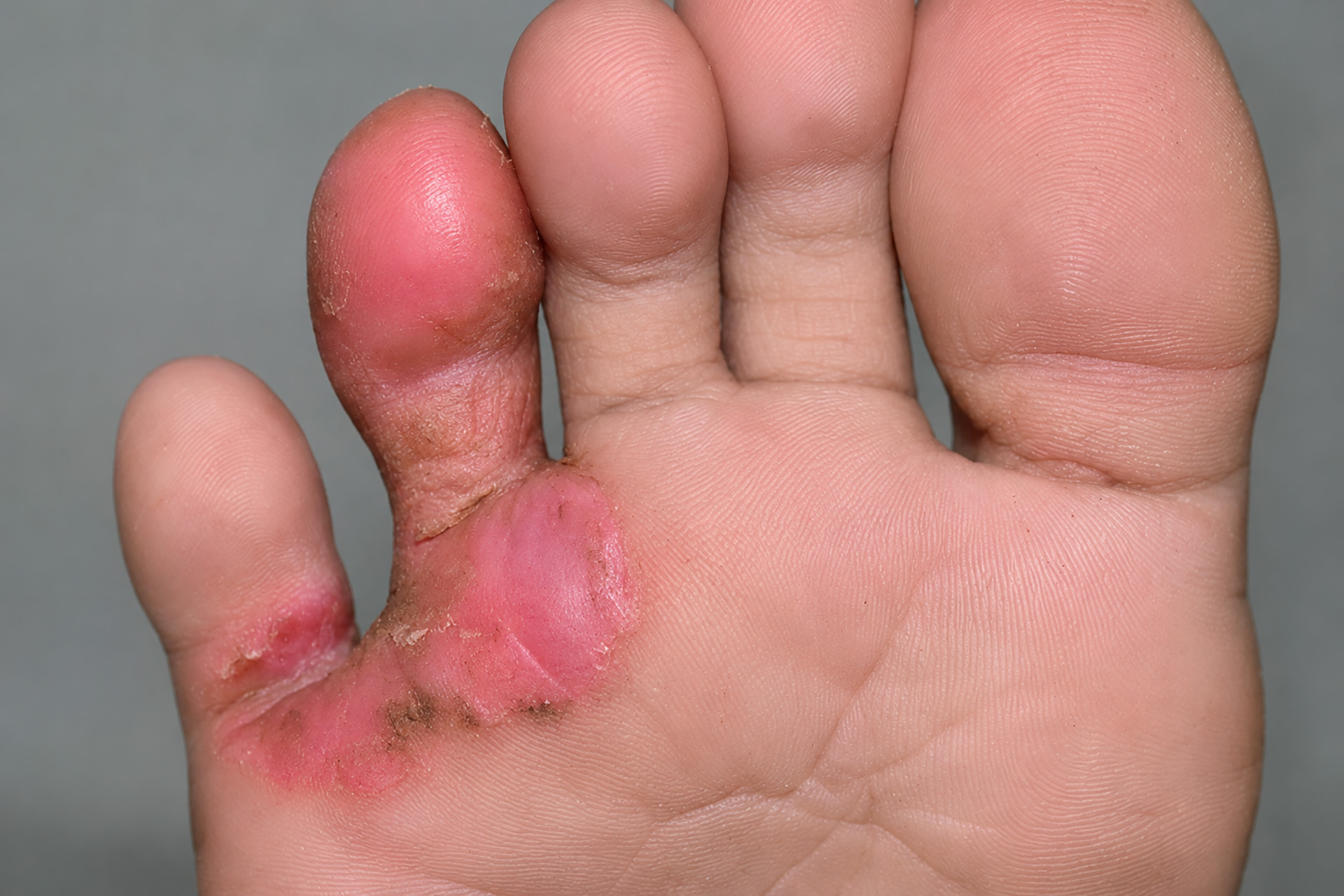
- a rash that looks red, purple, grey or darker than the surrounding skin, depending on your skin tone
- small fluid-filled blisters, sometimes on the sole or arch
- sore, raw or split skin
The appearance depends on the type of tinea pedis, which can be categorised into three types:
- Interdigital athlete’s foot affects the spaces between the toes and often begins between the fourth and fifth toes. The affected area may become itchy, soft, white, scaly or cracked.
- Moccasin-type athlete’s foot causes dry, scaly skin across the sole and sides of the foot. It can resemble dry skin or eczema.
- Vesicular athlete’s foot causes clusters of small, fluid-filled blisters, often on the sole or arch. Athlete’s foot blisters across the skin do not always mean the infection is more severe.
Not every itchy or peeling foot rash is athlete’s foot. Eczema, contact dermatitis, psoriasis and some bacterial infections can look similar to this fungal infection.
When to see a podiatrist for fungal infections
Arrange an assessment if:
- You are unsure what is causing your rash
- You have applied antifungal medication for about two weeks without any improvement
- The symptoms of athlete’s foot keep returning, spread or become painful
- Your nails become thick, discoloured or crumbly
- You have diabetes, poor circulation, reduced feeling in your feet or a weakened immune system
Seek prompt medical care if the affected area becomes hot, increasingly red or swollen, or if you develop pus, an open wound, fever or rapidly worsening pain. These signs may indicate a bacterial infection and need quick care to reduce further complications.
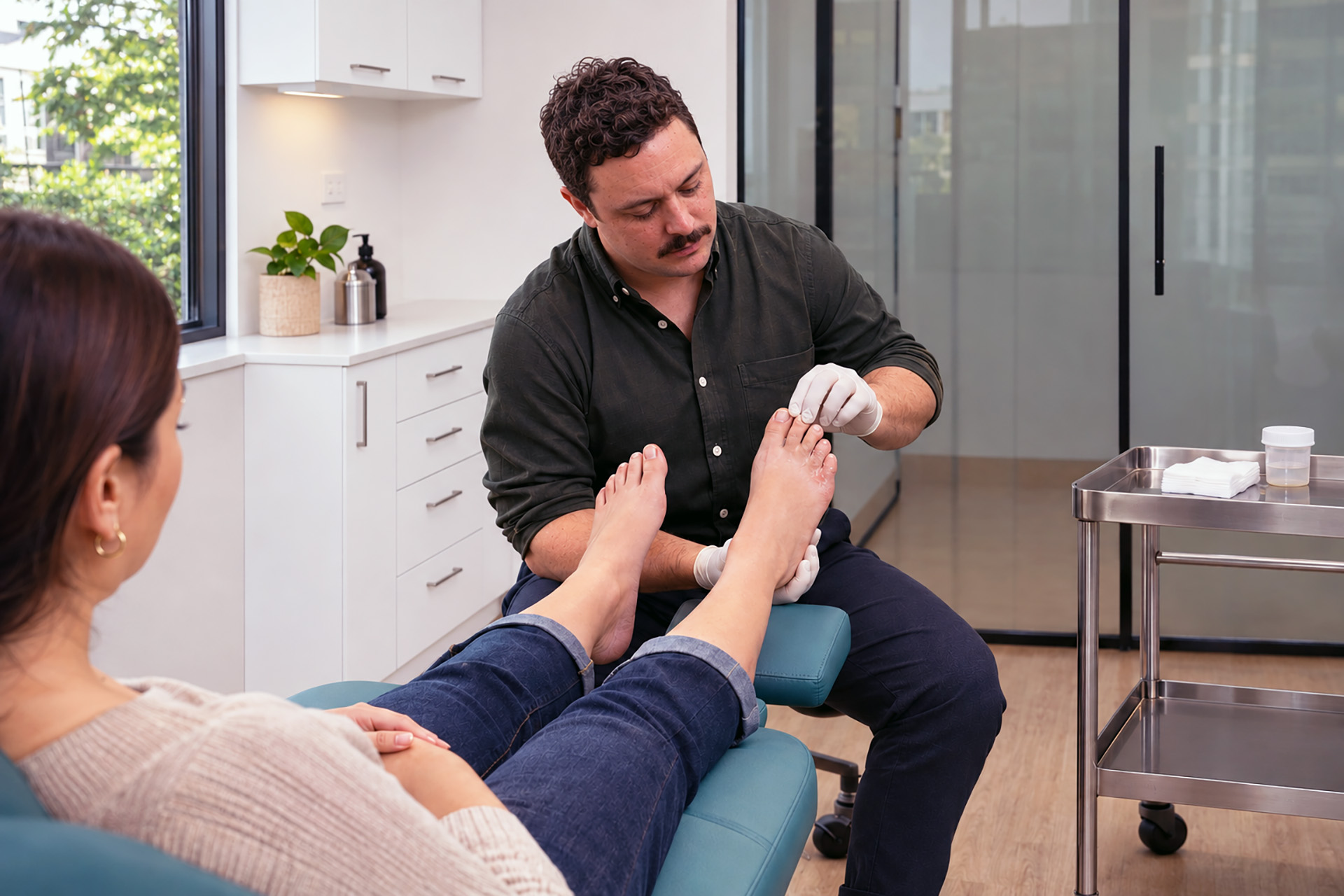
Athlete’s Foot Causes and Spread
Athlete’s foot is a fungal infection caused by dermatophytes, the same type of fungi that can cause ringworm and jock itch. These fungi favour warm, moist areas, but damp footwear alone does not cause the infection. Your skin must come into direct contact with the fungi.
Athlete’s foot spreads through direct contact with infected skin or contaminated floors, towels, bed linens, socks, shoes and other surfaces. Walking barefoot in public showers, locker or changing rooms, or around public pools increases the exposure.
Scratching the affected area and then touching another part of the body can spread the fungi to the hands. If the fungi reach the groin, it can cause jock itch. Using the same towel on your feet and body can also spread the fungi to another area of the body, so be careful with your towel use.
The same dermatophytes can cause fungal nail infection. A thickened, discoloured or crumbly nail may need toenail fungus assessment and care rather than treatment based on appearance alone.
Risk Factors
You may have a higher risk of athlete’s foot if you:
- wear shoes for long hours, particularly tight shoes, closed shoes or other enclosed footwear
- have sweaty feet, notice that your feet sweat heavily, or if you leave damp socks on
- go walking barefoot in locker or changing rooms, or other shared wet areas
- share towels, socks or shoes
- have cuts or other foot damage
- have had athlete’s foot before
Diabetes, poor circulation and reduced immunity increase the importance of early advice for broken skin or possible infection. Appropriate diabetic foot care includes prompt assessment rather than self-treating a wound.
Diagnosis
A healthcare professional may diagnose athlete’s foot by examining the rash and asking about your symptoms, footwear, sweating and any previous treatment. If the appearance is unusual or a suspected fungal infection doesn’t respond to antifungal medicine, a small skin scraping may be examined under a microscope or sent to a laboratory.
Confirming the cause matters because the symptoms of athlete’s foot can resemble other conditions like eczema, psoriasis or a bacterial infection. Antifungal medicine does not treat these conditions, and incorrectly applied steroid cream can change the appearance of a fungal rash and allow it to spread. Use a steroid on suspected athlete’s foot only when a healthcare professional advises it as part of the treatment plan.
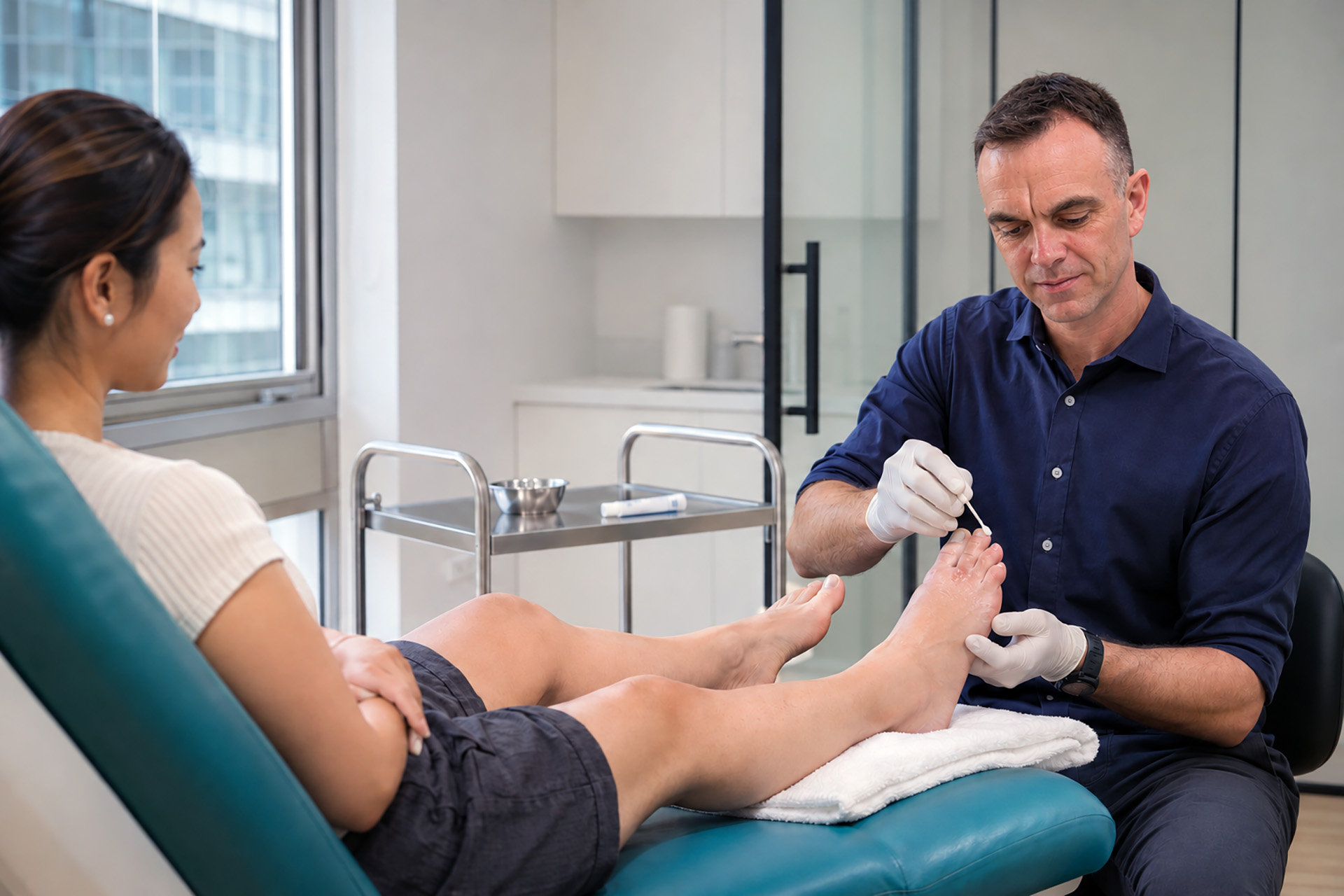
Manage Athlete’s Foot
Antifungal medicine and keeping the skin dry can help manage athlete’s foot. The infection can return, so seek advice if symptoms persist or recur.
Antifungal cream, spray or powder
Many mild cases can be treated with topical antifungal cream for athlete’s foot from a pharmacy. Common active ingredients include terbinafine, clotrimazole, miconazole and tolnaftate. A pharmacist can help you choose a suitable athlete’s foot cream, spray, or antifungal powder, especially if you are pregnant, treating a child, taking other medicines, or managing a health condition.
Apply the medicine to the affected area as directed. Treatment duration varies by product. Some courses are short, while others take two to four weeks. Complete the full course on the label or as prescribed by your clinician, including any advised period after the symptoms resolve.
Prescription treatment
A doctor may prescribe a stronger topical medicine or oral antifungal tablets if the fungal infection is extensive, persistent, or hasn’t responded to properly used topical treatments. Oral medicines can interact with other medicines and are not suitable for everyone. If your doctor suggests oral antifungal tablets, ask about any possible interactions with your other medications.
Skin care during treatment
Proper foot hygiene can help you manage athlete’s foot. Wash your feet in warm, soapy water and dry carefully between the toes before applying any medicine. Keep your feet dry, change socks regularly if your feet sweat, and allow shoes to dry between uses. Do not scratch or peel the affected skin, as this can worsen the condition.
A plain moisturiser may ease athlete’s foot dry skin on the sole or sides of the foot, but it does not treat the athlete’s foot fungus. Avoid applying moisturiser between moist or softened toes unless a clinician advises it.
Evidence for vinegar soaks and tea tree oil is limited. They should not replace an established antifungal medicine or delay a medical assessment.
Athlete’s Foot Prevention
You cannot prevent every infection, but these steps are helpful examples of how to prevent athlete’s foot and lower your risk of recurrence:
- wash your feet daily with warm, soapy water and dry them thoroughly, especially between the toes
- change socks regularly, at least daily and after heavy sweating
- choose well-fitting, breathable shoes and socks made from natural fabrics or moisture-wicking synthetic materials; replace cotton socks if they stay damp
- rotate shoes so you do not wear the same pair on consecutive days; let each pair dry fully before wearing it again
- clean footwear following the shoe manufacturer’s instructions
- avoid walking barefoot in public showers, locker and changing rooms; wear sandals in communal showers and around public pools
- do not share towels, socks or shoes
- use a separate towel for affected feet and wash it regularly
- avoid scratching the rash and wash your hands after touching it
- complete the recommended antifungal course for athlete’s foot, even if symptoms improve earlier than expected
Warm, humid weather can make it harder for footwear to dry. Climate alone does not cause athlete’s foot: exposure to fungi and individual factors also matter. Keep feet and footwear dry to reduce conditions that favour fungal growth.
Podiatry Assessment in Singapore
The Foot Practice’s podiatrists can examine the rash, consider other causes, review footwear and moisture factors, and discuss whether pharmacy care, testing, or medical assessment is appropriate. If you’re looking for athlete’s foot treatment in Singapore, arrange a podiatry assessment with us if the condition is recurrent, painful, spreading, or not improving.
Frequently Asked Questions
What is athlete’s foot?
Athlete’s foot is a fungal skin infection of the feet. Its medical name is tinea pedis. Athlete’s foot between the toes is common and may cause itching, burning, scaling, peeling or cracking.
Is athlete’s foot contagious?
Yes. Athlete’s foot can spread through contact with infected skin or contaminated floors, towels, socks and shoes. However, exposure does not always lead to infection.
What does athlete’s foot look like?
It may look white and soggy between the toes, dry and scaly across the sole, or red, purple, grey or darker than the surrounding skin. Some types cause blisters. Because eczema and other conditions can look similar, you may need an assessment.
How long does athlete’s foot last?
With topical treatment, athlete’s foot takes about two to four weeks to settle, but the duration depends on the active ingredient and the extent of the infection. Follow the label or your clinician’s instructions. Seek advice if the rash doesn’t improve after about two weeks or returns after treatment.
Can athlete’s foot spread to the toenails or groin?
Yes. The fungus can spread to the toenails, hands, or groin through direct contact, scratching, or shared towels. Prompt treatment and hand hygiene may reduce this risk.