

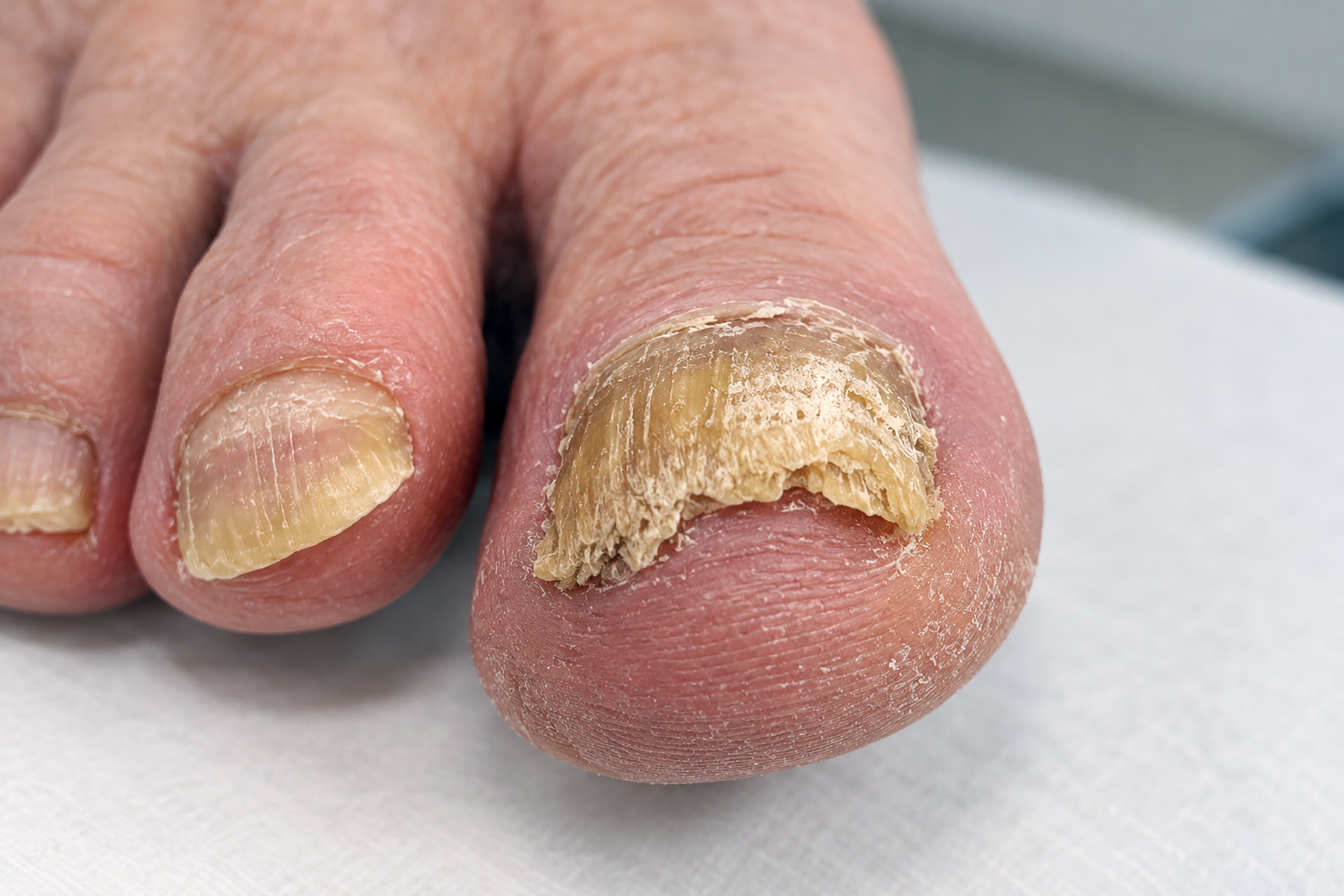
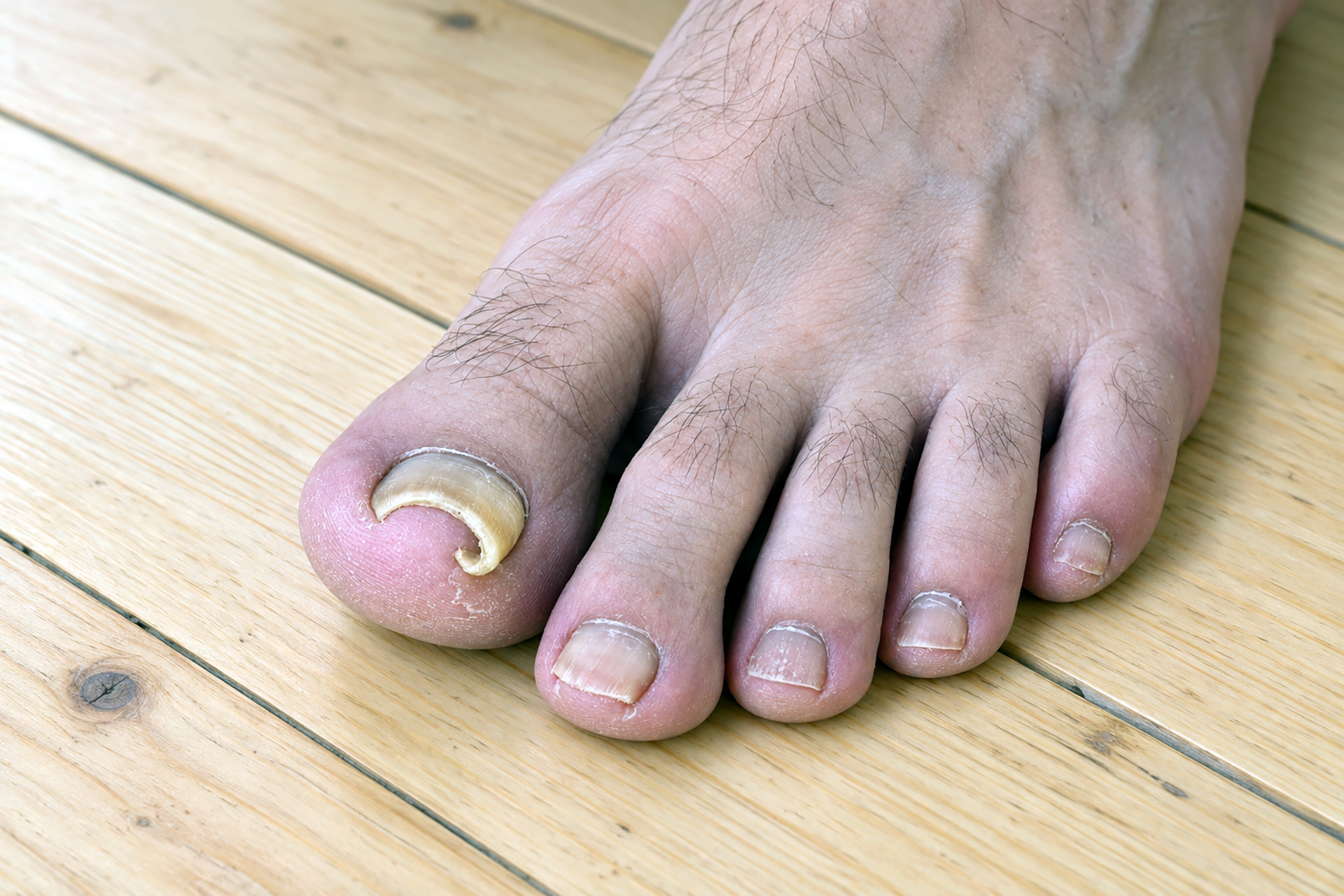
Thickened toenails, or onychauxis, develop when the nail plate becomes denser, harder or more raised than usual. The medical term is onychauxis. Onychogryphosis is a distinct deformity in which a very thick nail becomes elongated and strongly curved.
The main causes of thickened toenails are ageing, repeated pressure or injury, fungal nail infection and psoriasis. Thickening is a sign, not a diagnosis. A yellow or brittle nail may result from a fungal infection, but injury and inflammatory skin conditions can look similar. The right thick toenail treatment depends on the underlying cause.
Symptoms of Thick Toenails
Thickened toenails often change slowly and may be painless. Signs can include:
- a hard, raised or misshapen toenail
- yellow, white, brown or opaque colour
- ridges, roughness or crumbly edges
- lifting from the nail bed
- difficulty cutting or filing the nail
- pressure, discomfort or pain in shoes
The thick white stuff under a toenail is often a build-up of keratin and other debris. Debris beneath a thickened nail may result from fungal infections, psoriasis, repeated injury or separation from the nail bed. Appearance alone cannot confirm the underlying cause.
Why Do Toenails Get Thick?
Ageing
Because toenails grow slowly with age, changes in nail cells may make them thicker and harder. Previous shoe pressure, injuries and fungal infections may also affect nail health and healthy nail growth. Thickened toenails in elderly adults are common, but don’t assume a new, painful, or rapidly changing nail is due to ageing.
Repeated Pressure or Injury
Stubbing your toe, dropping an object on it, or repeatedly pressing it against a shoe can damage the nail matrix, where the nail grows. Ill-fitting shoes may cause repeated trauma when the toes strike the footwear. The new nail may become thick, ridged or misshapen. Runners can develop thickened toenails.
Fungal Nail Infection
A fungal nail infection, called onychomycosis or toenail fungus, can begin when fungi enter through small cracks or a gap between the nail and nail bed. Fungal infections of the toenails may make the nail thick, yellow or white, brittle and crumbly. However, not every thick toenail is fungal. Learn more about fungal nail infection.
Psoriasis and Other Nail Disorders
Psoriasis can disrupt nail formation and cause thickening, pits, ridges, yellow-brown colour, crumbling or lifting. It may resemble fungal infections. Hereditary factors and other nail disorders can also affect toenails. A review may be appropriate if several nails change or if other symptoms include a skin rash or joint pain.
Poor Circulation and Diabetes
Underlying health conditions, including peripheral vascular disease and diabetes, may affect nail growth and overall nail health. Reduced blood flow may limit oxygen and nutrients reaching the tissues that support healthy nail growth and healing. These underlying medical conditions may also increase the risk of fungal infections and reduced sensation. A thick toenail alone does not diagnose diabetes or poor circulation.
Does the Pattern Matter?
One thickened nail, including a thick pinky toenail, often suggests local pressure, previous injury or a shoe-fit problem. Fungal infections can also begin in one affected nail. Changes in several toenails may relate to ageing, fungal infections, psoriasis or another underlying health condition.
A thick black toenail may contain old blood after injury or repeated pressure from shoes. Dark nail changes have other causes. Read about black toenails and arrange an assessment if the colour appears without an injury, forms a new dark band, spreads onto nearby skin, or does not move toward the nail tip as the nail grows.
How Are Thick Toenails Diagnosed?
A podiatrist considers which toenails are affected, how the change developed, previous injury, footwear, activity, skin conditions and health. The examination may include the nail, surrounding skin, circulation and sensation.
A toenail that looks fungal may not be infected. If toenail fungus is possible, a clipping or scraping may be sent for microscopy, culture or another laboratory test. An accurate diagnosis identifies the underlying cause, helps distinguish fungal infections from other nail conditions and guides effective treatment. Testing is useful when previous care has not helped, or prescription tablets are being considered. The podiatrist may recommend medical or dermatology review if findings suggest psoriasis, poor circulation or another condition.

Thick Toenail Management
The treatment plan and treatment options depend on the underlying cause, symptoms and nail health. A podiatrist can trim, thin and smooth hard or very thick toenails with sterile, specialised tools. This is called nail reduction or debridement. It may reduce pressure and make the nail easier to manage, but it cannot reverse permanent nail-matrix damage or clear fungal infections on its own. Wear shoes with adequate length, depth and a wide toe box to reduce further pressure.
If testing confirms toenail fungus, treatment options may include a medicated nail lacquer or solution, or prescription oral antifungal medicine managed by a doctor. Some topical medicines are applied daily for about 48 weeks. Certain oral medicines require liver-function blood tests before and sometimes during treatment. See the full guide to toenail fungus treatment.
Nail surgery involving partial or complete removal is uncommon. A clinician may consider it when a thick, curved, or damaged nail causes pain despite conservative care. Removal does not guarantee normal regrowth if the nail matrix is permanently damaged.
A toenail can take about 12 to 18 months to grow out completely. It may remain thick or discoloured while healthy nail growth continues from the base.
How to Cut Thick Toenails Safely
If you can reach the nail easily and do not have diabetes, poor circulation or reduced feeling in your feet:
- Soak the foot in warm water for 5 to 10 minutes, then dry it well.
- Use clean, sharp nail nippers to trim your toenails straight across with small cuts.
- Do not cut the nail too short or dig into its sides.
- Gently file sharp edges with an emery board or nail file.
- Stop if cutting causes pain, bleeding or skin damage.
A sturdy nail file for thick toenails can smooth an edge, but aggressive filing may cause injury. Do not use a blade or electric grinder on your own nail. Cutting thick toenails in elderly adults may be unsafe when eyesight, hand strength, flexibility or sensation is reduced.
Do Home Remedies Work?
Home care may make a thick nail easier to manage, but it cannot identify the underlying cause or reverse permanent matrix damage. Keep your feet clean and dry, use clean nail tools and wear comfortable shoes with a wide toe box. Avoid ill-fitting shoes, including tight-fitting shoes. Good foot hygiene supports foot health but cannot prevent every form of thickening.
Vicks VapoRub and tea tree oil are sometimes used because of claimed antifungal properties. Evidence for Vicks VapoRub comes from small studies, and evidence for tea tree oil is also limited. Neither is an established cure, and both may irritate the skin. Remove nail polish before assessment so you can examine the nail plate and surrounding skin. Do not let home remedies delay assessment of a painful, dark or worsening nail.
When to Seek Care
Thickened toenails can be more than a cosmetic concern. Arrange an assessment if a nail causes pain or persistent discomfort, keeps getting thicker, makes walking difficult, repeatedly becomes an ingrown toenail, or is difficult to trim safely. Seek advice if several thickened toenails change without a clear reason or you are unsure of the cause.
Very thick toenails can press against shoes, contribute to blisters or an ingrown toenail, and split the surrounding skin. Cuts from trimming can also allow infection to enter. If left untreated, a skin break or infection may worsen. These problems require extra care for people with diabetes, poor circulation, reduced sensation, or a weakened immune system. See the diabetic foot care guidance.
Seek prompt medical care for redness, heat, swelling, increasing pain, pus, bleeding, an open wound, fever or spreading redness. An unexplained black area or new dark band also needs assessment.
Reducing Further Nail Problems
Not every nail condition can be prevented. To reduce avoidable pressure, injury and fungal exposure:
- wear shoes with enough length, depth and toe room
- trim nails straight across and keep them at a manageable length
- keep your feet clean, dry your feet well and change socks regularly
- wear cotton socks only if they keep your feet dry; choose moisture-wicking socks for exercise
- do not share nail clippers or files
- wear sandals or other protective footwear in swimming pools, communal showers and locker rooms
- manage athlete’s foot promptly
- check your feet daily if you have diabetes or reduced sensation
Prolonged exposure to damp footwear can encourage fungal and bacterial growth. Change socks when they become wet.
Podiatry Care for Thick Toenails in Singapore
The Foot Practice has provided podiatry care for adults and children in Singapore since 2004. A podiatrist can assess the underlying cause, reduce troublesome thickness, review footwear pressure and advise on steps that support healthy nail growth. When appropriate, the podiatrist can discuss fungal testing or referral to a doctor or dermatologist.
Consider an assessment if your toenail is painful, increasingly thick, difficult to trim or causing problems around the toe or in shoes.